

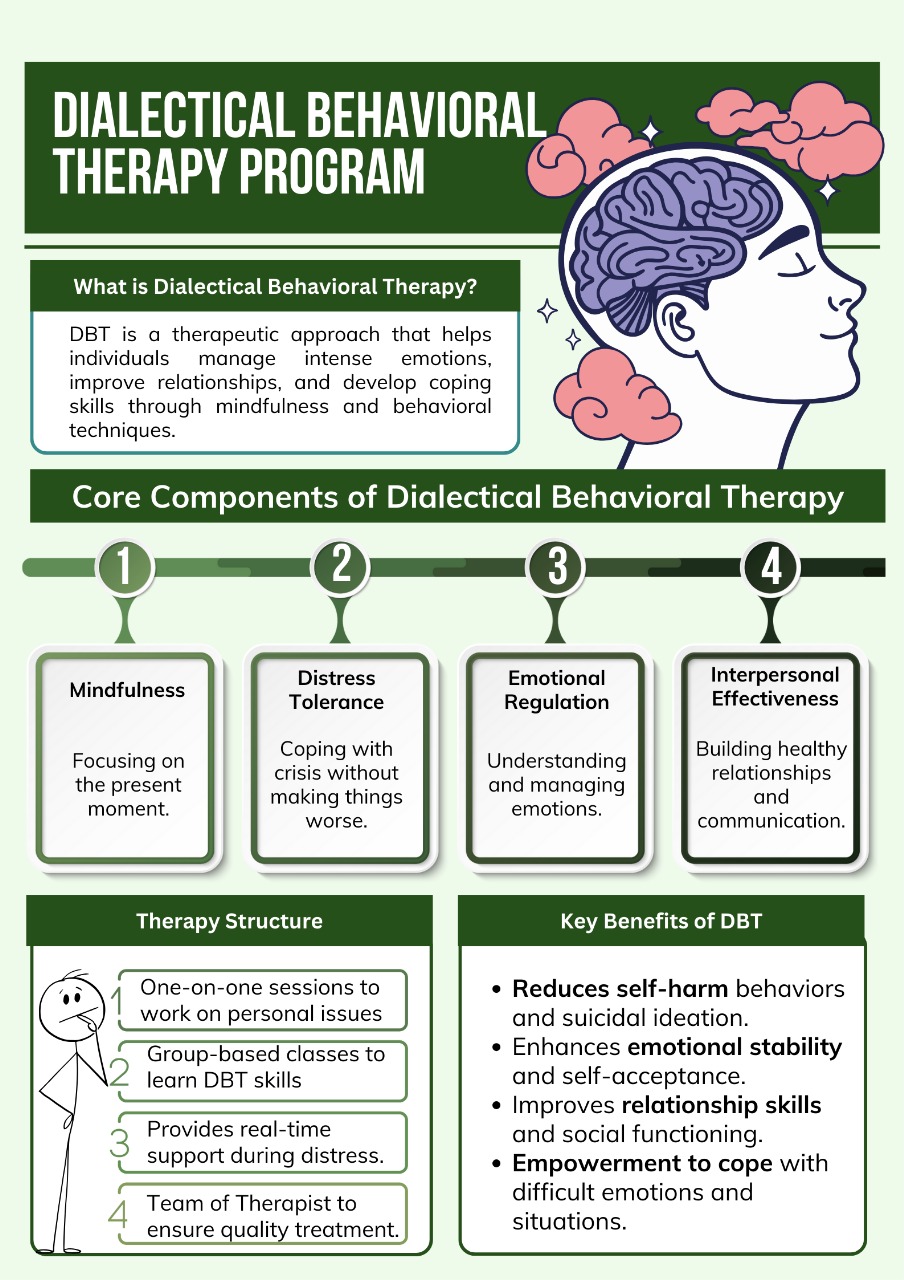
#2. Mindfulness: Staying Present Amid Chaos
Practicing mindfulness helps us stay in the “now,” which is a key to Dialectical Behavioral Therapy (DBT). Watch thoughts without judgment—it’s like watching clouds float by. In the busy world of Lexington, this tames crippling anxiety.
Practicing daily, you spot emotional triggers early. Forrest incorporates meditation in our IOP, helping clients weave it into their routines. Ever caught yourself spiraling? Mindfulness stops that cold.
Benefits abound:
- Boosts self-awareness for better choices.
- Relieves stress with the power of your breath.
- Fits well with family counseling in our center.
Now, let us turn to how regulating emotions can build upon this groundwork.
#3. Emotion Regulation: Mastering Your Inner World
In DBT, emotion regulation means you get to manage passionate feelings. Notice anger or anxiety, and then apply psychological tools, such as reframing thoughts. This skill shines for those battling depression in Lexington.
You learn to label emotions accurately, cutting vulnerability to triggers. Our therapists at Forrest use it in individual counseling, tailoring plans for substance use. Question: What if you could turn frustration into calm?
Key techniques include:
- Tracking moods to spot patterns.
- Using opposite actions for quick shifts.
- Building positive experiences proactively.
However, when distress hits hard, tolerance steps in next.
#4. Distress Tolerance: Weathering the Storm
Distress tolerance teaches survival without harmful escapes in Dialectical Behavior Therapy (DBT). Accept pain, then distract or self-soothe—think radical acceptance, embracing life’s ups and downs.
In Lexington, where pressures mount, this prevents relapse. Forrest’s programs emphasize techniques like pros/cons lists during crises. Have you tried distracting with a walk? It works wonders.
Essential strategies:
- Self-soothe with senses, like warm tea.
- Improve moments through small wins.
- Accept reality to lessen suffering.
Building on this, interpersonal skills strengthen connections.
#5. Interpersonal Effectiveness: Building Stronger Bonds
Interpersonal effectiveness hones communication in Dialectical Behavior Therapy (DBT). Assert needs respectfully, say no without guilt, and resolve conflicts empathetically. This mends relationships strained by mental health woes.
At Forrest, group therapy practices include boosting social support. In Lexington’s community, it combats isolation. Wondering how to ask for help? DBT scripts make it natural.
Core elements:
- DEAR MAN, for clear requests.
- Maintaining self-respect in interactions.
- Navigating empathy to deepen ties.
Finally, validation seals the therapeutic bond.
#6. Validation and Supportive Environment: Feeling Truly Heard
Validation affirms your experiences in Dialectical Behavior Therapy (DBT), creating safety for growth. Therapists at the Forrest model this, reinforcing adaptive behaviors and building trust.
This environment encourages skill practice, vital for long-term success. Clients feel valued, sparking change. In our dual diagnosis approach, we address trauma roots.
Why it transforms:
- Boosts self-worth through empathy.
- Strengthens alliances in therapy.
- Promotes ongoing progress post-treatment.
To illustrate, consider a real-world case study.
Real-World Case Study: Jane’s Path with Short-Term DBT
Jane, a 32-year-old single mom and medical tech in New Jersey, USA, faced borderline personality disorder with unstable ties, fear of loss, impulsivity, mood swings, emptiness, anger, and past suicide thoughts. In a 6-month short-term DBT at Rutgers University, she got individual sessions, phone support, and group skills on emotion regulation and distress tolerance, targeting relationship issues via diary cards and chain analyses.
- Reduced impulsive acts and shame responses.
- Improved ties with the partner through joint sessions.
- Sustained emotional stability 1.5 years later.
(Marks, M. W. (2021). Short-term DBT in action: The case of “Jane.” Rutgers)
 Feeling overwhelmed by emotions in Woburn? Our latest blog, Dialectical Behavioral Programs via Telehealth in Woburn, MA, unpacks DBT’s life-changing skills that you can gain remotely and at your pace.
Let’s Harness the Power of DBT for a Balanced, Resilient Life in Lexington
The relentless pace of Lexington can intensify emotional turmoil, but there’s a lifeline: Dialectical Behavior Therapy (DBT). Its six pillars—dialectical thinking, mindfulness, emotion regulation, distress tolerance, interpersonal effectiveness, and validation—prepare you to ride out life’s storms.
At Forrest Behavioral Health, such skills combine in customized programs such as IOP for lasting recovery. Want to break the grip of sapping emotions? Call Forrest Behavioral Health at (781) 570-5781 or Verify Your Insurance to Begin Healing Today! Start your journey now – what’s stopping you from a brighter, balanced future?