

Lasting Recovery from Prescription Drug Addiction Treatment In Massachusetts
“Sometimes the hardest part is admitting a pill has started to control the day.”
Prescription Drug Addiction Treatment In Massachusetts helps people safely stop misusing medications and rebuild stability with detox support (when needed), counseling, and long-term recovery planning. Prescription drug misuse can mean taking higher doses than prescribed, taking doses more often, or using someone else’s medication to cope or get high.
Withdrawal can also be risky; Mayo Clinic notes that coming off anti-anxiety medicines and sedatives may take weeks of slow tapering, and abrupt stopping can lead to serious symptoms like seizures. For opioid prescriptions, treatment may include carefully monitored options such as buprenorphine or methadone, and recovery medication options like naltrexone.
In this blog, you’ll learn the signs to watch for, the safest treatment levels, and the next steps to start recovery with confidence.
What Is Prescription Drug Addiction And How Does It Start?
Prescription drug addiction and dependence can look similar at first, which is why many people feel confused. Dependence means your body adapts, so stopping suddenly can cause withdrawal, while addiction includes loss of control and continued use despite harm.
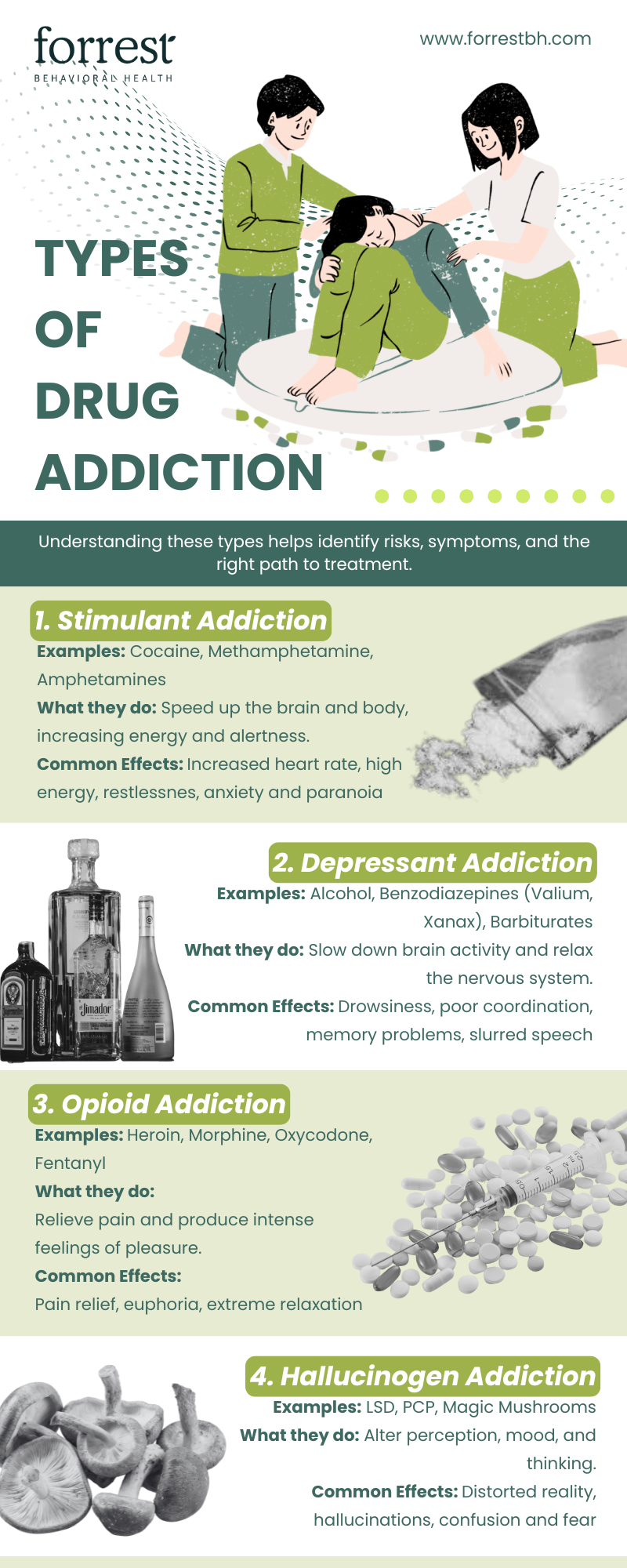
Because the brain’s reward system can be affected by commonly misused prescriptions, patterns can become compulsive over time. Studies find that commonly misused prescription drugs include opioids, anti-anxiety medicines and sedatives, and stimulants.
- Dependence: Your body gets used to the drug; stopping can cause withdrawal symptoms.
- Addiction: You keep using even when it causes major problems, and stopping feels out of reach.
Common Types Of Misused Prescription Drugs
- Opioids (pain medicines), such as medications containing oxycodone and hydrocodone.
- Anti-Anxiety Medicines, Sedatives, and Hypnotics, such as alprazolam, diazepam, and zolpidem.
- Stimulants, such as methylphenidate and amphetamine-based ADHD medications.
How Misuse Often Starts (No Shame, Just Clarity)
- Taking higher doses than prescribed.
- Taking doses more often than prescribed.
- Mixing pills with alcohol or other drugs can be seriously dangerous.
- Using someone else’s prescription “just to get through the day.”
Signs You May Need Prescription Drug Addiction Treatment In Massachusetts
A key sign is when the medication starts controlling your schedule, your mood, or your choices. Another sign is when you try to stop, but you cannot because withdrawal, cravings, or stress keep pulling you back.
Warning signs of prescription drug misuse also include taking higher doses than prescribed, requesting early refills, and trying to get prescriptions from more than one prescriber.
Behavioral Signs
- Running out early, “losing” prescriptions, or requesting early refills.
- Getting prescriptions from more than one prescriber.
- Hiding pills, increased conflict, missed work or school.
Physical And Mental Signs (Examples)
- Drowsiness, confusion, poor concentration, or memory problems (often linked to sedatives).
- Slowed breathing, poor coordination, or worsening sensitivity to pain at higher doses (opioids).
- Anxiety, agitation, insomnia, or paranoia (stimulants).
Red Flags That Suggest Higher Risk
- Mixing prescription drugs with alcohol or other substances can increase danger and even lead to death.
- History of overdose, seizures, blackouts, or severe panic.
- Suicidal thoughts or severe confusion.
When To Seek Emergency Help
- Trouble breathing, unresponsive, severe confusion, chest pain, or seizures—call emergency services.
Prescription Drug Withdrawal Treatment In Massachusetts: What To Expect
Withdrawal is not the same as failure. It is often a sign your body has adapted, which means you may need a safer plan than simply stopping on your own.
Some withdrawals can be dangerous, especially with sedatives and anti-anxiety medications. However, abruptly stopping anti-anxiety medicines and sedatives, in an uncontrolled environment, can cause seizures.
Common Withdrawal Symptoms (High-Level)
- Opioids: flu-like symptoms, body aches, stomach upset, anxiety, insomnia.
- Benzos/sedatives: rebound anxiety, panic, tremors, sleep disruption, seizure risk.
- Stimulants: fatigue, low mood, sleep changes, cravings.
Detox Vs. Treatment (Simple Difference)
- Detox = stabilization and safety.
- Treatment = therapy, skill-building, relapse prevention, and ongoing support.
Prescription Drug Detox In Massachusetts And Levels Of Care
The safest starting point depends on the medication type, dose, how long you have been using, and what your home environment looks like. If there is high-dose use, long-term use, multiple substances, or mental health instability, medical support is the safer choice.
At Forrest Behavioral Health, we offer structured outpatient options that help people build stability without stepping away from life completely. Our programs include a Day Treatment program (often five days per week), an Intensive Outpatient Program (several sessions per week, often evenings or weekends), and a standard Outpatient Program (often once or twice per week).
Levels Of Care At A Glance
Level Of Care | Typical Weekly Structure | Best Fit When | Primary Goal | Common Step-Down |
Prescription Drug Detox In Massachusetts | 24/7 short-term (or structured outpatient) | Withdrawal risk is high | Stabilize safely | Detox → Residential/PHP/IOP |
Inpatient Prescription Drug Rehab In Massachusetts | 24/7 | Needs full-time structure | Safety + intensive therapy | Residential → PHP/IOP |
Partial Hospitalization Program (PHP) In Massachusetts | Often 5 days/week | Needs strong structure, home at night | Stabilize + skills | PHP → IOP |
Cocaine IOP In Massachusetts (IOP Model) | Several days/week | Needs structure while living at home | Skills + accountability | IOP → OP |
Outpatient Prescription Drug Treatment In Massachusetts | 1–2 sessions/week | More stable | Maintenance + relapse prevention | OP → Aftercare |
How Forrest Behavioral Health Outpatient Levels Work
- Day Treatment helps you reset your routine with daily structure while still going home.
- IOP helps you practice recovery skills in real life while staying connected to care several times a week.
- Outpatient care supports long-term progress with ongoing therapy and relapse prevention.
Medication, Therapy, Dual Diagnosis, Family Support, And How To Start
Medication can be helpful in the right situation, but it must match the drug category and your medical needs. For opioid prescriptions, treatment may include tapering and supportive medications – like clonidine to help manage opioid withdrawal symptoms.
Additionally, healthcare providers may prescribe buprenorphine, buprenorphine-naloxone, or methadone under regulated conditions to ease withdrawal symptoms from opioid painkillers.
SAMHSA explains that buprenorphine, methadone, and naltrexone are common FDA-approved medications used to treat opioid use disorder and can help normalize brain chemistry and reduce cravings.
Medication Options By Prescription Drug Type
Drug Category | Treatment Focus | Medication Notes (High-Level) |
Opioid Addiction Treatment In Massachusetts | Cravings + withdrawal + relapse prevention | MOUD options may include buprenorphine, methadone, naltrexone. |
Benzo Addiction Treatment In Massachusetts | Safe taper + anxiety management + coping skills | Abrupt stopping can be risky; tapering and monitoring are important. |
Stimulant Prescription Addiction Treatment In Massachusetts | Sleep, mood, routine repair | Symptoms can include anxiety, agitation, and insomnia; care is often therapy-led. |
Evidence-Based Therapy Tools We Use
- CBT: trigger mapping and practical coping plans.
- DBT skills: distress tolerance and emotion regulation.
- Motivational interviewing: builds readiness without shame.
- Group support: connection, accountability, and real-world problem-solving.
Dual Diagnosis Prescription Drug Treatment In Massachusetts
Many people misuse prescriptions to manage anxiety, insomnia, trauma symptoms, ADHD, stress, or depression. Combining these conditions with substance use can worsen mental health. In this situation, an integrated care plan is offered – a plan that addresses both, so progress is steadier, and relapse risk is lower.
Family Support (What Helps Most)
- Learn boundaries and safety steps.
- Support treatment attendance and routines.
- Avoid “covering” or rescuing behaviors that keep addiction hidden.
How To Start With Forrest Behavioral Health
- Step 1: Confidential call and fit check, so we understand your needs and urgency.
- Step 2: Assessment and level-of-care recommendation, to match your plan to your risk and schedule.
- Step 3: Start treatment and build a step-down plan early, so support continues as stability improves.
Case Study
At Boston Medical Center, the STATE OBOT-B model expanded office-based opioid treatment with buprenorphine across community settings. In the program’s early experience, 382 patients were treated in the first five years.
One year after starting care, 51% were still engaged in treatment, and among those receiving buprenorphine, 91% were abstinent from opioids and cocaine.
The case study also reports that, over 11 years of OBOT at BMC, there were no overdose deaths while patients were in treatment. For many families, these numbers turn fear into a next step.
➡️ Read our latest blog, “Cocaine Addiction Treatment In Massachusetts”, for a clear, practical guide to outpatient care options, evidence-based therapies, and the next steps to start recovery with Forrest Behavioral Health.
Conclusion
Prescription misuse can start quietly, even when life looks normal. Still, it does not have to end in a crisis.
Withdrawal needs a plan, and benzo tapering may take weeks. For opioids, Medication-Assisted Treatment (MAT) / MOUD in Massachusetts – like buprenorphine, methadone, or naltrexone – can help.
The goal is steady sleep, safer choices, and fewer relapse triggers. Counseling and skills practice make cravings less powerful, especially under stress or pain. When mental health symptoms are present, integrated support keeps treatment focused and consistent.
At Forrest Behavioral Health, we help you choose the right detox, IOP, or outpatient care. Call us for a confidential fit check and level-of-care recommendation today.