

How Working Adults in Massachusetts Get Intensive Mental Health Care Without Disappearing
“You don’t have to see the whole staircase; just take the first step.”
— Martin Luther King Jr.
It’s 6:47 AM, and you’re lying in bed, staring at the ceiling. Again. Your alarm went off seventeen minutes ago, but you can’t move yet. You’ve got that 9 AM meeting. The project deadline. Your manager is asking if everything’s okay because you’ve seemed “distracted” lately.
Everything’s not okay. You know it. They’re starting to know it.
You tried weekly therapy. You did. But a lot falls apart between Tuesdays. And taking a month off for residential treatment? Not possible. You’ve got rent, car payments, and a career you’ve spent years building. A life that doesn’t pause because your brain decided to break.
So here you are, stuck between needing real help and not knowing how to get it without losing everything. What if there’s a middle path? One where you don’t choose between healing and keeping your job?
It’s called Flexible IOP. And it might be exactly what you need.
What Is Flexible IOP for Adults
Intensive Outpatient Programs have been around since the 1960s, quietly helping people who need more than weekly therapy but can’t disappear for a month.
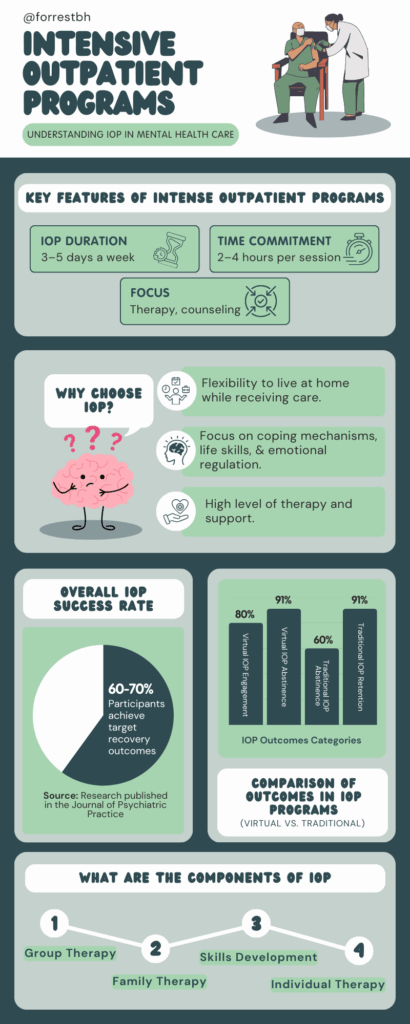
3-5 days per week, about 3 hours each session. Group therapy with people who get it. Individual sessions where someone knows your story. Skills workshops where you practice techniques, not just hear about them. Psychiatric support if your brain needs more than talk therapy.
The sessions are intensive. The word means what it says. You’re getting concentrated care that moves things forward.
The best part? You go home afterward. Your own bed. Your morning commute. Your job. You’re still living your life, just with support holding you steady while you figure things out.
In Massachusetts, flexible IOP means programs that work around your reality instead of expecting you to abandon it.
What Flexible Really Means When You’re Barely Holding It Together
Morning sessions run from 9 AM to noon, while evening sessions operate from 6 PM to 9 PM. This isn’t just scheduling convenience. It’s the difference between getting help and continuing to drown.
Morning programs work for night shift workers at Boston hospitals or Cambridge restaurants. The ones finishing at 2 AM who can’t make evening groups. They show up at 10 AM, get what they need, and rest before their shift.
Evening sessions are lifelines for Financial District professionals, Kendall Square tech workers, and lawyers billing hours. The ones who can’t leave at 2 PM three times a week without risking careers they’ve built. They show up at 6 PM, after work, when the rest of the world winds down.
This flexibility isn’t a luxury. It’s survival.
Who Can Benefit From This
You, probably. If you’re reading this at midnight trying to figure out how to get better without everything falling apart.
The Barely-Functioning Crowd
You’re showing up. Getting things done. Looking fine from the outside. Drowning on the inside. Your depression or anxiety is managed just enough that you haven’t collapsed, but you’re exhausted from holding it together. Weekly therapy stopped being enough months ago.
People Stepping Down From Higher Care
Maybe you completed residential or partial hospitalization. You’re better than you were, but not ready for just weekly check-ins. You need that middle ground. The structure that keeps you from sliding backward.
Working Professionals Who Can’t Disappear
You’re building something. A career, a business, a reputation. Your mental health is suffering, but a month-long gap isn’t an option. Morning or evening IOP means intensive help while maintaining momentum.
Parents Who Can’t Leave
Single parents. Primary caregivers. The ones who can’t pack a bag because who’s getting the kids to school? Who’s making dinner? Flexible schedules work around pickup times and bedtime routines.
Dual Diagnosis Situations
Your depression tangles with substance use. Your anxiety feeds your drinking, which feeds your anxiety. You need integrated care addressing both while still showing up to work because bills don’t pause.
Interventions Used in Flexible IOP for Adults
Let us get specific. What are you signing up for?
Individual therapy once or twice weekly. Your time. Just you and someone who specializes in what you’re dealing with. These sessions go deeper than group work—the stuff that’s specifically yours.
Group therapy is where something shifts. You walk in thinking your problems are uniquely shameful. Then someone describes your exact thoughts in different words. You’re not broken. You’re human, struggling alongside other humans who understand.
The groups aren’t just feelings. They’re structured. DBT skills for overwhelming emotions. CBT for thought spirals. Mindfulness that works when you’re panicking, not just when you’re calm.
Skills workshops. Communication. Stress management. Relapse prevention. Sleep. Nutrition. The boring stuff that matters when rebuilding a life that works.
Psychiatric support if medication helps. Not just initially, but throughout. Because doses need adjusting. What worked stops working. Brain chemistry needs recalibrating.
The schedule bends around your life. Individual sessions fit your work hours. Groups match your availability. Morning person? Evening person? There’s usually something.
The Top 3 Benefits Nobody Mentions
Everyone talks about evidence-based treatment and flexible scheduling. Here’s what they don’t tell you:
1. You Practice in Real Time
Learn a skill Monday. Have a panic attack Tuesday at work. Process Wednesday how it worked or didn’t. Adjust Thursday. This is active learning, not theoretical.
2. Structure Holds You When You Can’t
Depression says nothing matters. Anxiety says everything’s terrible. When you’re only in treatment one hour weekly, those voices have 167 other hours. With IOP, you have somewhere to be Monday, Wednesday, and Friday. People expecting you. On days you barely function, structure carries you.
3. You Build Real Support
Not therapy buddies. Your people. The ones texting when you’re struggling on Sunday. Celebrating milestones. Understanding that “I got out of bed” sometimes deserves applause. Moreover, Residential is a bubble where everything’s a treatment. IOP means going home to your kids, partner, cat, and life. You remember what you’re fighting for.
Taking the First Step
Most programs offer free phone consultations. You talk about your situation, and they help figure out what makes sense. You’re not committing. You’re gathering information.
Pick up your phone. Google “flexible IOP Massachusetts” or “evening IOP near me.” Call two programs. Have conversations. Ask about schedules, specialties, and insurance.
You don’t need to have everything figured out. You just need to make the call.
“And the day came when the risk to remain tight in a bud was more painful than the risk it took to blossom.”
— Anaïs Nin
That day might be today.
Forrest Behavioral Health offers flexible IOP programs designed for working adults who need real help but can’t pause their lives. Morning sessions, evening options, virtual programs. Evidence-based treatment. People who understand.
Your next chapter doesn’t have to look like this one. You matter. Even when you don’t believe it. Especially then.