

The Truth About Outpatient Mental Health and Addiction Treatment in MA: Comprehensive, Not Casual
Up until recently, mental health was not taken seriously anywhere, so we cannot really blame Massachusetts. People suffered in silence, and those who did try to find help, couldn’t find much. In fact, over 14,000 patients reported facing difficulty in finding adequate mental healthcare. There were all sorts of problems, such as provider shortage, high costs, and long wait times.
The situation somewhat changed, and now we have over 25 community behavioral healthcare facilities in Massachusetts – which is awesome!
But the stigma around mental healthcare has remained, and so have the commutation and logistical problems. A great solution around this problem is outpatient mental health and addiction treatment in MA. This solution was supposed to solve all issues – and in theory, it does exactly that.
But the hesitance among Massachusetts residents is confusing.
Today, let’s talk about one of the key reasons why many individuals hesitate to seek help: the misconception that outpatient treatment is casual. In reality, outpatient care is comprehensive and structured. But, don’t take our word for it. Have a read, we have got numbers to back our claim.
Outpatient Treatment: Not a Step Down, but a Continuum of Care
Simply put, outpatient treatment is structured clinical care that allows individuals to receive therapy, medication management, and support services while continuing to live at home and engage in daily responsibilities.
Comprehensive,
Not Casual
Many individuals believe that outpatient mental health and addiction treatment in MA is simply “casual” care just because it is often viewed as a step-down approach from inpatient care.
However, this isn’t true.
In fact, research confirms that step-down models combining inpatient stabilization with outpatient follow-up lead to higher engagement rates; 95% of patients began treatment in a step-down program compared to just 45% in outpatient-only programs.
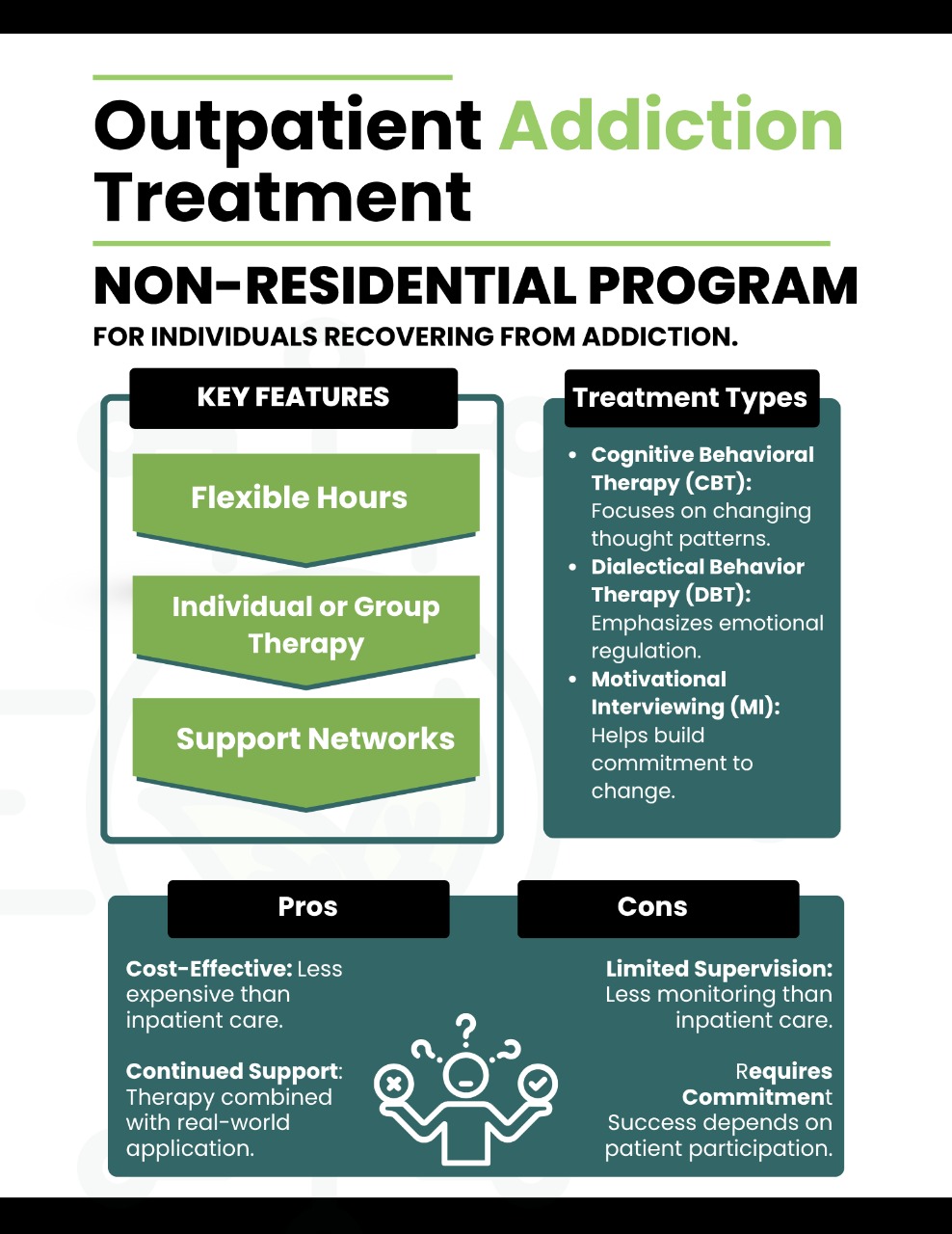
Consistent Attendance Required
Outpatient treatment requires consistent attendance and active participation, with the flexibility of tailoring session frequency to a person’s needs; whether that’s several days a week in an Intensive Outpatient Program (IOP) or fewer sessions in traditional outpatient care.
This is undeniably more convenient than 24/7 monitored inpatient care. But at the same time, it also includes evidence-based therapy, relapse prevention strategies, family involvement, and even holistic support like mindfulness or nutrition counseling.
A study published in Psychiatric Services found that individuals who had at least 12 months of consistent outpatient visits were more than twice as likely to achieve remission at two years compared to those with minimal follow-up. This goes on to show that outpatient care is not casual at all – it is a critical part of the recovery continuum that can prevent relapse, reduce rehospitalization, and support long-term healing.
Why Outpatient Mental Health and Addiction Treatment in MA Is a Strong Solution
Many individuals may not feel at ease when seeking addiction treatment due to shame and stress. The situation is already difficult. In fact, in Massachusetts alone, over one-third of adults say they have avoided seeking care because they worried about being judged. Outpatient mental health and addiction treatment in MA not only reduces this stigma but also offers a variety of other benefits, which include:
- Accessibility: With outpatient mental health and addiction treatment in MA, it becomes easier to attend sessions regularly while also balancing work and family routines.
- Real-world integration: Outpatient treatment allows individuals to return to their routines after regular sessions. Therefore, individuals attending these sessions can apply coping skills in everyday life.
- Long-term recovery: Outpatient mental health and addiction treatment in MA uses evidence-backed therapies such as CBT and DBT to help individuals strengthen their resilience. Therefore, outpatient treatment also helps with relapse prevention and helps individuals gain long-term recovery.
- Personalized Care: High-quality outpatient mental health and addiction treatment in MA, like the one offered at Forrest Behavioral Health, are tailored to each individual’s needs, whether that means focusing on trauma, family dynamics, or any addiction.
- Continuum of Care: With outpatient treatment, individuals are assured of ongoing support after inpatient. This helps reduce the risk of relapse and helps individuals maintain stable recovery with lasting impact.
The Future of Outpatient Mental Health and Addiction Treatment in MA
While Massachusetts has made strides in expanding mental healthcare facilities around the country, and is offering increased access to outpatient programs, some barriers are still remaining. Around 40% individuals still face issues regarding care due to waitlists, insurance challenges, and the very stigma. Outpatient mental health and addiction treatment in MA is already helping bridge this gap by offering flexible, structured care.
But our main challenge still lies with breaking the sense of shame. The improvements will require time, but we are hopeful that in the near future, more individuals will be able to seek compassionate care without the fear of judgment. Or without disrupting their lives.
If you are at that stage of life right now, and wondering how to reach out, don’t worry. Forrest Behavioral Health has got you covered. Just pick your phone and dial (781) 570-5781 to take the first step. Rest assured, our team is here to guide you with respect, empathy, and proven care strategies.