

Outpatient Mental Health Treatment vs Inpatient Care: Which Is Right for You?
Making a decision on whether to go to an outpatient or an inpatient mental health service is overwhelming.
Now the question might arise to you, do I require supervision full-time or on a flexible basis?
It is a usual inquiry of adults residing in high-population states in Massachusetts, such as Boston, Worcester, and Cambridge.
There are numerous types of therapy, and one is sure to get confused about which therapy to choose according to their lifestyle.
To make the correct decision, we shall learn the differences, advantages, and considerations.
Outpatient Mental Health Treatment Model
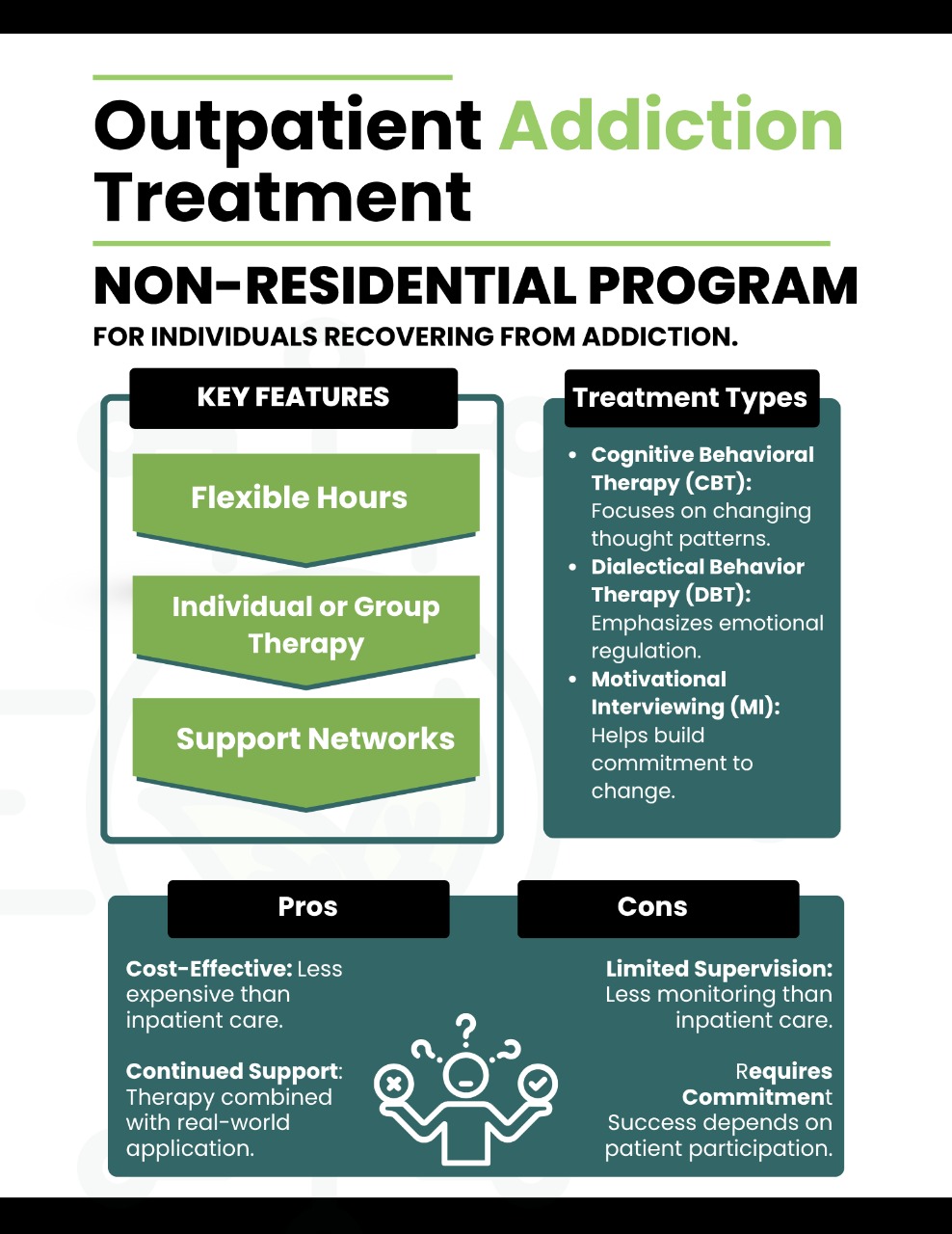
Outpatient care refers to the type of care that involves receiving therapy at home while maintaining the usual routine.
Sessions may be a few times in a week, such as in Forrest Behavioral Health in Massachusetts.
The outpatient services that are predominant are:
- Individual therapy
- Group counseling
- Medication management
- Skill-building programs
Outpatient programs are appropriate for individuals with a mild to moderate mental illness who are capable of safely surviving in society.
Key Benefit
Treatment does not mean foregoing work, school, or social life.
National statistics reveal that 27.9% of adults with mental illness in the United States accessed outpatient care within the last year.
Outpatient care gives you the opportunity to practice coping strategies in a real-life setting, which is especially useful in a congested city such as Boston or Cambridge.
Inpatient Mental Health Treatment Model
Inpatient care means one stays at a treatment center temporarily till receiving intensive treatment.
It is for people with severe conditions, e.g. high suicide risk, extreme depression, or severe anxiety.
Inpatient programs provide:
- 24/7 supervision
- Structured daily therapy
- Medical monitoring
- Crisis management
As an example, a patient with a severe case of PTSD in Boston might spend a week or longer in an inpatient unit to safely treat symptoms.
Key Benefit
Life-saving Inpatient care offers 24-hour professional care that is crucial during acute crises.
Inpatient care was only used on the most severe cases, as it was only used by 2.9% of adults with mental illness in the previous year in the US.
The intensive programs provided by inpatients are optional but do offer patients treatment without external distractions.
Outpatient Vs. Inpatient Care
The selection of the appropriate care would be based on your needs, your support, and the day-to-day activities.
Factor | Outpatient | Inpatient |
Supervision | During sessions only | 24/7 |
Routine activity | Structured | Organized in facility |
Work/School | Cannot attend | |
Price | Cheaper | More expensive but usually insured |
Most people begin with inpatient care when they are in a crisis, but proceed to outpatient programs to continue getting well.
Only in case the symptoms worsen, other people can initiate outpatient treatment and transition to inpatient treatment.
Massachusetts Background: Local Access and Landmarks
Massachusetts has a great number of mental health facilities and clinics.
For instance:
- The city residents can easily go to the Boston Public Library and their nearby therapeutic offices and make outpatient visits.
- A number of inpatient and outpatient clinics are located in the area around Fenway Park.
- Cape Cod towns have few outpatient programs among adults who want flexibility.
You can be affected by little things, such as traffic or subway schedules, that can impact attending daily sessions on a regular basis.
When the Outpatient Care Is Most Effective
Outpatient therapy is optimal in those individuals who:
- Are able to cope with everyday life.
- Have a strong support system.
- Have mild to moderate symptoms.
- Need flexibility for work or school.
An example is that someone who rides to the Boston office might be able to have therapy after work without disturbing his or her schedule.
There is research that indicates that 70 percent of adults having mild mental health conditions are better with the structured outpatient programs.
The outpatient care also gives you an opportunity to put the coping strategies into actions in the real world, and this enhances the recovery and confidence.
When the Inpatient Care Is Most Effective
Inpatient treatment is advised for those individuals who:
- Have severe depression or suicidal thoughts.
- Experience frequent crises.
- Are not able to cope with the day-to-day tasks.
- Require high-risk medical observation.
An example would be in the case of a resident of Worcester suffering from acute anxiety and panic attacks who would be an appropriate inpatient for a week.
Intensive care enables professionals to stabilize the symptoms, control the medication, and develop safe discharge plans.
This makes some patients later shift to outpatient programs to continue improvement as they resume their normal life.
The Way Forrest Behavioral Health Helps You Decide
The programs provided in Forrest Behavioral Health are specific to the needs of an adult in Massachusetts.
Their team observes the symptoms, support system, and day-to-day life responsibilities to prescribe the most effective thing.
Initially, you can start with outpatient care and switch to inpatient in case the symptoms become worse, or vice versa.
This is a personalized, flexible strategy that promises you treatment that fit your life and schedule, whether you are on the Freedom Trail in Boston or out on the low-key side of Cape Cod.
Advice on Which Choice to Make
- Measurement of symptoms and triggers.
- Reflect on work, school, and family responsibilities.
- Good support can help in getting better outpatient care.
- A counselor would help with the most appropriate plan.
- Arrange Local Commute.
A plan would also make therapy sessions sustainable even in busy towns where the schedules are not predictable.
However, despite existing services, approximately 28.9 percent of adults with severe mental illness receive no treatment, which is why it is important that they can access care.
Taking the Next Step to Mental Wellness
Regardless of the type of care therapy you take, be it outpatient or inpatient, what’s important is to ensure that treatment begins in time.
Contact Forrest Behavioral Health today and talk about your mental health treatment in Massachusetts.
Timely intervention is the best guarantee to success and being able to resume normal life again.