

Can You Work While in an IOP Program? Balancing Treatment and Career
One of the common questions that many people ask themselves is whether they can continue to work in an intensive outpatient program (IOP).
You would feel that you will be treated all the time and not have much time to work.
However, the good news is that in most cases, it is possible to do both with proper planning.
Let’s learn some ways to balance career responsibilities and mental health treatment effectively.
The Reason Why People Are Concerned With IOP and Work
Compared to the conventional outpatient therapy, IOP programs are more intensive and normally consist of a number of sessions per week.
People are usually afraid that they will be losing ground at work or at school because of attending therapy.
This concern is very common among professionals in Boston, Cambridge, or Worcester.
It has been found that one-third of working adults delay getting mental health care because of career and time issues.
Non-adherence to treatment, however, may worsen symptoms and complicate work in the long run.
Knowledge of IOP: Flexible Treatment
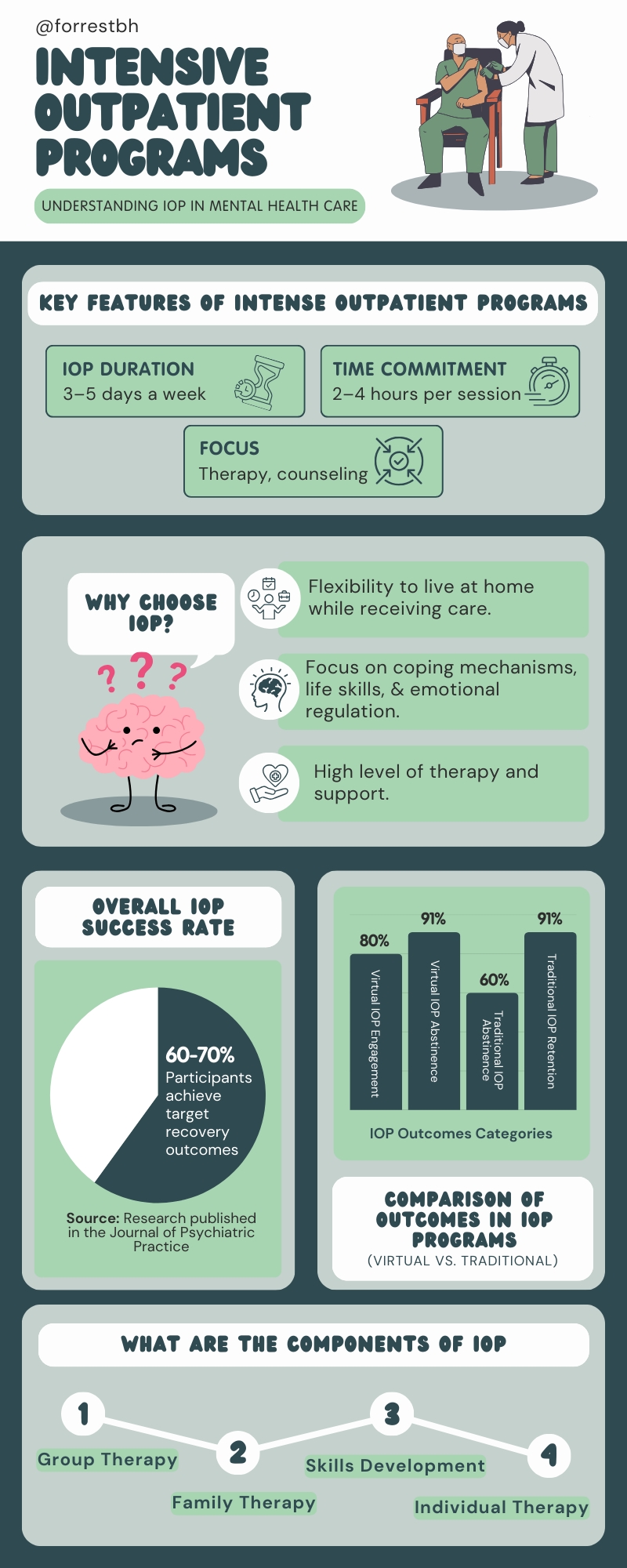
IOP programs seek to offer intensive care that does not necessarily involve staying overnight.
Sessions usually include:
- 9-12 hours of therapy per week.
- Group therapy and individual counseling.
- Exercises for coping and emotional regulation.
Most of the programs, such as those in Forrest Behavioral Health, have morning sessions, afternoon sessions, and evening sessions.
This makes the treatment flexible – the participants can balance work and, at the same time, receive adequate care.
Work and IOP: Tips to Find a Balance
There is no doubt that it is quite possible to juggle your career and an IOP program.
The following are some of the strategies:
Communication With Your Employer (When You Are Comfortable)
You are not required to reveal your diagnosis.
You can simply let them know you have therapy sessions. That’s all and then you’re free to arrange your sessions as they suit you and your wokr.
Additionally, mental health accommodations are provided by some employers in Massachusetts, particularly in offices in Boston or Cambridge.
Schedule Your Time When You Are Energetic
IOP sessions may be both mentally and emotionally draining.
You cannot work the entire time; therefore, you need to schedule the work according to your most productive time.
Use Breaks Strategically
Take little breaks at work to engage in practices that you had learnt in therapy, such as grounding exercises.
A five-minute mindfulness session can make you reset and alleviate stress.
Make Use of the Remote Work Opportunity
Hybrid or remote working is available in many companies across Massachusetts.
Therapy days at home could help to minimize the commute stress and balance the responsibilities.
Advantages of Working During Treatment
You may believe that a break at work will help you recover faster.
However, remaining on the job during IOP can be a good idea:
- Organizes and systematises.
- Have a social relationship as well as a support system at same time.
- Reduces financial stress.
- Promotes the sense of responsibility and development.
To illustrate, going to therapy and still working in a Boston office or Worcester company can help strengthen coping skills in a real-life circumstance.
Potential Obstacles
Coordinating treatment and work is not an easy task.
Common difficulties include:
- Exhaustion from attending several sessions.
- Therapy-induced emotional intensity and its impact on focus.
- Overlapping work schedules and counseling.
- Feeling guilty of spending time on self-care.
These are easy to identify in time and thus they can be avoided to eliminate burnout.
Realistic Enquiries Of The IOP Participants
One should be able to know that the treatment is a difficult process that needs routine.
Your improvement in IOP will be monitored weekly, not daily.
The benefits of therapy increase with attendance and practice, even when you keep on working.
A large number of participants believe that they acquire skills that make them improve their mental health as well as performance at work.
How Forrest Behavioral Health Cares About Working Adults
The programs in Forrest Behavioral Health are targeted at adults who have hectic schedules.
Therapists will collaborate with the participants in an attempt to design a plan that will accommodate their career, family, and day to day duties.
The sessions consist of group therapy, personal counselling, and practice in skills development.
This ensures that the participants are able to develop emotionally without the treatment impacting the professional duties.
When It Might Be Necessary to Adjust Work Commitments
Sometimes, work demands may conflict with treatment.
There is nothing wrong with rescheduling the program in the short run.
This may include:
- Cutting down on the number of hours or changing to flexible working days.
- Having short personal leave in intense weeks.
- Sharing duties wherever feasible.
Such temporary changes can make the advantages of the therapy as great as possible without losing the job.
Red Flags To Watch Out For
One can easily balance work and IOP, but excessive work may be a problem to recovery.
You will have to rethink it, in case you see:
- Several forms of fatigue or exhaustion.
- Reduced performance in the workplace.
- Depression or irritability.
- Missing therapy sessions.
It is important to identify such signs at early stages to make changes that help to save your mind.
Key Takeaways
Balancing between employment and enrollment in an IOP program can be managed through planning, communication, and support.
Massachusetts provides participants with resources and work supports to assist them in reaching their success.
Treatment and continuity of career can be combined to ensure recovery, routine, and decreased stress.
The aim of Forrest Behavioral Health is to help participants attain both mental and professional stability.
Make the First Steps in the Right Direction.
You would be wondering whether you would be able to do work and remain at IOP, and the answer to this would be yes, though with some guidance.
Contact Forrest Behavioral Health today to know how the IOP programs can accommodate your career and lifestyle.
Getting the initial step is the way to balance your work and personal life.