
Alcohol Use Disorder in Working Professionals: Confidential Evening IOP in Wilmington, MA
Kevin Baillie, who worked as creative director at entertainment effects company Eyeline Studios, alleges that drinking was “company-sponsored, leadership-modeled, and condoned,” citing a bar in the CEO’s office, a drink-pouring opportunity following a meeting with Netflix co-CEO, and alcohol-fueled company trips. Netflix has declined to comment in court, so these are all allegations. However, the fact that it reads like such an ordinary workplace story is the most surprising part. No one in the complaint seems to consider it a problem. They all seem to think it’s the culture.
Pop Culture has also helped that cultural normalization. Iron Man 2 allowed Tony Stark to destroy his own birthday party while intoxicated, filing it under “crisis,” rather than a warning, because movies and television are full of high-functioning drinking as a sign of success. In reality, it has a far less glamorous ending.
Approximately 9 percent of full-time American workers, or roughly 11 million people, meet the criteria for alcohol use disorder. They lose some 32 days per year in this category, versus 13 days for their non-disordered colleagues. You’re not the outlier in the workplace; you’re statistically close to average.
If you have a demanding job, drink more than you claim to do each week, and want to get out without damaging your career, this guide is for you.
How Alcohol Can Quietly Tax Your Working Life
Alcohol rarely wrecks a career in a dramatic way. Usually it’s a slow, leaking process, and by the time you hear the hiss, the tire is flat. Let’s look at the four main ways the damage manifests itself and how they interact with each other.
Foggier Thinking and Poorer Decisions
Alcohol decreases the activity of the prefrontal cortex, which is responsible for planning, decision-making, and impulse control.
Even after the blood alcohol level has returned to zero, studies on the aftereffects of alcohol consumption have shown decreased reaction time and poorer attention in individuals who engaged in heavy drinking.
This means your 10 a.m. call to a client may be handled by a version of you who is still half-sleepy.
Long-term heavy drinking can damage memory and executive functioning, which are essential elements to a professional’s daily routine.
Missed Days and Half-Present Days
Washington University analyzed more than 110,000 full-time workers in 2022 and found that those with severe alcohol use disorder lose significantly more workdays than their peers. Meanwhile, presenteeism means showing up at work while drunk and running on fumes.
The CDC attributes roughly 72 percent of the societal cost of excessive drinking to lost workplace productivity. Your body may be in the chair, but your output is not.
Safety Risks That Follow You to Work
Alcohol impairs coordination, reaction time, and hazard perception. Hence, your system stays impaired for longer than you expect.
Jobs such as those operating machinery, dealing with patients, making financial trades, and more all have increased risks of injury, error, and near misses around those who drink more heavily, whether on the clock or off.
Anxiety, Depression, and Wrecked Sleep
That nightcap can be the best aid to sleep known to man, except when it isn’t. Alcohol blocks deep sleep and REM sleep because your brain needs those to process and let go of stress.
Stress from poor sleep makes you more anxious and depressed, and you end up drinking more. This vicious circle is exhausting in itself and can show up as a co-occurring disorder.
Spotting the Signs at Work and at Home
No single behavior indicates anything, but look for clusters rather than outliers. Colleagues and families tend to notice patterns first, and they are often similar to these:
- Frequent Monday absences, tardiness, or long lunches that draw no questions
- Mood swings, irritability, or sudden withdrawal from events they used to enjoy, unless they include open bars
- Decreasing quality of work, oversights, and missed deadlines that were once routine
- Shaky hands, bloodshot eyes, or an overenthusiastic use of breath mints
At home, the same story unfolds behind hidden bottles, promises to cut back that quietly disappear, and a drink as the only release. If you find more than two of these signs in yourself or someone you love, consider this information rather than an accusation. Alcohol use disorder is a medical condition, and conditions respond to treatment.
Also Read: Bipolar Disorder Treatment in Reading, MA: Finding Stability Through Outpatient Care
Evening IOP in Wilmington: Treatment With A Night Shift
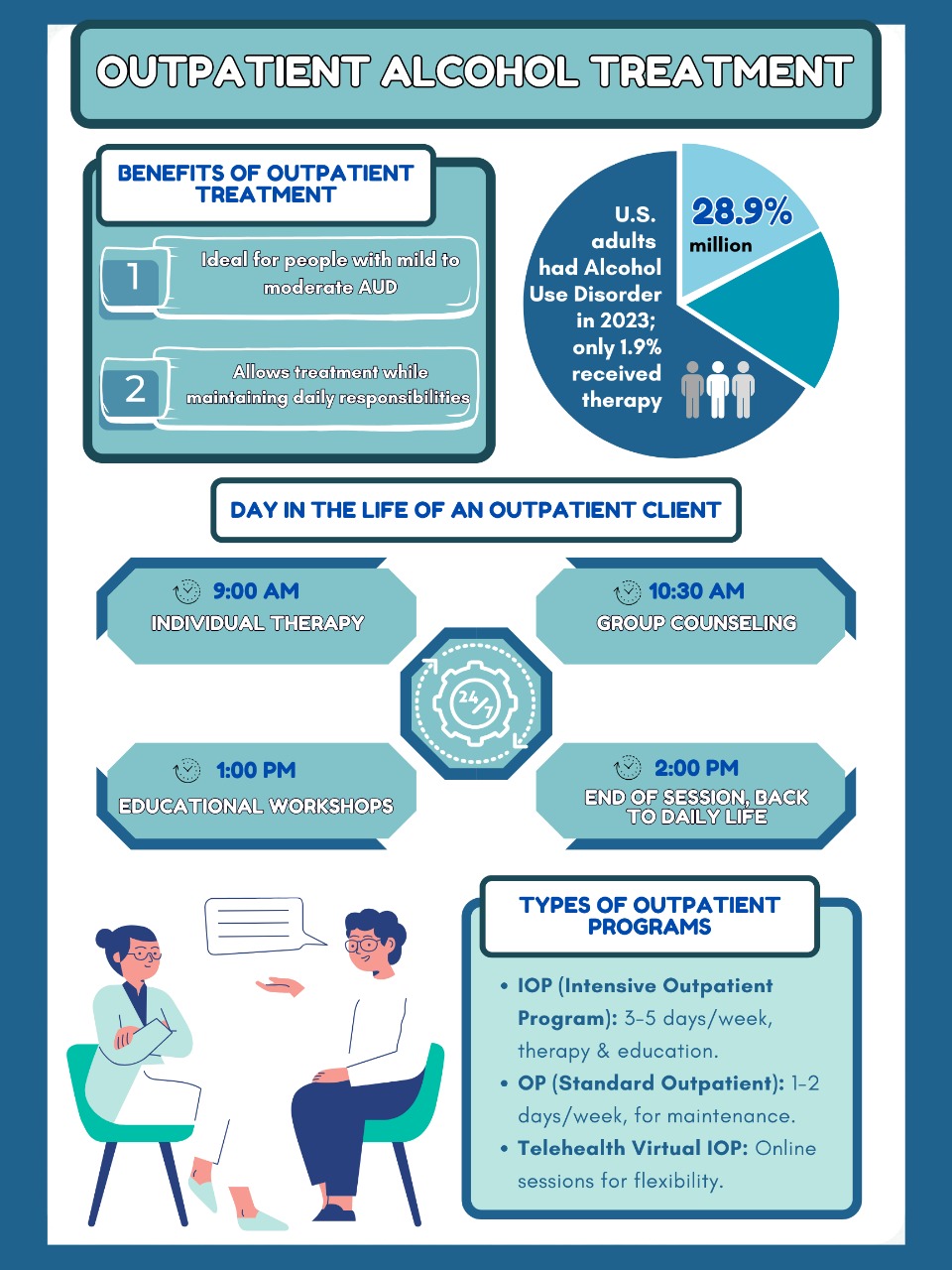
You may already be working a double shift, the office by day, drinking by night. Your third option is an evening intensive outpatient program. In a clinical setting, IOP falls somewhere between weekly psychotherapy and residential treatment. Hence, it is appropriate for those who do not require medical detox or full-time supervision.
The evidence for it is compelling. A review in Psychiatric Services found substantial reductions in alcohol and drug use across IOP trials. In one study on alcohol-dependent individuals, days sober at 18 months rose from 50 to 75 percent, comparable to inpatient and traditional outpatient programs. Severe dependence with a risk of dangerous withdrawal will always require medical stabilization first, and a good program will tell you so.
Forrest Behavioral Health’s Evening IOP is an option for working professionals, students, and parents who can’t spend a month away from their lives. The sessions are three to five evenings per week, approximately three hours apiece. You leave work, make the drive to Bedford (easy from Wilmington), and return home after the session. This all adds up to about 9 to 15 hours a week, which is the level of intensity that the American Society of Addiction Medicine expects for this level of treatment. Most people go through the program over a period of weeks to a few months. The schedule loosens as they stabilize. Your days are kept intact, and your treatment records are protected under federal privacy law.
Your clinicians will work through the exact schedule and start date with you during your intake. Moreover, the admissions team can check your insurance on that first call.
Final Words
You’ve been pulling the night shift for booze long enough, and it never paid you overtime. The good news is you can finally hand in your resignation and not turn in your career. Also, to the family members reading along and holding this page for a loved one, know that help is available after 5 pm, and it doesn’t require a leave of absence or an explanation to their boss.
Call (781) 570-5781 or visit forrestbh.com to speak with someone about the Evening IOP and check your insurance.