Cocaine Addiction Treatment in Massachusetts: What Actually Works (And What Most People Miss)
“Cocaine can feel like a quick boost—Until the crash starts running your life.”
In one clinical trial summarized in a major review, people who received voucher-based Contingency Management alongside behavioral therapy achieved longer average cocaine abstinence (11.7 weeks vs. 6.0 weeks at 24 weeks) than those without vouchers.
Because there are no medications proven safe and effective for cocaine use disorder, psychosocial treatment (structured therapy and support) remains the foundation of care.
In this blog, you’ll learn what cocaine treatment looks like, what to expect, and how to choose the right level of support for lasting recovery.
What Is Cocaine Addiction And Cocaine Use Disorder Treatment In Massachusetts?
Cocaine addiction is not about “weak will.” It is a pattern where cravings and brain reward pathways start running the show, even when you can clearly see the damage happening.
In simple terms, Cocaine Use Disorder Treatment in Massachusetts focuses on breaking that loop with structure, skills, and support that lasts longer than motivation alone. One strong review explains that psychosocial care – such as therapy and structured programs – remains the main treatment approach for cocaine use disorder.
Cocaine Use Disorder Explained In Simple Terms
- Using more than you planned.
- Strong cravings that feel urgent.
- Trying to stop and returning to use.
- Continuing even when it hurts work, health, money, or relationships.
Cocaine Vs. Crack Cocaine (Quick Clarifier)
- Cocaine is commonly a powder form.
- Crack cocaine is typically a smoked form.
- Both can lead to addiction and serious health risks.
Why Professional Support Helps
- Clear routine and accountability.
- Evidence-based therapy tools.
- A plan for cravings, triggers, and relapse prevention.
Signs You May Need Cocaine Addiction Treatment In Massachusetts
Many people wait because they think they have to “hit rock bottom.” However, early help often prevents bigger losses, and it can protect your health and relationships.
The most telling sign is repeated patterns. If cocaine keeps showing up in your life despite real consequences, Cocaine Addiction Treatment in Massachusetts can help you reset those patterns with practical tools and consistent support.
Behavioral Signs
- Using more often than planned.
- Hiding use or lying about it.
- Money problems or missing responsibilities.
- Conflict at home, work, or school.
Mental And Emotional Signs
- Anxiety, irritability, or agitation.
- Paranoia or feeling constantly “on guard.”
- Mood swings.
- Low mood or depression during the crash.
Physical Signs And Health Concerns
- Sleep loss and appetite changes.
- Nose and sinus irritation (if snorting).
- Chest pain or a racing heart (needs medical evaluation).
When To Seek Emergency Help
Get emergency help right away for chest pain, fainting, severe agitation, hallucinations, or suicidal thoughts.
Cocaine Withdrawal Treatment In Massachusetts: What To Expect
Cocaine withdrawal can feel like your body and mind suddenly run out of fuel. People often describe fatigue, low mood, cravings, and sleep disruption; that mix can feel overwhelming.
That is why Cocaine Withdrawal Treatment In Massachusetts is not just “waiting it out.” It is having a plan, support, and monitoring when symptoms or safety risks rise, especially if depression or suicidal thoughts show up during the crash.
Cocaine Withdrawal Symptoms (High-Level)
- Fatigue and low energy.
- Low mood, irritability, or anxiety.
- Sleep changes (too much or too little).
- Strong cravings.
- Restlessness or agitation.
Why Withdrawal Can Trigger Relapse
- The crash can feel unbearable without coping skills.
- Cravings can spike when mood drops or sleep breaks down.
Detox Planning (When It’s Needed And When It’s Not)
A research review describes intensive outpatient approaches as common psychosocial care, while also noting that medication options are still not proven safe and effective for cocaine use disorder. That is why treatment planning should focus on safety, mental health needs, and the right level of structure, not on searching for a “quick medication fix.”
Outpatient Cocaine Treatment In Massachusetts: Levels Of Care At Forrest Behavioral Health
Not everyone needs the same intensity of care, and that is normal. The goal is to match treatment to your current risk, symptoms, and daily responsibilities, and then adjust as you improve.
At Forrest Behavioral Health, our outpatient cocaine care is built around three levels: day treatment, intensive outpatient, and traditional outpatient, so you can get the support you need without putting your whole life on pause.
Day Treatment: Partial Hospitalization Program (PHP) In Massachusetts
- Partial Hospitalization Program (PHP) in Massachusetts (day treatment) is the most intensive outpatient level in our model, with programming five days per week and daily therapy and counseling.
- You return home at night, which helps you practice recovery skills in real life.
Cocaine IOP In Massachusetts (Intensive Outpatient Program)
- Cocaine IOP in Massachusetts typically runs three or five days per week in three-hour sessions, and it may be scheduled evenings or weekends to support work and family needs.
- The focus is: relapse prevention skills, accountability, and applying skills between sessions.
Traditional Outpatient Cocaine Treatment In Massachusetts
- Outpatient Cocaine Treatment in Massachusetts at the standard level is usually once or twice per week, often after the “heavy lifting” phase is complete.
- It supports long-term stability, coping skills, and relapse prevention.
Levels Of Care At A Glance
Level | Typical Weekly Time | Best Fit When | Main Goal | Step-Down Path |
Partial Hospitalization Program (PHP) In Massachusetts | 5 days/week | You need strong structure and daily support | Stabilize and build a recovery foundation | PHP → Cocaine IOP In Massachusetts |
Cocaine IOP In Massachusetts | 3 or 5 days/week (3-hour sessions) | You need structure while keeping life commitments | Skills + accountability | IOP → Outpatient |
Outpatient Cocaine Treatment In Massachusetts | 1–2 sessions/week | You are more stable and maintaining progress | Long-term support + relapse prevention | Outpatient → Aftercare |
Evidence-Based Therapies For Cocaine Rehab In Massachusetts
Good therapy is not vague advice. It is practical skill-building that helps you respond differently when cravings hit, stress rises, or old routines call you back.
A major review explains that psychosocial treatments like Cognitive Behavioral Therapy (CBT) and Contingency Management (CM) are standard approaches for cocaine use disorder, and it describes voucher-based Contingency Management (CM) as “perhaps the most effective” psychosocial option for promoting initial abstinence.
Cognitive Behavioral Therapy (CBT) For Cocaine Addiction
- Identify triggers and high-risk situations.
- Challenge “craving thoughts” before they become actions.
- Build coping plans you can use in real life.
Motivational Interviewing (MI) To Strengthen Readiness
- Helps you move from “I should stop” to “I am ready to change.”
- Builds confidence by connecting recovery to your values.
Contingency Management (CM) For Cocaine Use Disorder
- Uses tangible incentives to reinforce clean drug screens and consistent engagement.
- Voucher-based reinforcement is discussed as a strong approach in a major review of cocaine use disorder treatment.
Individual Therapy, Group Therapy, And Family Education
At Forrest Behavioral Health, we provide individual therapy, group sessions, family education, and relapse prevention planning as part of outpatient care. We also offer psychiatric care and medication management when needed for co-occurring symptoms.
Medications And Mental Health Support (Set Clear Expectations)
Many people ask, “Is there a medication that can make cocaine cravings stop?” It is a fair question, and you deserve an honest answer that helps you plan realistically.
A major review states that no medication has yet been proven safe and effective for treating cocaine use disorder, which is why psychosocial treatment is still the standard foundation. However, medication management can still matter for sleep, anxiety, depression, ADHD, or other mental health concerns that can destabilize recovery if left untreated.
Dual Diagnosis Cocaine Treatment In Massachusetts
Cocaine can worsen anxiety, panic, paranoia, and mood swings, and mental health symptoms can also drive cocaine use as a form of self-medication. So even when someone stops using, untreated mental health symptoms can pull them right back.
That is why Dual Diagnosis Cocaine Treatment in Massachusetts matters. Forrest Behavioral Health’s outpatient model includes psychiatric care and treatment planning that considers mental health alongside substance use, so your plan supports the whole person, not just one symptom.
Why Mental Health And Cocaine Use Often Interact
- Stress and trauma can increase cravings.
- Cocaine can intensify anxiety and sleep problems.
- The crash can worsen depression.
What Integrated Support Looks Like
- Screening and clear assessment.
- Coordinated plan: therapy + groups + psychiatric care when appropriate.
Relapse Prevention And Aftercare After Cocaine Addiction Treatment In Massachusetts
Recovery gets stronger when it becomes a routine, not a one-time event. That is why relapse prevention is not saved for “later.” It starts early and stays active through every level of care.
At Forrest Behavioral Health, our programs emphasize relapse prevention planning as part of treatment, and we adjust intensity over time so support stays aligned with your progress. This step-down approach helps many people move from day treatment to IOP to outpatient care without losing momentum.


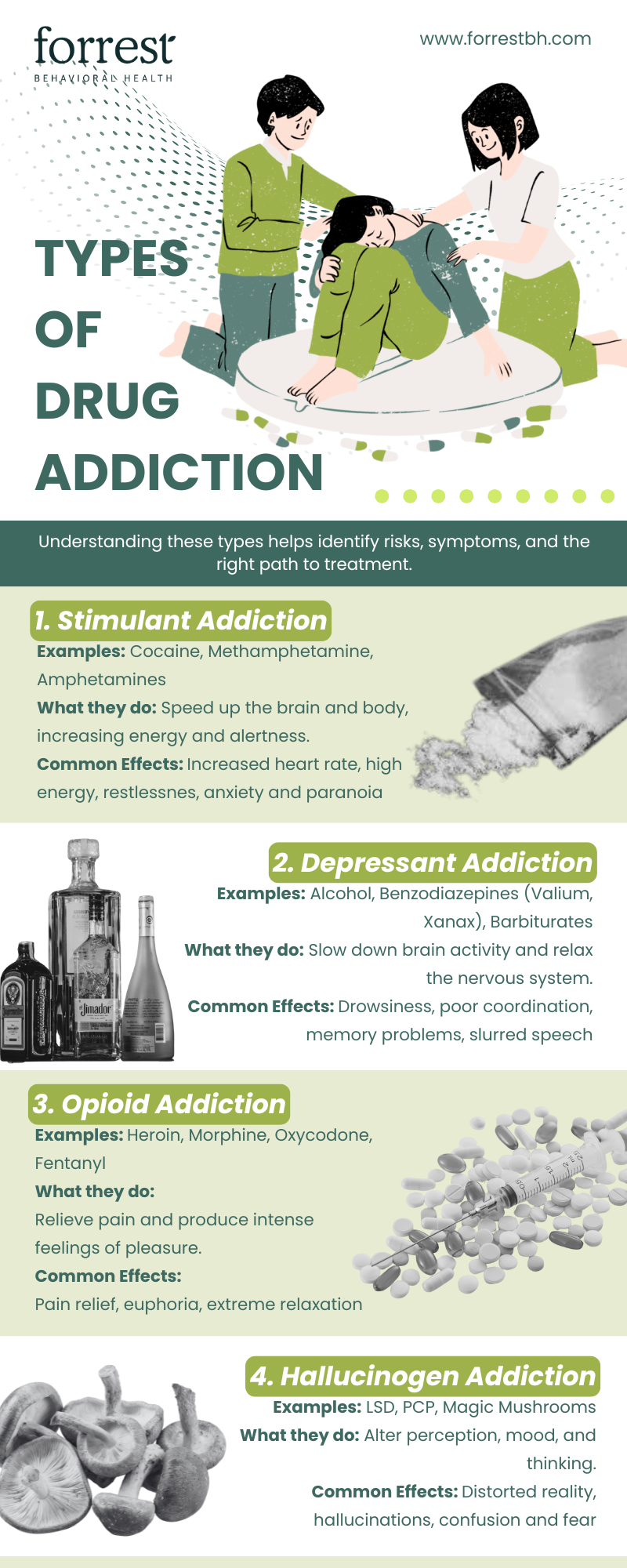
 Read our latest blog, “Fentanyl Addiction Treatment In Massachusetts”, for a clear breakdown of detox, evidence-based care, overdose safety planning, and the next steps toward recovery.