
Forrest Behavioral Health

Outpatient Addiction Treatment in Massachusetts

Outpatient Addiction Treatment in Massachusetts What Should You Expect from Outpatient Addiction Treatment in Massachusetts?

What Should You Expect from Outpatient Addiction Treatment in Massachusetts?

“Recovery Can Start With One Small, Steady Step—Taken Today.” 

If you are searching for Outpatient Addiction Treatment in Massachusetts, it usually means getting structured care while you live at home (or in sober living) and attend scheduled therapy sessions that fit real life. 

The goal is to build coping skills, strengthen daily routines, and create a plan you can practice between visits, with options that may include outpatient (OP) and intensive outpatient (IOP), depending on your needs. 

Treatment works best when it lasts long enough to create lasting change, and NIDA notes that significant reductions in drug use and related problems often occur during the first three months, with longer treatment linked to better outcomes. 

In this blog, you will learn how outpatient care works, who it helps most, and how to choose the right level of support with confidence.

What Is Outpatient Addiction Treatment In Massachusetts?

Outpatient treatment means you receive professional addiction care while living at home or in a sober living setting, so you can keep daily responsibilities while still getting steady clinical support. At Forrest Behavioral Health, we use outpatient care to help you build skills, strengthen stability, and follow a plan you can practice between sessions.

Outpatient care usually includes an assessment and a personalized plan, along with therapy, recovery education, and step-down planning, so support continues as you improve. When appropriate, ongoing monitoring and regular check-ins can help the treatment team adjust care early instead of waiting for a crisis.

Is Outpatient Addiction Treatment In Massachusetts Effective?

In some cases, outpatient care may be appropriate when the level of support matches the level of need, and a person remains engaged long enough to develop new habits. Research-based advice from NIDA emphasizes that staying in treatment for an adequate time matters, with many encountering a turning point around three months.

Outpatient typically works the best when you have stable housing, reliable transportation , and can attend appointments consistently. If readjustment risks are high – mental health or physical symptoms are still volatile, or relapse keeps occurring despite structure – a higher level of care might be safer first, and outpatient as step-down later.

What Are The Levels Of Outpatient Addiction Treatment In Massachusetts?

Outpatient care is not “one program.” Instead, it is a ladder of support, so you can step up when symptoms are intense and step down as stability improves. At Forrest Behavioral Health, that ladder commonly includes Outpatient (OP), Intensive Outpatient (IOP), and day-level structure such as PHP, depending on clinical needs and recommendations.

Below is a simple way to compare options. We use this same kind of thinking when helping people choose a starting point and build a step-down plan that supports long-term recovery.

Program Level

Typical Weekly Structure

Best Fit When

Main Goal

Outpatient Program (OP)

Often 1–2 sessions weekly

Step-down care or steady maintenance

Consistency and relapse prevention

Intensive Outpatient Program (IOP)

Often 3–5 days/week, about 3 hours/session

More structure needed while living at home

Skills + accountability + real-life practice

Day Treatment / PHP

Day-level structure (varies by provider)

Needs more support than IOP alone

Stabilization and structured daily support

Outpatient Program (OP) In Massachusetts: Who Is It For?

OP is often a good fit when you need ongoing support but do not need multiple treatment days each week. Our outpatient program is designed for people who have completed higher levels of care or who need a less intensive structure based on their stage of recovery.

In OP, the focus is on steady progress – through weekly therapy, coping skills, and relapse prevention – while you continue work, school, or family responsibilities. It can also be a helpful “return-to-care” option if stress rises and you want support before things worsen.

Questions To Ask Before You Start OP

  • How often will I attend, and for how long?
  • What does progress look like in the first 30–60 days?
  • What happens if I struggle or relapse?

Intensive Outpatient Program (IOP) In Massachusetts: Who Is It For?

IOP is designed for people who need more structure than standard outpatient care, while still living at home or in a supportive environment. Our IOP commonly runs three to five days per week, with sessions that are about three hours, which gives you frequent support without 24/7 supervision.

Week to week, IOP often includes group and individual therapy plus skill-building, so you can practice recovery tools in real life and bring challenges back to treatment quickly. The main difference from OP is time, structure, and clinical touchpoints, which can improve follow-through when symptoms are moderate.

Who Often Benefits From IOP

  • People with moderate symptoms who need a consistent structure.
  • People stepping down from a higher level of care.
  • People who need accountability while staying active in daily life.

Day Treatment (PHP) In Massachusetts: When Do You Need More Structure?

PHP is a day-level outpatient option for people who need a highly structured schedule, often as a bridge between inpatient care and IOP. It can be helpful when symptoms, relapse risk, or instability are too complex for IOP alone, yet 24-hour supervision is not required.

A PHP schedule may include multiple therapy groups, skill-building, recovery planning, and coordination of care so you can step down safely over time. It is also a common place to strengthen routines, build coping skills, and create a practical plan for evenings and weekends.

➡️ Read our latest blog, “Drug Rehab in Massachusetts,” to understand your care options and next steps—and if you need immediate, free, confidential support 24/7, SAMHSA’s National Helpline can help.

What Therapies Are Used In Outpatient Addiction Treatment In Massachusetts?

Outpatient care is most helpful when it includes evidence-based therapy and practical skill-building you can use the same day. At Forrest Behavioral Health, our outpatient services emphasize therapy, coping skills, and continued support that fits real life.

You may see a combination of individual sessions, group sessions, and family support, depending on your needs and goals. Treatment should feel structured and clear, not confusing, and your plan should be updated as progress and challenges change.

Individual Therapy: What Do You Work On?

  • Triggers and cravings
  • Stress and emotional regulation
  • Boundaries, routines, and goals
  • A plan for high-risk moments

Group Therapy: Why It Helps

  • Peer support and accountability
  • Shared skills practice
  • Consistent structure and routine

Family Counseling: When To Include Loved Ones

  • Communication and boundaries
  • Rebuilding trust
  • Creating a healthier home support system
Outpatient Addiction Treatment Forrest Behavioral Health

Dual Diagnosis: Can Outpatient Treat Addiction And Mental Health Together?

Yes, outpatient care can treat substance use and mental health together when a program offers integrated support. At Forrest Behavioral Health, we describe dual diagnosis care as treating co-occurring substance use and mental health needs in one plan, rather than splitting them apart.

Common co-occurring concerns include anxiety, depression, bipolar disorder, PTSD, and trauma-related symptoms. Integrated care can support long-term recovery because untreated mental health symptoms can increase cravings, weaken routines, and raise relapse risk.

Medication Support In Outpatient Addiction Treatment In Massachusetts (When Appropriate)

Medication support can be one tool in a broader plan, especially when it helps reduce cravings, stabilize symptoms, or improve participation in therapy. Treatment is strongest when medication is paired with counseling, monitoring, and skill-building, rather than used alone.

If medication is part of care, it is important to ask who prescribes, how follow-ups work, and how side effects are monitored. Ongoing monitoring and plan adjustments are also part of what NIDA highlights as important in effective treatment.

What To Ask About Medication Management

  • Who prescribes and how often are follow-ups scheduled?
  • How do you track benefits and side effects?
  • How do you coordinate medication care with therapy goals?

Aftercare And Relapse Prevention: What Happens After Outpatient?

Recovery is stronger if you prepare for the next stage before treatment is over. A solid aftercare plan enables you to handle your triggers, safeguard your schedule, and maintain support in challenging transitions.

Aftercare might include step-down plans, continued therapy, and recovery support, as well as a written relapse prevention plan with specific steps and resources. NIDA also highlights that the longer treatment path and continued monitoring progressively enhance outcomes.

Here’s What A Good Aftercare Program Will Typically Entail

  • A step-down plan (PHP ➔ IOP ➔ OP as clinically indicated)
  • Ongoing therapy and skills practice
  • A written relapse prevention plan
  • Supportive community connections

Cost And Insurance For Outpatient Addiction Treatment In Massachusetts

Price varies according to the level of care, how many sessions per week, and insurance benefits. As coverage can be sporadic, it’s a good idea to check benefits early and ask for a clear expected schedule.

One realistic approach to minimize surprise bills is asking for an estimate of copays, deductibles , and any authorization needed before you start the first week. If cost is a concern, inquire what options are available to keep cost from delaying care.

Pros And Cons Of Outpatient Addiction Treatment In Massachusetts 

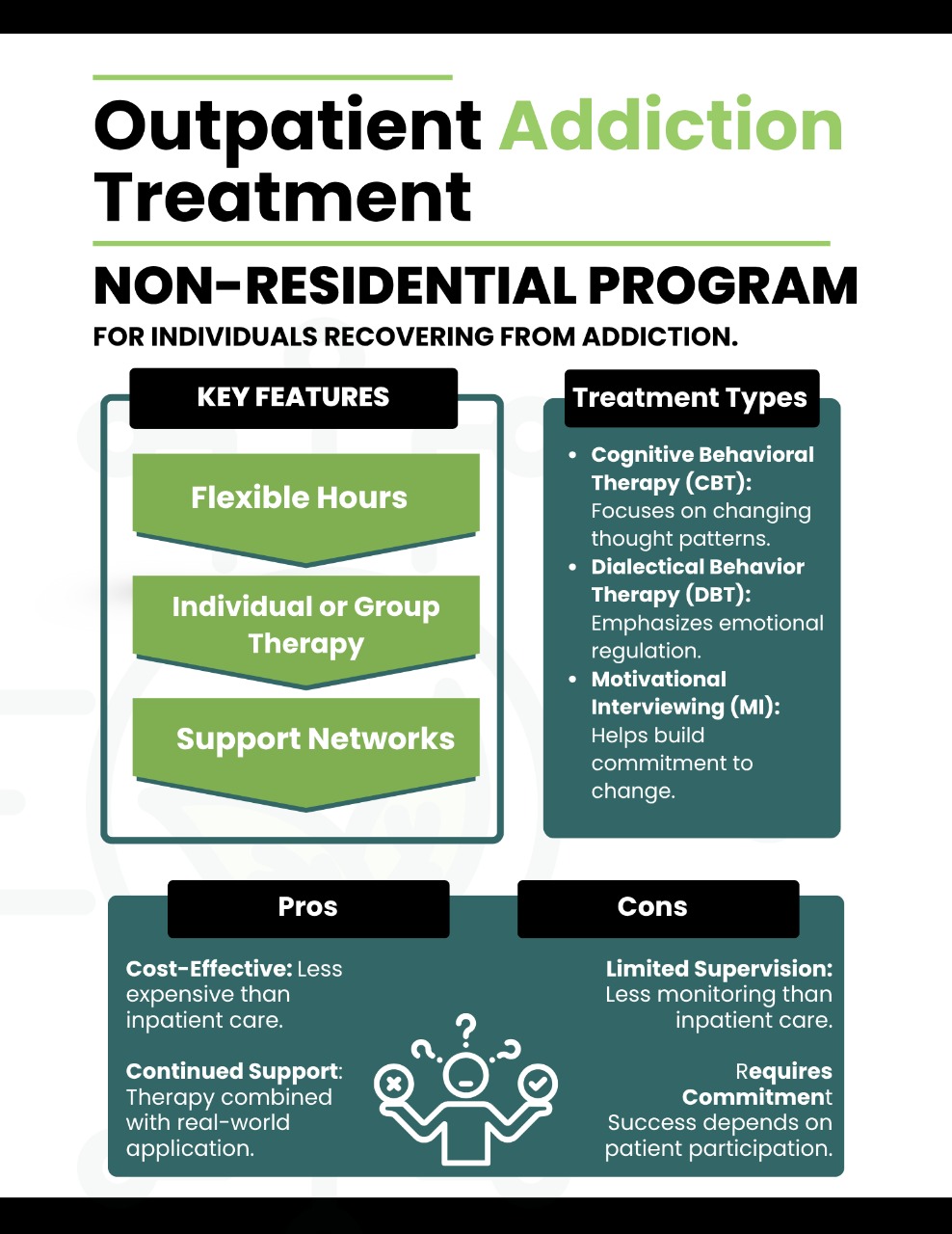
Outpatient care offers flexibility, privacy, and real-world practice because you keep living your life while building new skills. It is also often more affordable than inpatient care, and it can provide long-term support through step-down planning.

However, outpatient can be harder if your home setting has frequent triggers or limited support, because supervision is not 24/7. You can reduce risk by choosing the right intensity (IOP or PHP when needed), attending consistently, and using monitoring and accountability tools.

Massachusetts Physicians’ Recovery Through Outpatient Addiction Treatment

A Massachusetts physician struggled with narcotics and barbiturates for 15 years, facing mood swings, anger, and job loss. Physician Health Services (PHS) arranged outpatient addiction treatment and a three-year monitoring contract with random drug screening and workplace oversight. 

PHS taught him addiction is a disease, not a willpower failure, helping him accept help. He attended support meetings, connected with other recovering professionals, and rebuilt his life. Today, he has years of sobriety, better relationships, and renewed respect at work. “PHS saves lives. I’m living proof,” he says.

Choosing Outpatient Addiction Treatment In Massachusetts: A Practical Checklist

Choosing care is easier when you compare programs with the same set of questions. The best program is not the one with the most promises; it is the one that matches your needs and supports progress over time.

Use this checklist when you call programs, and write down the answers so you can compare clearly. If a program cannot answer these questions, that is useful information too.

  1. Which levels do you offer (OP, IOP, PHP), and how do you step people down?
  2. Do you treat dual diagnosis and provide mental health support?
  3. What therapies are included (individual, group, family, trauma-informed)?
  4. Do you offer medication management and coordinated care?
  5. How do you measure progress and adjust the plan over time?
  6. What does aftercare look like after discharge?

How To Start Outpatient Addiction Treatment In Massachusetts

Outpatient care can help you recover without leaving your whole life behind. It gives structure and support while you live at home. 

NIDA notes that many people improve in the first three months, and longer care can help outcomes. Are you trying to cut back, but keep slipping? 

Do you need more support than weekly sessions alone? 

Our outpatient and intensive outpatient options can match your needs and schedule. You will learn coping tools, strengthen routines, and build a relapse-prevention plan for real situations. 

If you are ready, reach out to Forrest Behavioral Health today and ask for an assessment, verify insurance, and choose your next step. 

Why wait when support is available? We can explain OP, IOP, and day treatment options.

Forrest Behavioral Health

Are you ready to overcome your addiction or learn more about our treatment programs? We are here for you.

Related Articles

addiction treatment Bedford MA Rehab Near Bedford, MA Addiction Treatment in Bedford, MA: What Happens After You Leave?
Addiction Recovery
Forrest BH

Rehab Near Bedford, MA

What happens in the brain after addiction treatment that keeps pulling people back? The science behind relapse may change how you see recovery.

Read More »
drug rehab Boston, mental health Boston MA Rehab Near Boston, MA A Private Escape: Rehab Near Boston, MA
Drug Addiction Rehab
Forrest BH

Rehab Near Boston, MA

High-performing on the outside, struggling underneath? See how rehab near Boston, MA is designed for professionals like you.

Read More »
leaf

Need treatment?

Get a call to start your recovery journey.

"*" indicates required fields

Other Posts

Verify Approval for www.forrestbh.com

Are you ready to overcome addiction? We encourage you to request a phone call from a recovery specialist.

"*" indicates required fields