

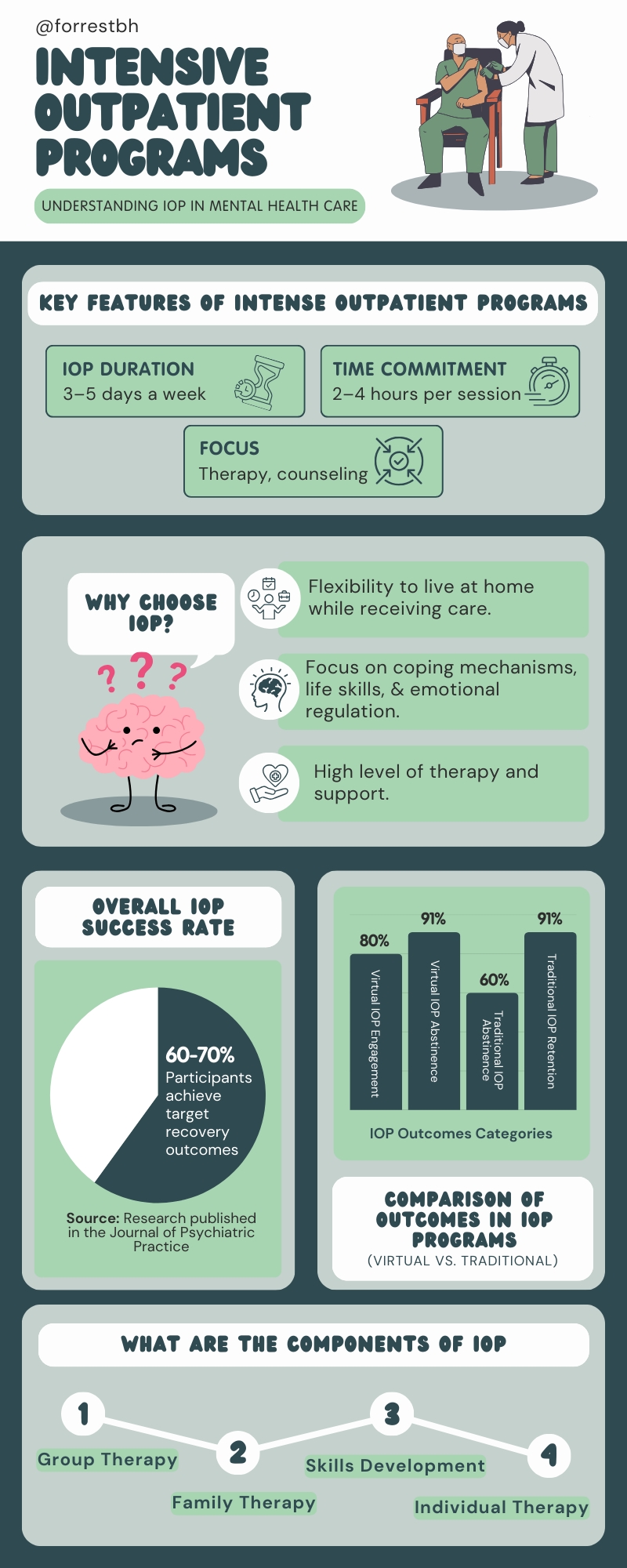
Key Factors That Determine How Long You Need To Stay In An IOP Program
There is no magic formula that fits everyone. Some people step into IOP and need 6 weeks. Others need 10 or 12 weeks. The difference often comes down to how intense your symptoms are, how much support you have at home, and how quickly you apply what you learn.
Below is a simple table that shows how common factors can change your IOP timespan.
Clinical Factor | Impact On IOP Timespan | Estimated Weeks |
Severity Of Condition | Higher severity usually extends the stay | 8–12 weeks |
Co‑Occurring Disorders / Dual Diagnosis | Two conditions need more time to stabilize | 10–14 weeks |
Progress Rate | Fast progress may shorten the stay | 6–8 weeks |
Support System At Home | Strong support may reduce need for extra weeks | 6–10 weeks |
Previous Relapses | More relapses often mean a longer stay | 10–12+ weeks |
You can think of this length of IOP program as a flexible backbone. The structure is there, but your team can adjust as you grow.
Illinois-Specific Regulations For Intensive Outpatient Programs
Illinois has clear rules for how IOP centers must operate. The Illinois Department of Human Services (IDHS) sets guidelines for mental health and substance use facilities. These rules cover staff training, safety, treatment plans, and how long care should last.
Insurance also plays a big role. Most IOP programs in Illinois require pre‑authorization from your insurance. After that, your stay in an IOP program is reviewed about every 30 days. If your team can show that your symptoms still affect your life, insurance will usually keep covering you. Medicaid and private plans both follow this pattern.
What This Means For You
- Illinois laws make sure your IOP program is safe and professional.
- Your treatment plan is written in clear, measurable steps.
- Your length of IOP program may change if your needs change.
 Learn what a real week inside an intensive outpatient program looks like in Illinois by reading our latest blog: “Inside an Intensive Outpatient Program: What a Full Week Looks Like in Illinois.”
Case Study: Tailoring The Length Of IOP Program For Sustainable Recovery
A 35‑year‑old nurse in Illinois was stuck with weekly therapy for months as her drinking and anxiety interfered with shifts. Her team shifted her to a 10‑week IOP with nine hours of group and individual work each week.
Research shows that most IOP programs run 6 to 12 weeks, often with similar hours and structure. After treatment, her clinician noted a 70% drop in drinking days and healthier sleep and mood.
A review in the SAMHSA TIP‑47 literature on intensive outpatient care highlights that flexible, individualized timelines like this often improve retention and reduce relapse.
Signs It Is Time To Step Down Or Complete Your IOP Program
You do not need a big announcement to know you are ready. Often, it comes from small, steady changes. You may notice that you are using your coping skills more often, your moods feel more stable, and your relationships are improving.
Here are clear signs it may be time to step down or end your IOP program:
- You Use Healthy Coping Without Thinking
You reach for a walk, call a friend, or journal instead of using substances or old habits. - You Meet Your Treatment Goals
Your clinical team checks off the goals you set at the start. - Your Home Life Feels Safer
You have a supportive network, a stable routine, and fewer high‑risk triggers. - You Have A Relapse Prevention Plan
You know what to do if cravings or setbacks return.
If your team agrees with these signs, they will help you step down to outpatient care or another level that fits your life.
FAQs
Can You Work While Participating In An IOP Program?
Yes. Most IOP programs in Illinois offer morning or evening sessions. You can keep your job, pay your bills, and attend therapy without taking weeks off.
What Is The Difference Between PHP And IOP Timespans?
PHP (Partial Hospitalization) is more intense. You may be at the center for 5 to 6 hours a day for 2 to 4 weeks. IOP is less intense but longer, usually 6 to 12 weeks with fewer daily hours.
Will Insurance Cover A Longer Stay In An IOP Program?
Insurance will usually cover a longer IOP timespan if your team can show it is medically necessary. They may ask for progress updates every 30 days.
How Forrest Behavioral Health Personalizes Your Recovery Timeline
There is no one‑size‑fits‑all answer to How long should you stay in an IOP program. Some people need 6 weeks. Others need 10 or 12. What matters is that your IOP program fits you, not the other way around.
At Forrest Behavioral Health, we treat every client as a person, not a number. We start with a 6‑ to 12‑week IOP as a guideline. Then we adjust as you grow, heal, and change. If you need a longer IOP timespan, we document your progress and work with your insurance to keep you covered.
If you are unsure about how long you should stay in an IOP program, reach out to Forrest Behavioral Health for a confidential assessment. Someone on our team can walk you through your options, timeline, and next steps.
You do not have to walk this path alone.