

Forrest Behavioral Health

Therapy vs Intensive Outpatient Program (IOP)

therapy vs IOP Therapy vs Intensive Outpatient Program (IOP) Therapy vs Intensive Outpatient Program (IOP): Which is Right for You?

Therapy vs Intensive Outpatient Program (IOP): Which is Right for You?

“The right amount of support can change what happens next.”

Therapy vs IOP comes down to how much care you need each week. Regular therapy may fit when symptoms stay manageable between visits. An intensive outpatient program may fit when cravings or emotional distress require frequent clinical support. In 2024, 61.5 million adults experienced a mental illness. Yet only 52.1% received treatment. 

At Forrest Behavioral Health, we know waiting can turn a difficult week into a deeper crisis. This guide compares schedules, services, safety needs, and treatment goals. You’ll also learn how an assessment can identify the right care level.

What Therapy vs IOP Actually Means

Weekly therapy usually involves one scheduled session and suits people who remain stable between visits. An IOP provides several sessions each week, often combining individual counseling, groups, education, and medication support. IOP may fit when symptoms require more structure without overnight care.

Therapy describes a clinical service. IOP describes a care level that combines several services on a more frequent schedule.

How Standard Outpatient Therapy Works

Standard outpatient therapy often happens one-on-one, though families and groups may participate. Sessions can address emotions, behaviors, relationships, or trauma. Common methods include cognitive behavioral therapy and dialectical behavior therapy. Weekly care often suits people who can function safely and use coping skills between appointments.

NIMH describes psychotherapy as treatment that helps people identify and change troubling thoughts, emotions, and behaviors. Learn more about how psychotherapy works.

How an Intensive Outpatient Program Works

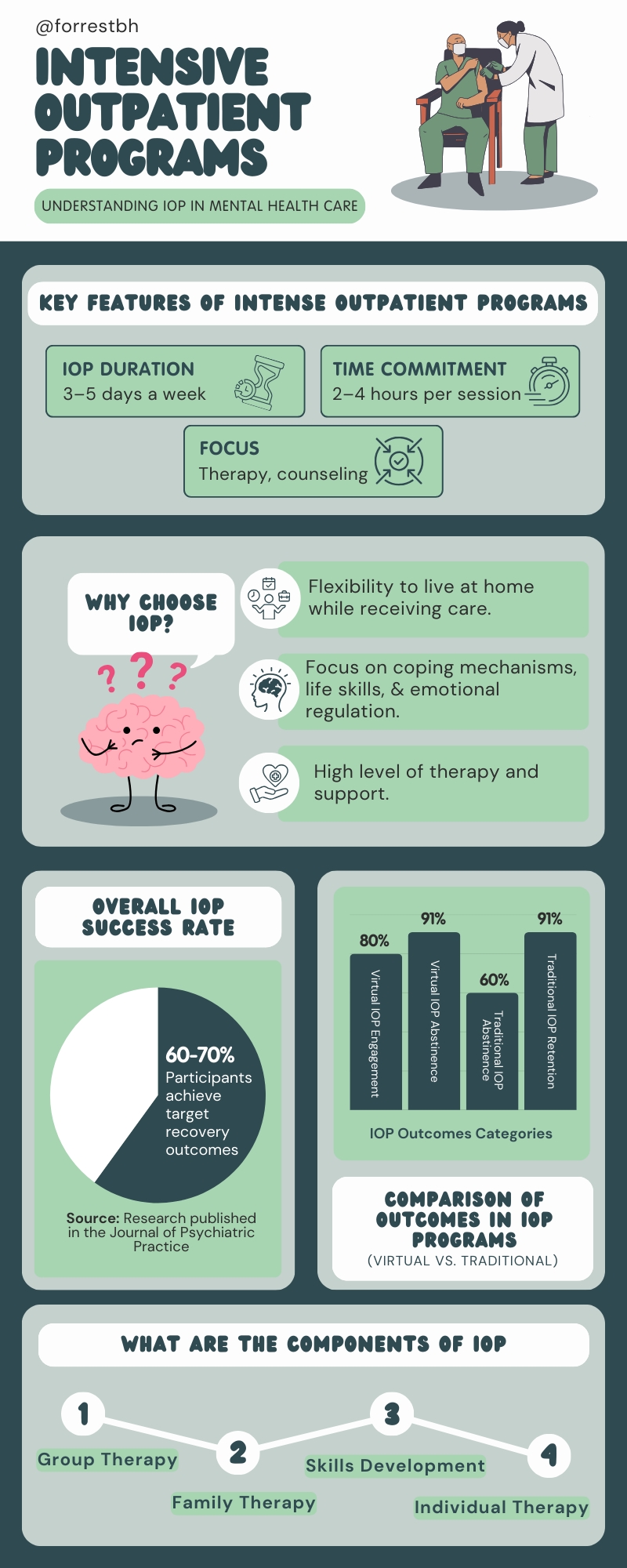
An intensive outpatient program includes several treatment periods each week while clients live at home. Services may include counseling, groups, education, care coordination, and medication support. A mental health IOP may address depression or anxiety. An addiction IOP may focus on cravings, relapse, and recovery skills.

Intensive outpatient care offers more contact than weekly therapy, though less supervision than inpatient treatment. Medicare places intensive outpatient mental health services between traditional weekly counseling and inpatient or partial hospitalization care.

➡️ Also Read: SMART Recovery vs AA: Which Program Is Right for You?

Therapy vs IOP Differences at a Glance

Neither option is automatically better. The right match depends on symptoms, safety, home support, and daily functioning.

Feature

Weekly Therapy

Intensive Outpatient Program

Schedule

Usually one or two visits

Several treatment periods weekly

Services

Mainly therapy

Therapy, groups, education, coordination

Structure

Lower

Higher

Common Use

Stable symptoms

Symptoms needing frequent support

Think of IOP vs therapy like choosing between a weekly lesson and a short course. Both teach skills. One offers more practice each week.

Which is Right for You: Therapy or IOP?

A clinical assessment should guide placement. An online quiz cannot measure withdrawal risk, safety, housing, or support at home.

Weekly Therapy May Fit Stable Symptoms

When comparing weekly therapy vs IOP, regular appointments may fit when:
  • You remain safe between sessions.
  • You manage work, school, or family duties.
  • Symptoms don’t cause severe daily disruption.
  • You use coping skills outside appointments.
  • You have reliable housing and support.

Traditional therapy vs IOP isn’t a choice between “serious” and “minor” care. Weekly sessions can still address painful experiences, trauma, depression, or relationship problems.

However, because you are only in the clinician’s office for one hour a week, the success of standard therapy heavily relies on building functional, real-world grounding habits in your own time. 

Engaging in high-focus, high-gratification household tasks is an excellent way to practice single-point mindfulness. Exploring the neurological benefits of structured physical chores – as broken down in the ultimate guide to therapeutic cleaning: why pressure washing is great for mind and body – demonstrates how active, everyday routines can naturally lower stress hormones and help you maintain emotional stability between sessions.

IOP intensive outpatient program forrest behavioral health forrestbh

IOP May Fit When Weekly Therapy Isn’t Enough

An IOP treatment program may help when symptoms return sharply between visits. It may also fit when relapse or distress keeps disrupting daily life.

Possible signs include:

  • Repeated relapse or strong cravings
  • Trouble maintaining basic routines
  • Recent discharge from higher care
  • Need for repeated skills practice
  • Safe housing outside program hours

The IOP level of care may serve as a step up from counseling. It may also provide a step-down after residential, inpatient, or day treatment.

When a Higher Care Level May Be Safer

Neither option offers round-the-clock supervision. Severe psychosis, dangerous withdrawal, medical instability, or immediate risk of harm may require emergency or inpatient care.

Call 911 during immediate danger. Call or text 988 during a mental health or substance-related crisis.

What Happens During an IOP Treatment Program?

Structured outpatient treatment varies by provider. A typical week may include:

  • Individual counseling
  • Group therapy in IOP
  • Family sessions
  • CBT, DBT, or motivational methods
  • Relapse prevention
  • Medication visits when offered

Forrest Behavioral Health offers behavioral health treatment programs with different support levels. Its Evening IOP Program in Massachusetts may help clients balance care with work, school, or family duties.

Case Study: Real-World Results From a Two-Week IOP

2024 study examined a two-week Unified Protocol program for military service members and veterans. It used concentrated cognitive behavioral treatment for depression, anxiety, and trauma-related conditions.

Researchers followed 117 people. Retention reached 94%. Depression and trauma-related symptoms decreased, though emotion regulation scores showed no measurable change.

The study shows how therapy can be delivered intensively. Still, it lacked a weekly therapy comparison group. Its military sample limits how widely the results apply. The outcomes shouldn’t be treated as expected results for every IOP participant.

Can Individual Therapy and IOP Work Together?

Individual therapy vs IOP is often a false choice. Individual counseling may form part of IOP, while weekly sessions may continue after discharge.

Private sessions, groups, family support, medication visits, and step-down planning can work together. For example, someone may discuss trauma privately during individual counseling. Later, a group session may help them practice emotional regulation skills.

Recovery resembles a staircase, not one doorway. Your care level can change as symptoms and outside support change.

FAQs

Is IOP the Same as Therapy?

No. Therapy is one clinical service. IOP is a care level that often includes therapy, groups, education, medication support, and care coordination.

How Do I Know if I Need IOP?

IOP may fit when weekly appointments no longer provide enough support. A clinician should review symptoms, safety, substance use, functioning, medical concerns, and home stability.

Can I Work While Attending an IOP?

Many people continue working during IOP. Schedules differ, so ask about daytime or evening sessions before admission. Forrest’s evening program was created for people balancing treatment with everyday duties.

Does Insurance Cover IOP Treatment?

Many plans cover IOP when clinical criteria are met. Networks, deductibles, covered services, and prior authorization rules differ. You can verify your insurance benefits before admission.

Choose the Support That Matches Your Needs

Choosing between therapy and IOP should reflect your symptoms, safety, support system, and daily functioning. Weekly therapy may provide enough room for steady progress. IOP offers more structure when problems keep returning between appointments. Are you missing work, relapsing, or struggling to stay safe? Those signs deserve prompt attention. 

Forrest Behavioral Health provides personalized mental health and addiction care in Bedford, Massachusetts. Call (781) 570-5781 to discuss therapy vs IOP, review available programs, and check insurance coverage. You don’t need every answer before calling. One honest conversation can help you choose a safer, clearer path forward today with confidence.

Forrest Behavioral Health

Are you ready to overcome your addiction or learn more about our treatment programs? We are here for you.

Related Articles

leaf

Need treatment?

Get a call to start your recovery journey.

"*" indicates required fields

Other Posts

Verify Approval for www.forrestbh.com

Are you ready to overcome addiction? We encourage you to request a phone call from a recovery specialist.

"*" indicates required fields