
National Depression Screening Month: When to Get Assessed in Burlington, MA
“Depression and substance abuse are often overlooked in primary care visits.” Barbra Rabson, president of Massachusetts Health Quality Partners, told The Boston Globe that in 2016. Overlooked. In the very place most people go first.
The numbers still ask for attention. CDC data show 13.1% of people 12 and older had depression in a given two-week window between August 2021 and August 2023. Of those, 87.9% said it made work, home, or social life at least somewhat difficult. Yet only 39.3% had seen a mental health professional for counseling in the past year.
So when should you get a depression assessment in Burlington? Get one when low mood or lost interest lasts two weeks or more. Get one sooner if it starts to get in the way of work, home, or relationships. October is National Depression Screening Month. That makes the timing good. Here’s how the process works.
What Is the Difference Between a Screening and an Assessment?
People use the two words as if they mean the same thing. They don’t. One is a quick check, while the other is a clinical conversation that can lead to a diagnosis.
What Does a Screening Do?
A screening is a short questionnaire. The most common one, the PHQ-9, asks how often nine symptoms showed up over the past two weeks. Each answer scores 0 to 3. Totals run from 0 to 27. A score of 10 or higher flags possible depression. A large meta-analysis found that cutoff caught about 88% of cases and correctly cleared about 85% of people without depression. Screens point. They don’t diagnose.
What Does an Assessment Add?
An assessment is a conversation with a licensed clinician. They ask about your history, sleep, appetite, stress, substance use, and safety. They also look for other explanations for how you feel. Then they tell you whether you meet the criteria for depression and what level of care fits. The U.S. Preventive Services Task Force gives adult depression screening a Grade B recommendation. That recommendation is only useful when a positive screen leads to a real evaluation.
When Should I Get Assessed?
Don’t wait until you feel bad enough to deserve help. That bar doesn’t exist. These signs mean it’s time to book a visit.
- Two weeks or longer. Low mood, emptiness or lost interest that doesn’t lift.
- Daily life suffers. Work slips, bills pile up or relationships strain.
- Your body changes. Sleep, appetite or energy shifts sharply.
- A high screening score. A PHQ-9 result of 10 or more deserves a professional’s eyes.
If you have thoughts of suicide, call or text 988 right away.
What Do PHQ-9 Scores Mean?
Your total lands in one of five bands. Treat them as a guide for your next step rather than a verdict. Only a clinician can read your score alongside the rest of your life.
- 0 to 4: minimal symptoms.
- 5 to 9: mild symptoms.
- 10 to 14: moderate symptoms. Professional support is a smart move.
- 15 to 19: moderately severe symptoms. Seek help promptly.
- 20 to 27: severe symptoms. Seek immediate, intensive care.
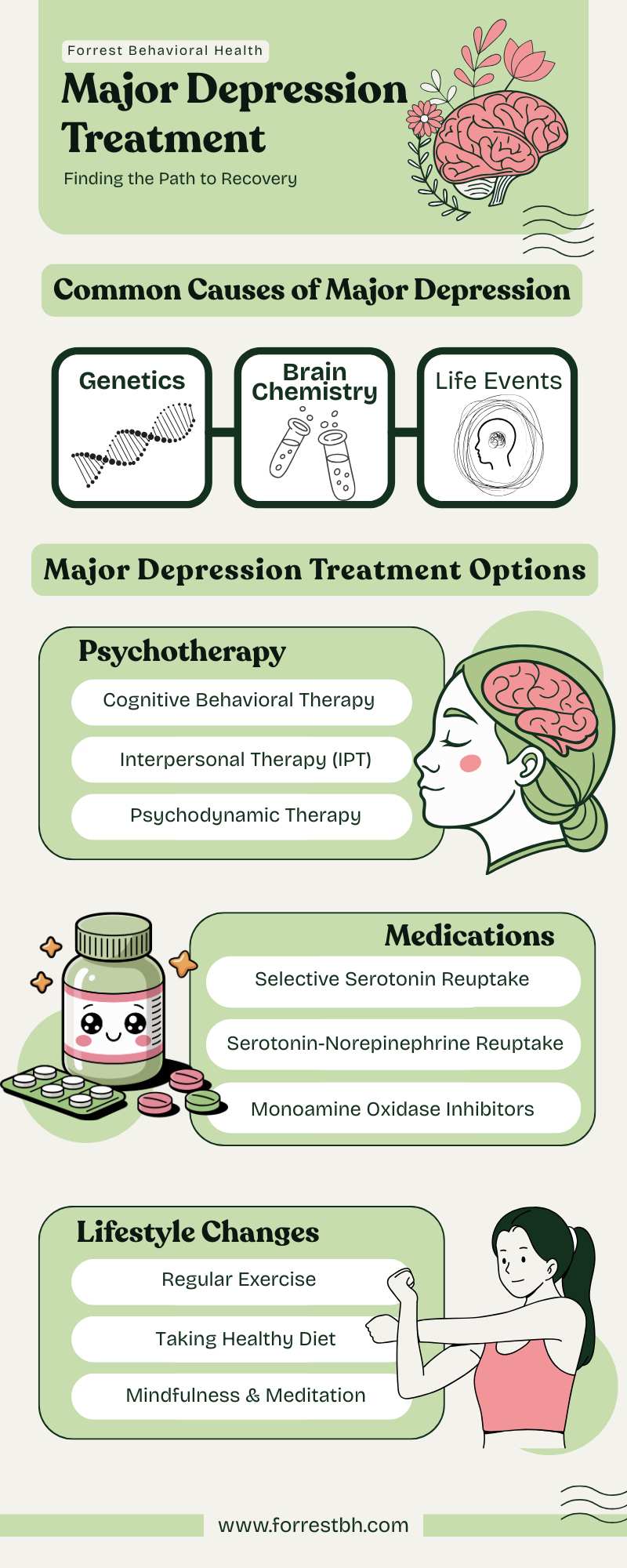
You can try our depression self-assessment in a few minutes. It doesn’t replace a visit.
What Happens at a Depression Assessment?
Many people dread this part because they picture an interrogation. It’s closer to a long, careful chat. Two things tend to matter most.
What Will the Clinician Ask?
Expect questions about how long symptoms have lasted and how they affect your days. You’ll likely talk about sleep, relationships, past treatment, and family history. Questions about alcohol or drug use are routine and not a judgment. Be as honest as you can. The more accurate the picture, the better the plan that comes out of it. Nothing you say is too small or too strange to mention.
What Happens Next?
The result is a plan, not a label. Options include cognitive behavioral therapy, a medication review or both. If weekly sessions won’t be enough, an intensive outpatient program adds structure. A mild result may lead to simple monitoring. Nobody pushes you into more care than you need. You also decide the pace. You can ask your clinician to explain any step before you agree to it.
A Real-World Case: What Massachusetts Patients Reported
Here’s a Massachusetts snapshot.
Massachusetts Health Quality Partners asked adult patients whether their primary care provider had talked with them about depression, substance use, and other mental health topics.
Doctors averaged just 56 out of 100 in 2015, up from 53 the year before. For comparison, doctors reported screening 96% of diabetics for blood sugar problems.
The data are a decade old, and they track patient reports rather than clinical outcomes.
Still, the gap tells you something useful. If your doctor hasn’t brought up your mood, you can. Ask for the screening yourself. Practices can change quickly once they make it routine.
The same survey showed Chelsea HealthCare Center climbing from 48 to 62 in a single year. Shrewsbury Internal Medicine moving from 45 to 62.
Where Can I Get Screened Near Burlington?
Burlington residents have a short drive to help. Forrest Behavioral Health sits at 4 Preston Court in Bedford, right next door. Our guide to same-day mental health assessments in Billerica shows how a fast first step can look. Start with any of these. None of them commits you to treatment. Each one gives you more information than you have today.
- Call (781) 570-5781 to talk with a specialist about an assessment.
- Take the depression self-assessment and bring your score along.
- Read about our depression treatment options.
- Verify your insurance before you book.
Two Weeks Is Long Enough: Book Your Screening Today
Two weeks of feeling flat is already long enough to ask for help. October puts depression screening in the spotlight. Use the moment. A short questionnaire can start a conversation that changes the next few months. Screening costs you a few minutes. Waiting can cost you a season.
Ready? Call Forrest Behavioral Health at (781) 570-5781 or verify your insurance. Dark evenings making things harder?
Read our guide to seasonal affective disorder treatment in Woburn. If you’re in crisis, call or text 988.