

Forrest Behavioral Health

Virtual IOP vs In-Person IOP

Kw: virtual IOP vs in person IOP Virtual IOP vs In-Person IOP Virtual IOP vs In-Person IOP: Which is Right for You?

Virtual IOP vs In-Person IOP: Which is Right for You?

“Good care should fit your life without asking recovery to wait.”

Virtual IOP vs in person IOP is about choosing where you can participate safely and consistently. Virtual care may help when travel, childcare, disability, or work limits attendance. In-person treatment may feel stronger when home is distracting or face-to-face contact matters. In 2022, 30.1% of adults used telemedicine during the previous year

At Forrest Behavioral Health, we compare access with clinical fit. This guide covers privacy, safety, group support, research, and insurance.

What Virtual IOP vs In-Person IOP Means

Virtual IOP provides scheduled care through secure video, while in-person IOP takes place at a treatment center. Virtual care may fit people with dependable technology, privacy, and home stability. In-person care may fit those needing stronger routine, direct contact, or fewer distractions.

Both formats provide intensive outpatient care. The main difference is where you attend and communicate.

How a Virtual Intensive Outpatient Program Works

A virtual intensive outpatient program uses live video on a fixed schedule. It isn’t self-paced content. Services may include counseling, virtual therapy groups, education, and care coordination.

To attend IOP from home, you need privacy, stable internet, and a suitable device. HHS describes synchronous telehealth as live provider-patient contact and advises privacy and emergency planning.

You may also need to confirm your physical location before sessions. That detail helps staff respond correctly if a crisis occurs during remote care.

How an In-Person Intensive Outpatient Program Works

An in-person intensive outpatient program requires several weekly visits. Care may include individual, group, and family counseling. Clients return home afterward.

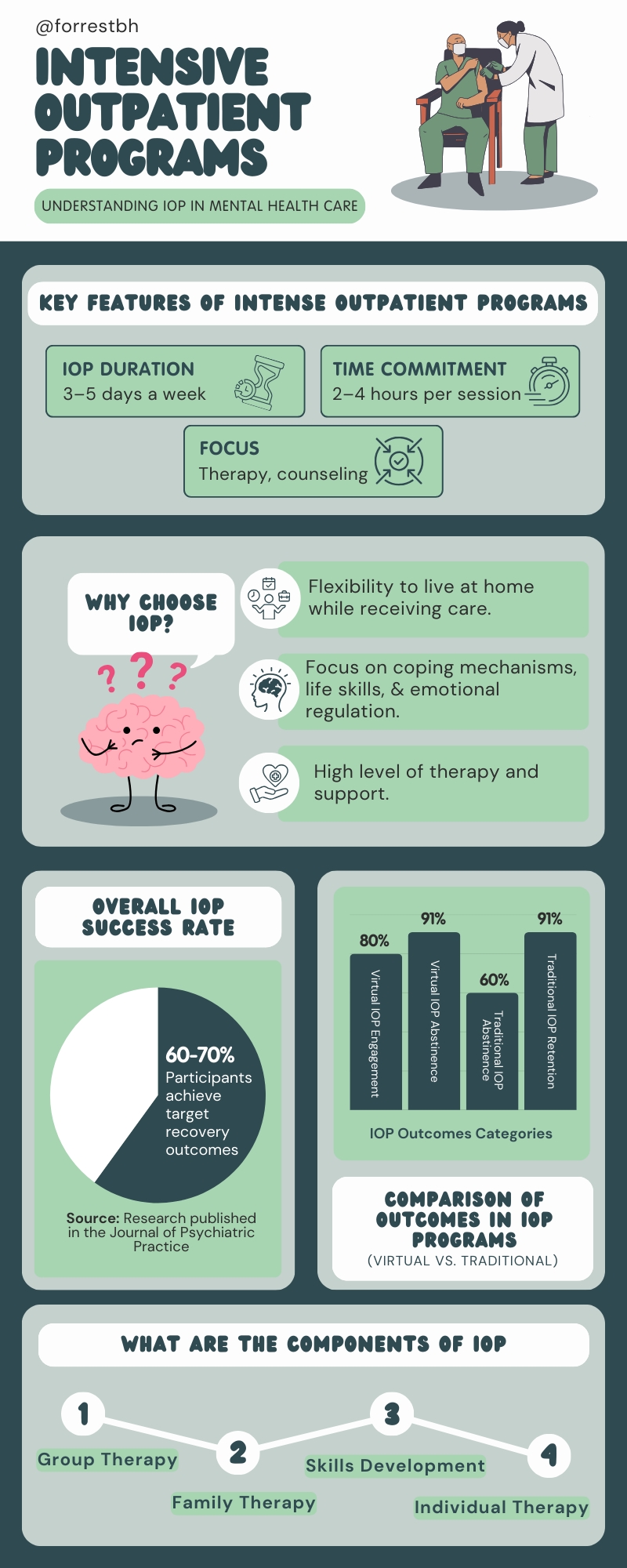
Forrest’s Intensive Outpatient Program in Massachusetts runs three-hour sessions three to five days weekly, with daytime and evening options.

This setting creates a clear boundary between home and treatment. For some people, simply entering a clinical space improves focus and accountability.

Virtual IOP vs In-Person IOP Differences at a Glance

Convenience matters, though safety, privacy, transportation, home support, and comfort also shape the right fit.

Feature

Virtual IOP

In-Person IOP

Location

Approved private space

Treatment center

Travel

No regular commute

Transportation needed

Technology

Device and internet required

Little personal technology needed

Privacy

Depends partly on home

Clinical setting offers separation

Group contact

Live video discussion

Face-to-face discussion

Staff presence

Remote during sessions

Physically present

Overnight care

Not provided

Not provided

Online IOP vs in-person IOP resembles home working versus office working. Both are serious, yet focus and connection differ.

A quiet home may make virtual care comfortable. However, roommates, children, pets, or household conflict can interrupt sensitive conversations. In-person care removes many of those distractions, though travel may create another barrier.

Which IOP Format May Fit Your Needs?

A clinical assessment should guide the choice. Safety and active participation come first.

Virtual IOP May Fit Your Daily Routine

A telehealth IOP may suit you when travel, mobility, caregiving, or work creates barriers.

Virtual care may fit when:

  • You have private space for each session.
  • Your internet connection remains dependable.
  • Your home feels safe and supportive.
  • You speak comfortably through video.
  • You can follow a fixed schedule.
  • You have a backup plan for technical problems.

Remote IOP treatment and online addiction treatment still require active participation. You’ll need to attend on time, join discussions, complete assigned work, and communicate openly with clinicians.

Virtual care can remove a long drive. Still, it cannot remove what the work recovery asks from you.

In-Person IOP May Offer Stronger Structure

In-person care may fit when home brings conflict, noise, or interruptions.

Consider in-person group therapy when:

  • Private space is difficult to find.
  • Face-to-face communication feels easier.
  • Technology causes stress.
  • Leaving home helps you focus.
  • Direct staff presence supports accountability.
  • Reliable transportation is available.

Some people connect more naturally when they can read posture, facial expressions, and room energy. Others may feel less anxious behind a screen. Neither reaction is wrong.

One awkward group doesn’t define every program.

  • Safety note: Neither format offers 24-hour supervision. Severe psychosis, medical instability, dangerous withdrawal, unsafe housing, or immediate risk may require higher care. Call 911 during immediate danger. Call or text 988 during a crisis.
IOP intensive outpatient program forrest behavioral health forrestbh

Practical Questions Before Choosing Virtual or In-Person IOP

One person may lack privacy online. Another may miss on-site sessions because transportation fails. IOP treatment options must work in real life.

Ask:

  • Where can I speak privately?
  • What happens if my internet fails?
  • Who will staff contact during an emergency?
  • Can I travel to each session?
  • Is a hybrid IOP available?
  • Can clinicians treat me while I’m in my state?
  • How does insurance cover each format?

A hybrid IOP may combine remote and on-site sessions. This format can offer flexibility while preserving some face-to-face contact. Still, schedules and hybrid services vary between treatment providers.

HHS advises discussing privacy, consent, communication, and emergency planning before telebehavioral care.

➡️ Also Read: Therapy vs Intensive Outpatient Program (IOP)

Case Study: Virtual and In-Person IOP Outcomes

2022 study compared in-person, hybrid, and virtual substance use IOP. The baseline included 3,642 clients, while 1,060 completed follow-up.

Researchers reported no significant format differences in continuous abstinence, psychological well-being, overall quality of life, or confidence in staying sober. Hybrid clients reported better general health than virtual clients.

The study supports virtual IOP as a possible option. Still, outcomes were self-reported, groups weren’t randomized, and follow-up reached 29.1%.

That matters. Similar average outcomes don’t mean every person will do equally well in every setting. Privacy, diagnosis, motivation, housing, technology, and outside support may change the experience.

FAQs

Is Virtual IOP as Effective as In-Person IOP?

Some research reports similar outcomes. Results still depend on diagnosis, participation, privacy, technology, and home support.

Can You Complete an IOP From Home?

Yes, when a provider offers it, and you meet clinical requirements. You’ll need live video, privacy, and crisis support.

Who May Not Be a Good Fit for Virtual IOP?

Virtual mental health IOP may not fit without safe housing, privacy, internet, or emergency support. Severe symptoms may require higher care.

Does Insurance Cover Virtual IOP?

Some plans cover telehealth behavioral health care when plan rules are met. Ask about authorization, copays, licensing, and location limits. You can verify your insurance benefits before admission. ForrestBH describes this review as free and confidential.

Choose the Setting That Supports Real Participation

Choosing between virtual and in-person IOP starts with one question: where can you participate safely and honestly? Virtual care may remove travel barriers and fit demanding routines. In-person treatment may offer clearer separation from home stress and more direct group contact. Neither format suits every situation. Are symptoms worsening, cravings returning, or weekly therapy no longer enough? 

Forrest Behavioral Health offers structured intensive outpatient care in Bedford, Massachusetts. Call (781) 570-5781 to discuss virtual IOP vs in person IOP, current program formats, clinical fit, and insurance coverage. A private assessment can help you choose your next step with confidence.

Forrest Behavioral Health

Are you ready to overcome your addiction or learn more about our treatment programs? We are here for you.

Related Articles

leaf

Need treatment?

Get a call to start your recovery journey.

"*" indicates required fields

Other Posts

Verify Approval for www.forrestbh.com

Are you ready to overcome addiction? We encourage you to request a phone call from a recovery specialist.

"*" indicates required fields