
Mixing Xanax and Alcohol: Risks You Need to Know
You are not Hermione Granger. There’s no cauldron, no carefully measured potion that fixes you if you just get the ratios right. Yet a lot of people treat Xanax and alcohol like ingredients in a spell. A little of this to take the edge off and a little of that to feel calmer, mixed together in hopes it adds up to relief. It doesn’t work that way. There’s no wand for this. There’s no counter-curse if it goes wrong. And nobody hands you a second try.
Combining them doesn’t give you a fix. It’s two feet pressing down on the same brake pedal at once. Xanax and alcohol both slow your central nervous system down on their own. That’s manageable, even medically useful, the way brakes are supposed to be. Together, the car doesn’t slow down gently. It stalls out. Sometimes it doesn’t start back up.
Why It Feels Like It’s Working (For a Minute)
Xanax and alcohol mixing can feel good before it feels dangerous. That’s not a personality flaw. That’s chemistry in its finest form. Both drugs increase a brain chemical called “GABA,” the one that helps slow things down and makes you feel calm, quiet, and unbothered. For a moment, that just seems like more stopping power. Laid back. Loose. Maybe slightly euphoric. The kind of calm that follows a hard week.
That feeling is the problem, not the proof it’s fine. The body isn’t genuinely handling two depressants better than one. It’s not multitasking well. It’s just quiet on the surface while something more serious builds underneath, the way a house can look perfectly still right before the power goes out.
What Happens When Both Feet Press Down
At this point, the pedal metaphor becomes clinical rather than poetic. When Xanax and alcohol combine, the sedative effects don’t add; they multiply. That means the risk of slowed breathing, dangerously low heart rate, and full respiratory depression climbs fast, at doses that would be unremarkable if you’d only had one or the other. This is the part that surprises people the most: it doesn’t take a reckless amount of either substance. It just takes both, at the same time, in a body that wasn’t built for this.
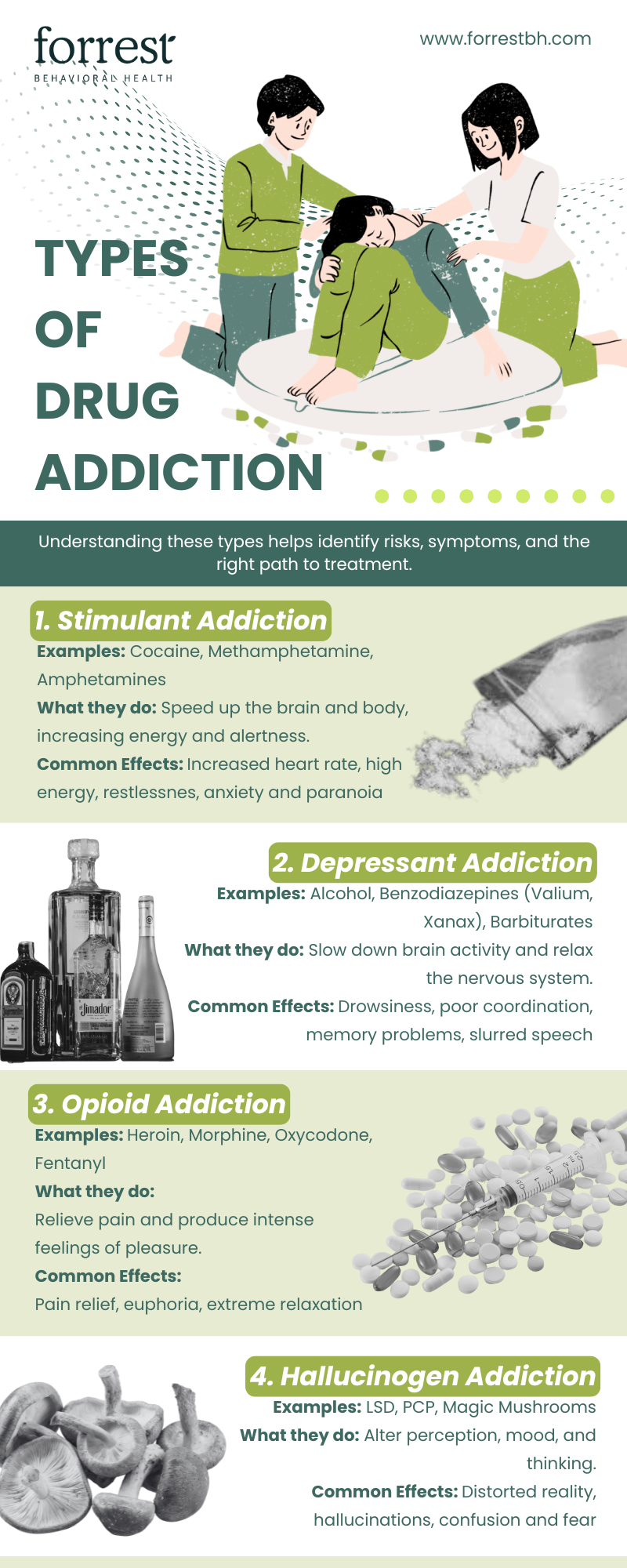
In practice, that shows up as heavy drowsiness, slurred speech, poor coordination, memory blackouts, confusion, and, in the worst cases, breathing that slows down enough to become a medical emergency.
The Timing Problem Nobody Warns You About
Alcohol leaves your system faster than Xanax does. That gap is where a lot of the real danger hides, mostly because it’s invisible. You might start to feel sober, feel like the drinking part of the night is over, and feel like the risk has passed along with it. However, the Xanax is still working, still pushing that pedal down, long after the wine is gone and the glass is rinsed out.
That disconnect helps explain why people underestimate how much is still in their system and why “I only had a little” turns out to be more dangerous than it sounds so often. The body doesn’t grade on how little you meant to take.
The Long Game:
Risk of Substance Use Disorder (SUD)
The immediate risk gets most of the attention, and it should, as it’s the one that can end a night in an emergency room. Nevertheless, mixing Xanax and alcohol regularly does damage that doesn’t announce itself in one sitting. Chronic use takes its toll on both the liver and kidneys. They have to process both drugs over and over again.
Tolerance builds up over time, so you need more of each to get the relief you once got from less. Tolerance first and then dependence. Not because someone is weak-willed, but that is just how it works.
On top of that, using two depressants together regularly raises the odds of the whole thing sliding into a genuine substance use disorder. That is not because someone set out to develop one, but because the pattern has a way of deepening on its own, one ordinary night at a time.
How to Tell If This Has Already Become a Problem
You don’t need a clinical checklist to start being honest with yourself here. Ask if the mixing has become routine instead of occasional. Something you reach for, not something that happens to you. Observe if you’ve needed more of either to feel the same relief you used to get from less. Determine if you’ve woken up without a clear memory of the night before or if a doctor told you plainly to stop drinking this medication, and some part of you decided that didn’t really apply to you.
None of that makes you a bad patient or a failure at managing your own health. It usually just means the pattern has quietly gotten ahead of you, which is exactly the kind of thing that’s fixable once someone actually looks at it instead of you trying to white-knuckle it alone.
What Getting Help Looks Like at Forrest Behavioral Health
You don’t need to have this fully figured out before you reach out. You don’t need to know whether it’s dependence, misuse, an anxiety disorder that never got properly treated, or some combination of all three sitting on top of each other. That’s not something you’re expected to diagnose on your own, and nobody’s going to ask you to.
At Forrest Behavioral Health, we sit down with people who’ve been mixing Xanax and alcohol longer than they meant to and help sort out what’s truly going on. If that’s safely managing withdrawal, it’s treating an underlying anxiety condition instead of just medicating around it. Or building a plan that doesn’t rely on two depressants doing the work that one clear, honest conversation with a professional could do instead.
Final Words
You’re not a chemist or a wizard, and this was never a potion you could get the measurements right on. It’s two feet on one brake pedal, and eventually, the car stalls. The good news is that, unlike a stalled car in the middle of the road, this is one you can get out of with the right help, at the right time, before the pedal’s all the way down.
Reach out to Forrest Behavioral Health today for a clear way forward!