

Balancing Work, Life, and IOP Treatment in Illinois
Let’s talk about John, who works 9-5 in project management, has a wife and two kids aged 6 and 9. Recently, his anxiety got to a point where ignoring it was no longer an option, so his therapist recommended starting an intensive outpatient program (IOP) for treatment.
Now, his IOP runs Monday, Wednesday, and Friday from 6 pm to 9 pm. Inevitably, kids’ homework help, dinner prep, and other chaos that comes with two kids largely fall on his wife in those three hours. Then, at work, he uses his lunch breaks to catch up with his parents or to walk a few thousand steps, since he is practically tied up the whole workweek.
This is what someone’s IOP for mental health looks like: John might not be giving his 100% to all of these things, but he is trying. He is showing up three nights a week to do hard psychological work, and three months from now, he will be a steadier and more grounded version of himself, thanks to his commitment.
But how can someone balance their life, work, and IOP treatment in Illinois, given that all of these drain one’s energy? This article lists a few useful tips you can follow to make that happen. Read on to ace your treatment.
How to Balance Life, Work, and IOP Treatment in Illinois?
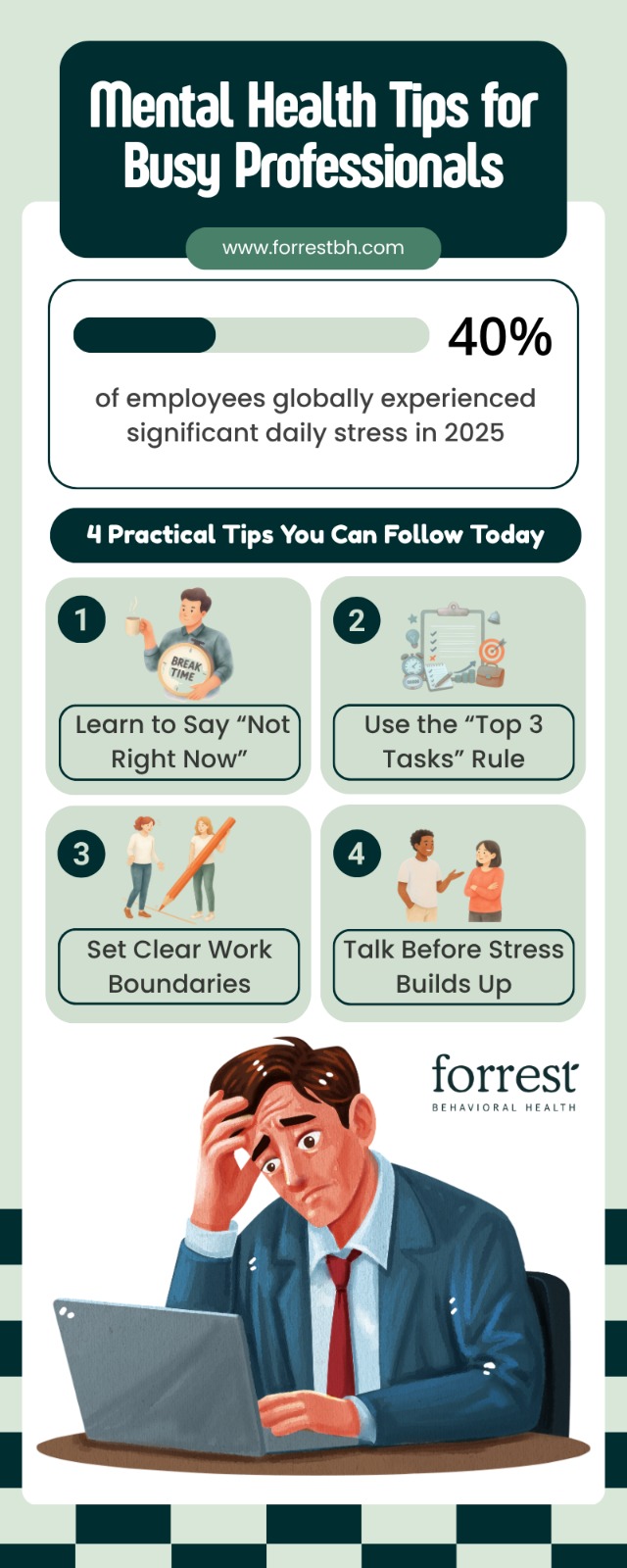
Treatment doesn’t always go as planned, whether it’s physical or mental. But you can ease the process through planning and time blocking. Here are some ways we teach at Forrest Behavioral Health so anyone can balance their life and treatment without letting either of them slip:
Know What IOP Demands
You might underestimate what an IOP treatment in Illinois might take out of you, but know that it’s not like a doctor’s appointment. Its sessions are emotionally intensive by design, where you will be asked to confront your thought patterns or behaviors, talking about who makes you uncomfortable. While some intensive therapy sessions help you feel lighter, others are more emotionally charged and draining.
Forrest Behavioral Health experts believe that when people have a demanding meeting or do any high-stakes task immediately after a session, they feel troubled. So realize that your brain has just done serious work, and protecting the two to three hours after each session will solidify its results.
Tell Your Therapist About Your Life Constraints Early
Your therapist only knows what you share. If they don’t realize that you might have back-to-back work meetings or are a single parent juggling multiple things, they might follow the standard intensive outpatient treatment pattern. They will likely assign you homework and set expectations that don’t account for any of that. So the earlier you discuss your constraints, the better your therapist can pace the work and support you. Since IOP is a collaborative process, it works best when your therapist has an honest picture of your life.
Use the Group
If you’re a private person or not used to discussing personal struggles in front of strangers, group therapy will surely feel uncomfortable at first. But when you internalize that the people in that room are in the same program and facing similar pressure, the results are impressive.
For instance, someone in your mental health treatment group might have already figured out how to handle a hard week at work while doing therapy sessions. That’s why being part of a group that understands your struggles shouldn’t scare you. Those people bring lived knowledge, which will surely support your journey.
Build a Post-Session Routine
Imagine spending 3 hours at a great behavioral treatment center and walking straight to a work deadline or a stressful home environment. Your brain will face a sudden shock, something you can’t afford while trying to overcome a mental health condition.
That’s why you always have some buffer after a treatment session to adjust your nervous system. And interestingly, this buffer doesn’t have to be elaborate: a few quiet minutes in the car or a short walk will do. During this short time, your brain can shift gears and protect your recovery efforts.
Missed Sessions Should Be an Issue
You can miss a therapy session because of a work emergency or a sick kid, because that’s just life. But if you cannot avoid these situations a few times in a row, that means the logistics of your program and your life have gone out of sync.
During such a situation, your instinct is to make up the session, but the more useful move is to bring it to your treatment team. The expert can reschedule your recovery sessions, or at a minimum, understand what you’re up against.
Manage Energy, Not Just Time
Some people spend a lot of effort scheduling their intensive outpatient treatment, but then show up for sessions after only a few hours of sleep. In such a situation, you’re technically there, but your brain cannot do much with what the session is offering.
We understand you cannot manage a perfect wellness routine alongside treatment, but if you are consistently arriving for treatment depleted, you are putting in the hours without getting much of the return. Therefore, try to manage your energy: get enough sleep, eat well, and keep alcohol out of treatment weeks.
Give Yourself a Shorter Horizon
Anyone can get overwhelmed when their life gets disrupted because of IOP, but luckily, it’s a manageable stint. If you understand that you’ll only do this hard work for up to 12 weeks, it feels more manageable.
Whatever you miss while IOP is going on, be it missed family time or barely meeting work deadlines, it has an end date. This fact reframes the whole period from an open-ended burden into something you can see yourself getting through.
You’ve Got More in You Than You Think
Asking for help while still holding your life together is one of the hardest things. Also, there is no perfect way to move through it, and nobody expects there to be. The hard stretch you are in right now is not the whole story, so keep going. There’s always light at the end of the tunnel. Just keep pushing through.