

PHP vs IOP for Mental Health: What Level of Care Do You Actually Need?
Figuring out mental health treatment options can sometimes feel like trying to decode a map in a language you don’t speak. You’ve already made the hardest decision to seek help, but then you’re hit with a jumble of acronyms like PHP and IOP.
It can feel confusing and overwhelming, especially if you already have a lot on your plate. The last thing you need right now is more stress, trying to make sense of it all. Many people end up in the wrong program because no one ever explained it in simple terms, not because they made a poor decision.
As a result, they land in one of two situations: either a program that’s more than they can handle right now, leaving them feeling buried and burned out, or one that barely scratches the surface of what they need, leaving them stuck and wondering why nothing seems to change.
Let’s start by understanding why choosing the right level of care matters. Nearly 1 in 5 adults in the U.S. experience some form of mental illness every single year. Let that sink in for a moment. That’s a significant number, and it shows how important it is to find a treatment approach that fits your needs.
A Brief Overview of PHP and IOP
Between weekly therapy and hospitalization, there are two common levels of mental health treatment: PHP (Partial Hospitalization Program) and IOP (Intensive Outpatient Program). PHP and IOP both fall between inpatient care and weekly therapy. More than a 50-minute appointment, but no overnight stay required, just real, structured support that meets you where you are.
What is a PHP (Partial Hospitalisation Program)?
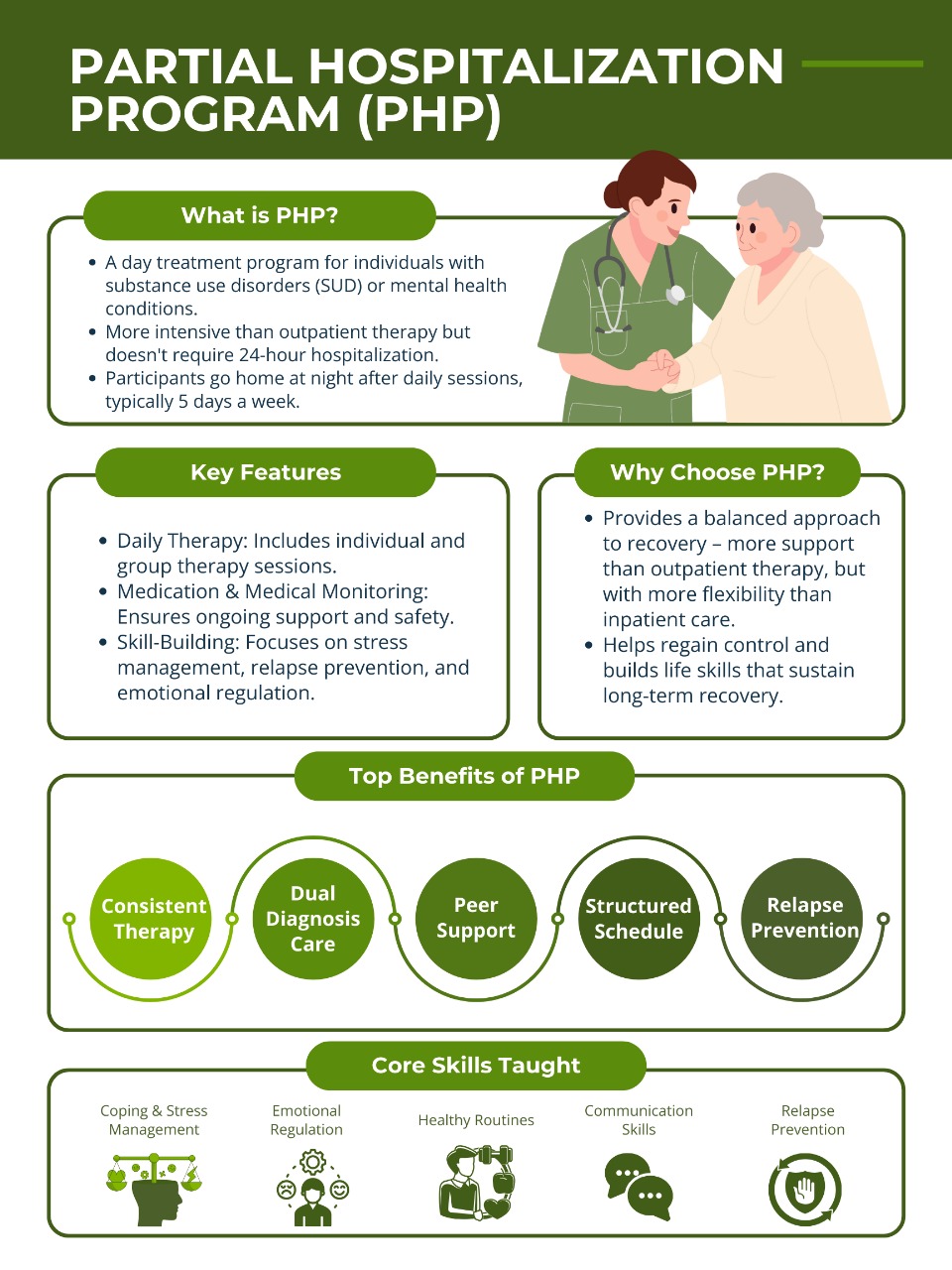
PHP (Partial Hospitalization Program) means being at the treatment center most days of the week, fully engaged and committed to your recovery. You spend a good part of your day participating in therapy, managing medications, and receiving regular support from clinical professionals.
It follows a structured, time-intensive schedule during the day, but you return home each evening. PHP is designed for those who need daily, hands-on support without 24/7 supervision.
What is an IOP (Intensive Outpatient Program)?
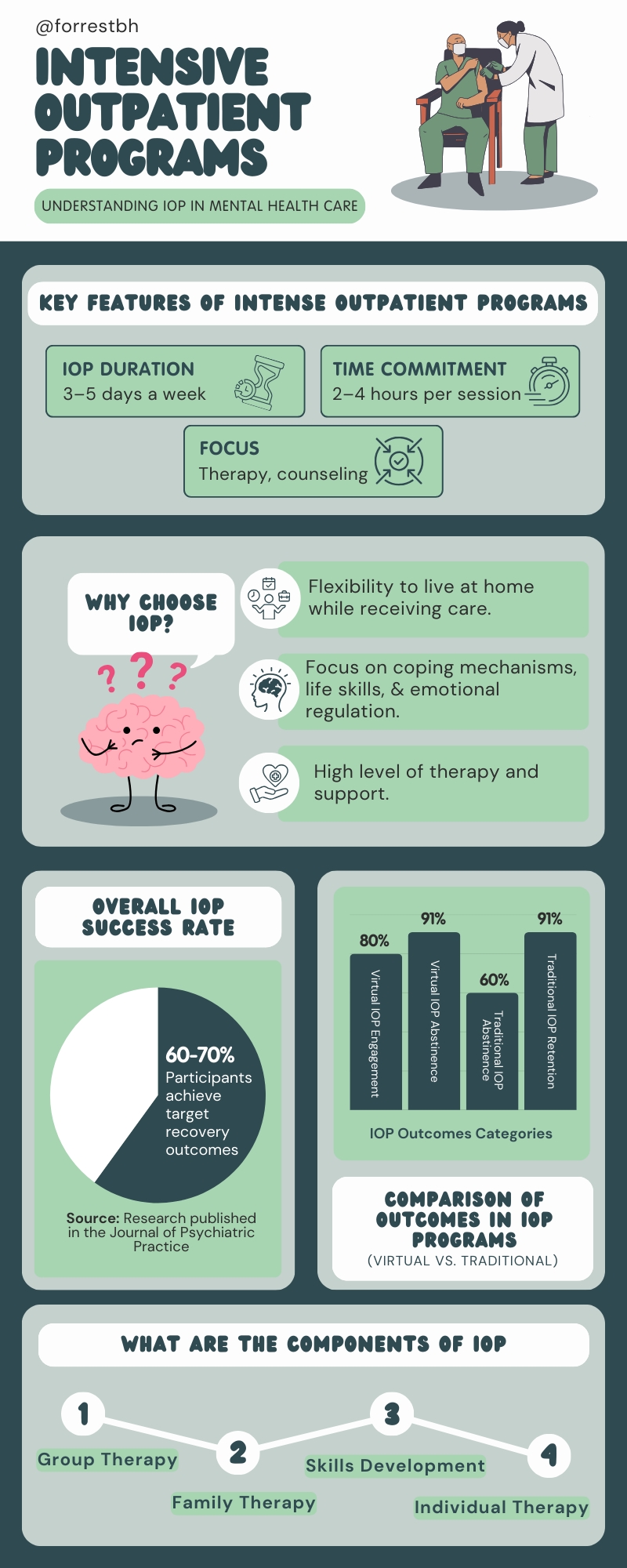
IOP (Intensive Outpatient Program) is less intense than PHP but still requires a structured commitment. With IOP, you attend sessions three to five times a week and spend a few hours each time working on your mental health through therapy, medication management, and support.
The key difference is flexibility; IOP lets you continue your daily routine. It’s ideal if you need ongoing support but have a stable home environment and can’t commit to full-day treatment.
What Are the Main Distinctions Between PHP and IOP?
You can choose the right level of care for a loved one by being aware of the key differences between PHP and IOP. Here is a brief synopsis:
Aspect | PHP | IOP |
Frequency of sessions | 5+ days a week, daily | 3-5 days a week, several hours per day |
Duration of treatment | Usually several weeks to months | Usually several weeks to months |
Level of supervision | High, with medical and psychiatric oversight | Moderate, primarily therapy and support |
Living situation | Patients often stay at home but require supervision | Patients live independently or with family |
Suitability | Severe symptoms, recent hospitalisation, high risk | Moderate symptoms, stabilisation, or as a step-down |
Cost | Higher due to the intensity and hours of clinical care involved | More affordable, fewer hours mean lower overall cost |
How Do You Know if PHP or IOP is Right for You?
It’s that quiet question that often shows up when you’re alone with your thoughts: “Do I really need this much help?”
It’s normal to minimize your struggles, but you don’t have to suffer in silence. If you’re not sure if PHP vs IOP is the best option for you, have a look at these indicators.
Signs you may need PHP
- Your symptoms are seriously affecting your ability to function day-to-day
- You’ve just come out of a hospital stay and still need that close level of support around you
- You’re feeling emotionally overwhelmed, unsafe, or unstable
- You require regular, daily clinical supervision and organization
Before stepping down to a less intensive level of care, consider PHP as a reset phase, a place where you may settle, feel supported, and begin regaining control.
Signs you may need IOP
Ensure consistency:
- Add periods at the end of each point
- Keep structure parallel
- You need more support than weekly therapy
- You’re trying to get ahead of things – preventing a relapse or stopping things from getting worse
A simple way to think about it
A simple way to understand it: if PHP is like pressing pause on life to focus entirely on stabilising, IOP is about learning to carry your healing with you as you gradually step back into everyday life.
PHP vs IOP for Mental Health: Which One Actually Works Better?
It’s a bit like asking whether a cast or physical therapy is better for a broken leg. The answer is, it depends on where you are in the healing process.
Neither PHP nor IOP is superior. They’re just designed for different moments in your recovery.
PHP tends to be the right call when:
- You need to stabilize before anything else can happen
- You require close, daily clinical monitoring
- The level of support in weekly therapy just isn’t enough anymore
IOP tends to be the right call when:
- You’re stepping down from a higher level of care and need a softer landing
- You want real structure, but also need the flexibility to keep living your life
- You’re actively rebuilding your independence and practising what you’ve learned in the real world
Final Word!
Choosing between PHP and IOP comes down to the level of support you need right now. PHP provides more structure and daily care, making it suitable for those who require intensive support. IOP offers greater flexibility, allowing you to continue your daily life while still receiving ongoing treatment.
Neither PHP nor IOP is better. They are simply designed to serve different stages of your recovery journey.
At Forrest Behavioral Health, we’re here to help you find the right path tailored to your unique needs.
Contact us today to take the next step toward the care and clarity you deserve.
Read Next: What Happens If You Leave Mental Health Treatment Too Early?