

What Is An Intensive Outpatient Program (IOP) For Mental Health? A Complete Guide
When mental health struggles become overwhelming, many assume the only options are a one-hour therapy session or a week-long hospital stay. But what happens when you need more than an hour yet can’t walk away from your responsibilities?
This is the purpose of intensive outpatient programs (IOPs). People in Bedford can get substantial, evidence-based help through Forrest BH without having to abandon their daily obligations.
They can maintain their routine while getting organised care day or night, regardless of their obligations to their families, jobs, or personal lives. It is the practical path to recovery for those who need help but cannot put their lives on hold.
As the demand for flexible mental health care reaches an all-time high, intensive outpatient programs are setting a new standard.
IOPs provide a strict therapeutic framework without the isolation of a hospital stay for the 20% of individuals dealing with mental health issues. It is evidence-based, continuous therapy that honors your desire to maintain a connection to your everyday life.
In this blog, we’ll break down what a mental health Intensive Outpatient Program (IOP) actually looks like, how it works in practice, and why it’s becoming one of the most valuable options in modern mental health treatment and recovery.
What Is An Intensive Outpatient Program (IOP) For Mental Health?
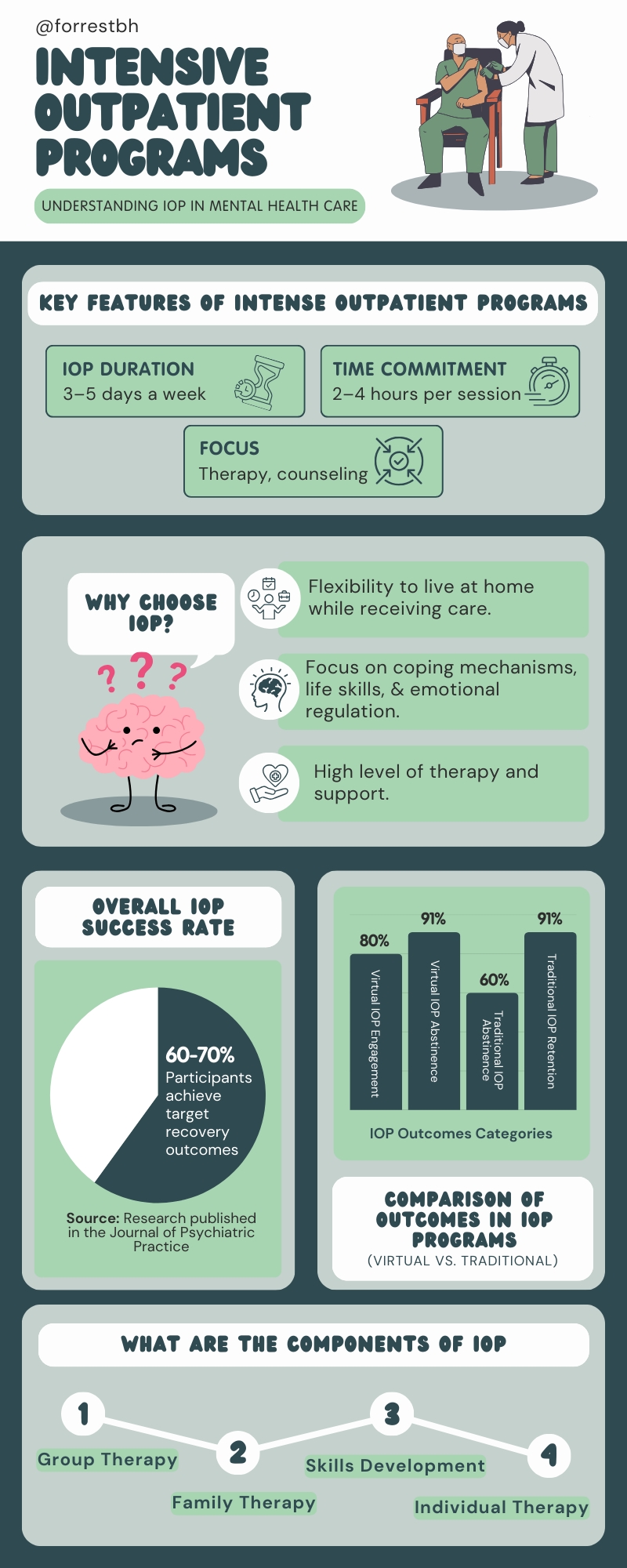
An IOP is essentially a dedicated mental health training camp. You participate in a targeted combination of group sessions, individual counseling, and psychiatric check-ins as opposed to a single hour of treatment.
This regular, research-based regimen is intended to help you stabilise, build resilience, and hone the skills needed to navigate daily life confidently.
- Sessions of group therapy
- Individual therapy
- Check-ins for mental health (if necessary)
- Workshops for developing skills
Consider it a methodical, regular practice with a single objective: assisting you in stabilizing, recovering, and returning to your life.
Why Does It Exist In The First Place?
Healing happens at different speeds. When symptoms start to interfere with daily life, you need more intensive support. IOPs exist for exactly that in-between space.
They’re particularly effective for people dealing with:
- Anxiety disorders
- Depression
- Trauma-related conditions
- Emotional dysregulation
- Post-hospital stabilization
How Does An IOP For Mental Health Work Day-To-Day?
The term “Intensive Outpatient Program” can feel heavy, but the experience itself is grounded and supportive. It’s a purposeful routine designed to foster healing in a way that feels manageable, not clinical.
Weekly Schedule And Structure
An IOP offers a steady rhythm for recuperation without interfering with an overnight stay. In most applications, there are the following:
- Meeting three to five times a week for two to four hours.
- Combining one-on-one therapy, practical training, and group sessions.
- Sleeping in your own bed every night while putting your mental health first is a sensible approach.
What A Typical IOP Session For Mental Health Looks Like
Every session is strategically planned. By combining multiple therapy styles, the program ensures every hour spent contributes directly to your healing and growth.
Sessions Of Group Therapy
This is frequently one of the most important components of an IOP for mental health. You join others facing similar challenges, all guided by a licensed therapist. It becomes a space where you can share openly, feel genuinely understood, and learn from the experiences and progress of the people around you.
Individual Counseling
These private sessions focus on the mechanics of your mental health. In one-on-one sessions, you will work through your own emotional triggers, break bad habits, and replace outdated reactions with more positive, long-lasting ones in one-on-one sessions.
Skill-Building Workshops
Our real-world-based skill-building seminars provide you with useful tools that you can put to use immediately, such as effective ways to calm overwhelming thoughts and symptoms, stress management techniques, emotional regulation tactics, and enhanced communication skills.
What Advantages Do Intensive Outpatient Programs (IOPs) Offer For Mental Health?
Until they encounter organised help directly, most individuals are unaware of how transforming it can be.
1. Real-Life Healing
One of the biggest advantages of a mental health IOP is that you don’t have to put everything on hold. You are learning to navigate real-world challenges while actively living through them.
2. Strong Emotional Support
There’s something powerful about being in a room with people who genuinely get it. Many people say that the feeling of belonging and connection, knowing they’re not alone in their emotions, was the turning point in their lives.
3. Useful Coping Mechanisms
Real-world preparedness is the foundation of mental health IOPs. You depart with a real toolset of useful techniques for controlling stress, navigating emotional triggers, and managing high-pressure situations as they arise in daily life.
4. Adaptability
Maintaining your life and getting healthier shouldn’t have to be mutually exclusive. A mental health IOP accommodates your schedule so you may concentrate on recovery without neglecting the people and obligations that are most important to you.
5. Prevents Relapse And Crisis
Consistency is one of the most powerful parts of recovery. With regular, structured support in place, it becomes far easier to stay on track, catch warning signs early, and avoid slipping back into crisis
What To Expect In Your First Week Of IOP
Deciding to put your mental health first is a significant step, and it’s acceptable to be apprehensive. Concerns about privacy, judgment, and the “unknowns” of group therapy are common. In an IOP, the goal is to replace that uncertainty with a supportive routine where your story is respected, not judged.
Your First-Day Experience
Usually, it starts with:
- An evaluation of intake
- Talking about your past mental health issues
- Establishing individual treatment objectives
What Changes After The First Few Days
As the days go on, things naturally start to feel more familiar
- A routine forming
- Familiar faces in group sessions
- A quiet sense of emotional safety begins to grow.
Emotional Reality Check
It’s typical for the first week to feel overwhelming. You’re simultaneously adjusting to a new framework, meeting new people, and opening yourself emotionally.
However, the majority of folks also leave that first week feeling relieved, which is something they didn’t anticipate.
For the first time in a long time, they weren’t carrying it alone. And that’s usually when real healing begins.
Final Words!
A balanced approach to mental health care is provided via an intensive outpatient program (IOP), which provides constant, organized assistance that works with your life rather than against it. It’s where healthy patterns are reinforced, genuine coping skills are developed, and long-term recovery becomes something you can truly see for yourself.
IOP treatment provides a flexible, efficient way forward for residents near Bedford, dealing with anxiety, depression, trauma, or other mental health issues without putting everything else on hold.
Are you prepared to go forward? Get in touch with us right now to find out how Forrest Behavioral Health’s mental health IOP may help you on your path to a more stable, healthy life.