
Evening Therapy Exists for a Reason (And It’s Not Convenience)
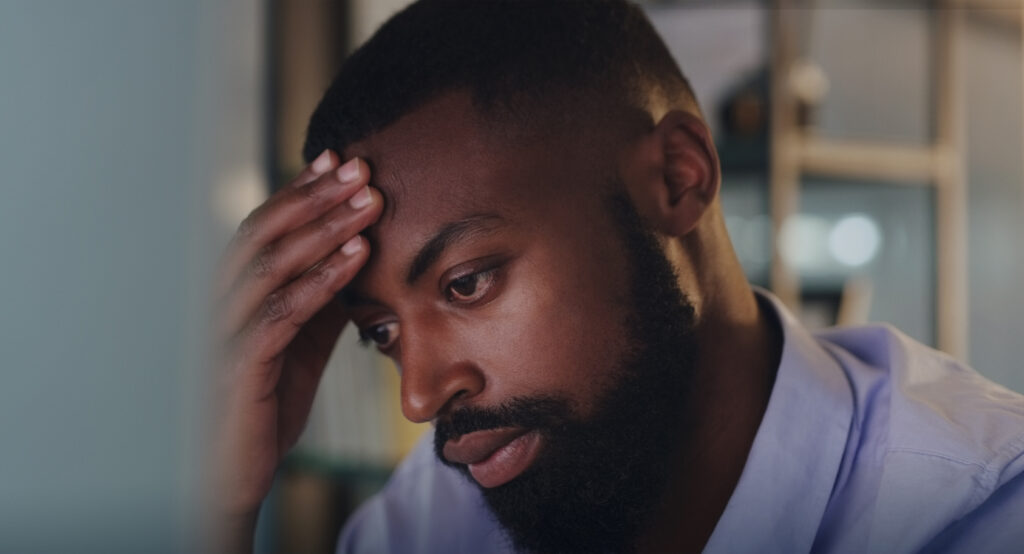
There’s a particular kind of exhaustion that comes from holding it together all day. You show up to work. You answer the emails. You smile at the right moments. You do the school pickup, make the dinner, and pay the bills. You perform the intricate choreography of a functioning adult.
Then the sun sets, and the mask cracks. You are finally overtaken with a depression that you have been evading all day. The addiction leaves a murmur when all other people are asleep.
Morning and afternoon treatment programs work beautifully for some people. However, what about those of us whose lives don’t pause for recovery? What about the single parent who can’t miss work? The college student with a full class schedule?
That’s where Evening Intensive Outpatient Programs come in. Treatment that doesn’t ask you to dismantle your entire life to get better. Recovery that happens after five o’clock, when your day job is done but your real work is just beginning.
The Impossible Math of Daytime Treatment
Traditional IOPs typically run weekday mornings or afternoons. Three to five days a week, several hours per session. Clinically effective, yes. Practically? Impossible for most working adults.
Try explaining to your employer why you need to leave at 2 PM every Monday, Wednesday, and Friday for the next two months. Watch how quickly “mental health support” turns into “reliability concerns” on your performance review. See how fast your income disappears when you’re hourly and treatment conflicts with your shift.
The math doesn’t work. You need intensive treatment, but you also need to keep your job, maintain your insurance, pay your rent, and feed your family. Recovery shouldn’t require financial ruin as an entry fee.
The Substance Abuse and Mental Health Services Administration reports that work-related factors are one of the leading causes that make people postpone or avoid obtaining mental health care. It is not that people do not need assistance. It’s that daytime programs ask them to choose between healing and survival.
Evening IOP: Treatment That Fits a Real Life
Evening Intensive Outpatient Programs operate on a different timeline. Sessions typically run from early evening into night, usually starting between 5 PM and 6 PM and running until 8 PM or 9 PM. Three to four evenings per week. Same intensive clinical structure as daytime programs. Same evidence-based therapies. Same level of support.
Different clock.
You work your regular day. Pick up your kids from school. Handle what needs handling. Then you show up for yourself. For the hardest, most important work you’ll do all week.
At Forrest Behavioral Health Center in Bedford, MA, our Evening IOP isn’t a watered-down version of daytime treatment. It’s the full program, scheduled for people whose days are already spoken for. We know your time after work isn’t “free time.” It’s homework help and grocery shopping and laundry and the thousand small things that keep life running. We also know that without treatment, none of those things will matter because you won’t be okay enough to do them.
Techniques and Approaches Used in Evening IOP Treatment
You’re not sitting in a circle making small talk about your feelings for three hours.
Evening IOP provides the same evidence-based treatment modalities as any quality intensive program. Cognitive Behavioral Therapy to identify and challenge the thought patterns keeping you stuck. Dialectical Behavior Therapy for emotional regulation skills that work when you’re in crisis at 11 PM. Group therapy with people who understand what it’s like to smile through a meeting while planning how to fall apart later.
You learn coping skills you can use immediately. How to handle the Sunday anxiety before Monday morning. How to communicate with your partner when depression makes you want to isolate. How to recognize your triggers before they trigger you. How to ask for help when everything in you says you’re being a burden.
The group component becomes its own kind of lifeline. These are people who get it. They understand what it is like to have a job when your brain is working against you. To be in charge of other individuals when you are barely able to take care of yourself. To be worn out not only from your day but also from your daily struggle to look all right.
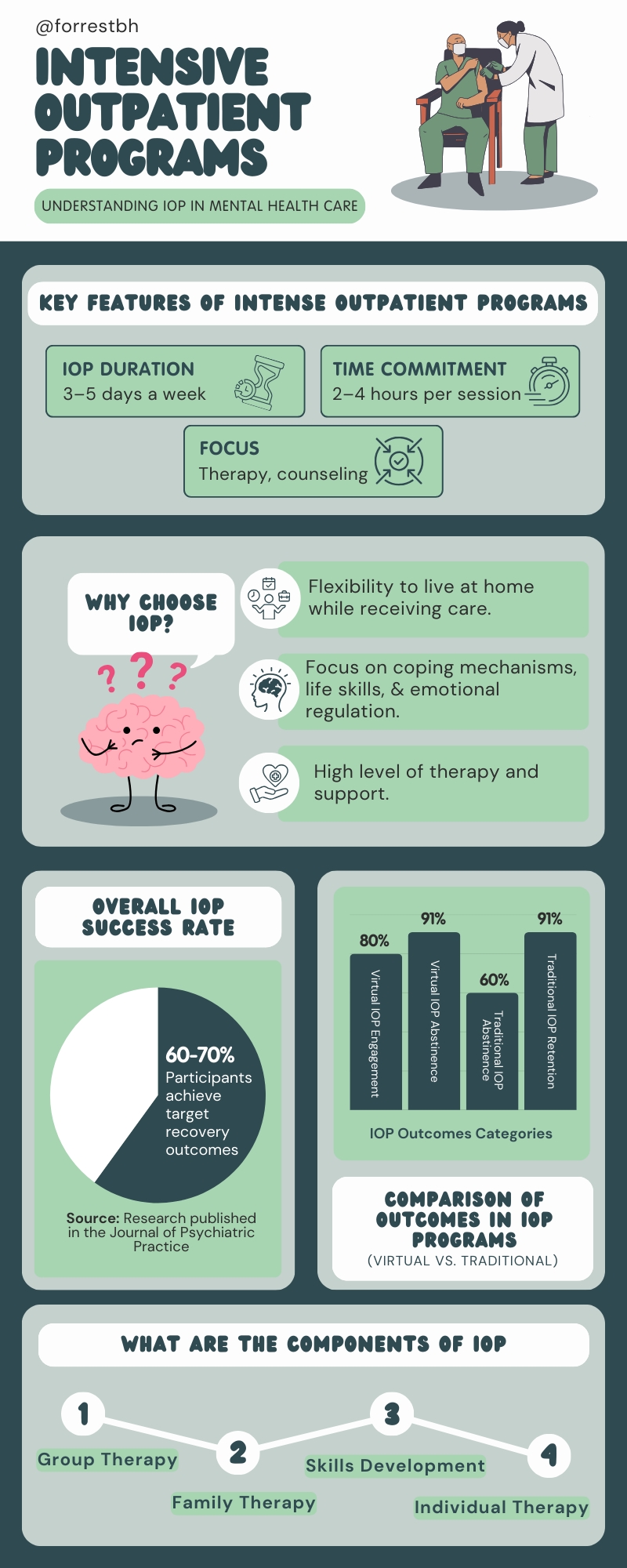
Studies indicate that evening IOPs have similar results, and completion rates tend to be higher due to the schedule being able to accommodate the lives of people rather than contravene them. When therapy is convenient to you, you will adhere to it. When you stick with it, you truly get better.
How Long Before Life Gets Lighter?
Evening IOP programs typically last eight to twelve weeks, but it depends on the needs and progress of the individual. You are not confined to a strict schedule. Some people need six weeks. Some need more. Recovery doesn’t punch a clock.
You start intensively. Three or four evenings per week. As you stabilize, you step down gradually. Maybe drop to two evenings. Eventually transition to weekly outpatient therapy. The goal isn’t to keep you in treatment forever. It’s to give you intensive support when you need it most, then help you maintain progress with standard care.
You’ll know when the weight starts lifting. When Monday morning doesn’t fill you with dread. When you can be present with your kids instead of just going through the motions. When the future stops looking like something to endure and starts looking like something worth showing up for.
The Final Truth
You do not have to decide whether to become better or to hold your life together. You do not have to lose everything before you deserve intensive help.
If you’re in Bedford, MA, or the surrounding area, and you’ve been putting off treatment because you can’t figure out how to fit it into your impossible schedule, there’s another way. Call Forrest Behavioral Health Center or visit our website. Our Evening IOP is built for people who need serious treatment but also need to keep showing up for all the responsibilities that don’t pause just because they’re struggling.
The bravest thing you can do is admit you need more support than one hour a week. And then ask for it. Your evenings can become about healing instead of just surviving. Your days can belong to everyone else, but your recovery? That can finally belong to you.
Treatment doesn’t have to wait for a more convenient season. Evening exists for exactly this reason.