

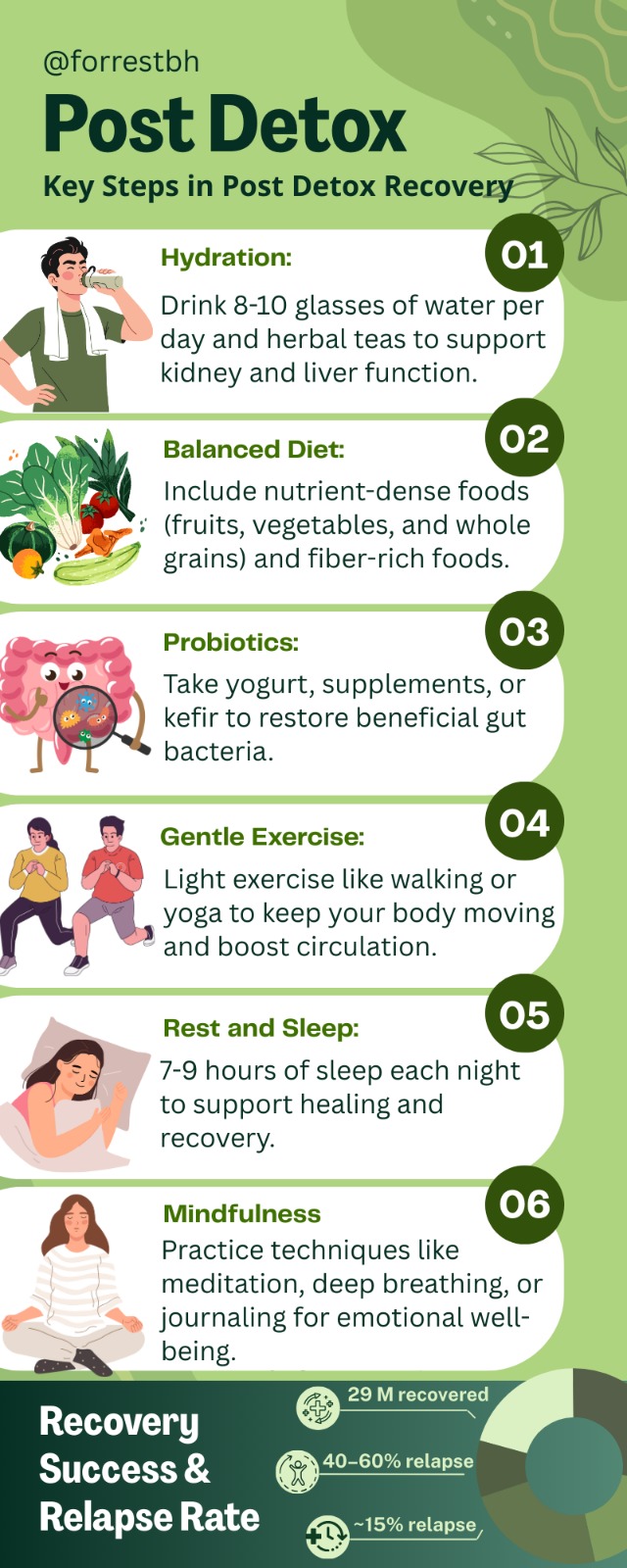
That broader picture helps determine whether someone needs residential rehab after detox or can safely receive care while living at home.
Why More Intensive Care is Not Always Better
The best program isn’t automatically the one with the most treatment hours.
Picture two people leaving detox on the same morning. One returns to a home where substances are still present. They’ve also relapsed several times. Residential treatment may provide needed separation and structure.
The other person has stable housing, supportive family, and manageable symptoms. IOP after detox might offer enough support without requiring residential care.
The goal is the right level, not the biggest program.
When Does Rehab After Detox Make Sense?
Residential rehab after detox provides treatment while someone lives inside a structured recovery setting. It creates distance from daily triggers and offers more support than outpatient programs.
Residential care may be considered when someone has:
- High relapse vulnerability
- An unsafe recovery environment
- Little reliable support at home
- Repeated treatment setbacks
- Significant mental health concerns
- Difficulty staying safe without close structure
Still, residential care isn’t required for everyone.
As stability grows, people may step down into PHP or IOP. Recovery often works more like a staircase than an elevator. You move according to what you can safely manage next.
When is PHP After Detox the Right Next Step?
A Partial Hospitalization Program, often called PHP or day treatment, offers substantial daytime structure without requiring overnight residence.
PHP after detox may fit someone who no longer needs 24-hour supervision but still needs frequent treatment. Forrest Behavioral Health’s day treatment program runs structured weekday programming that includes group-based clinical care.
PHP may make sense when someone:
- Needs regular daytime clinical structure
- Has stable housing
- Requires frequent therapy
- Needs psychiatric support
- Is stepping down from residential treatment
- Needs more support than IOP currently offers
Forrest BH’s Partial Hospitalization Program provides a structured option between round-the-clock care and lower-intensity treatment.
When is IOP After Detox a Good Fit?
IOP after detox gives you more room to return to daily life while keeping recovery structured.
An Intensive Outpatient Program can suit someone who is medically stable and doesn’t require residential supervision. Therapy still happens regularly. However, you return home afterward and begin practicing recovery skills where real triggers actually happen.
IOP may fit if you:
- Can manage time outside treatment safely
- Have a stable living situation
- Need more than weekly therapy
- Are returning to work or family responsibilities
- Need regular relapse-prevention support
Forrest BH offers an Intensive Outpatient Program as part of its current treatment continuum. Its site also lists day treatment, IOP, evening IOP, and outpatient services.
How Do Rehab, PHP, IOP and Outpatient Care Compare?
These options mainly differ in where you live, how often treatment occurs, and how much independence you can safely manage.
Level of Care | Living Arrangement | Structure | May Fit Someone Who |
Residential Rehab | Treatment setting | Highest here | Needs separation from triggers |
PHP After Detox | Home/supportive housing | High daytime structure | Needs frequent care without overnight supervision |
IOP After Detox | Home | Moderate structure | Can manage growing independence |
Outpatient Treatment | Home | Lower intensity | Has greater stability and ongoing support needs |
Forrest BH describes its outpatient treatment as a flexible option for people balancing recovery with other responsibilities.
Treatment can move both directions. If symptoms worsen, stepping back into more intensive care may be appropriate.
Real-World Case Study: Recovery in Stages
A Glamour feature documented Casey’s recovery from opioid addiction.
She described trying to detox alone before returning to opioid use. Later, she completed medical detox and entered two inpatient treatment centers for around five months. Her second program used step-down care, allowing her to begin working, attending meetings, and slowly rebuilding daily life. She later moved into sober living. At the time of publication, she reported eight years without alcohol or drugs.
Her experience doesn’t create a rule for everyone. It does show something useful: recovery intensity can decrease gradually as stability grows.
Detox wasn’t the finish. It was one part of a longer process.
Planning Treatment After Detox Before Discharge
The transition between programs can be a vulnerable moment. Research found patients were less likely to relapse when they stepped down into continued SUD care within 14 days.
Before leaving detox, try to have clear answers to practical questions:
- Where will you stay?
- Which program comes next?
- When does treatment begin?
- How will medications continue?
- How will you get there?
- Who knows your relapse plan?
- Are mental health needs being addressed?
- What should happen if symptoms worsen?
The fewer loose ends, the less recovery depends on improvising during a difficult week.
Finding PHP or IOP After Detox Near Bedford, MA
Forrest Behavioral Health provides addiction and mental health treatment at 4 Preston Court, Bedford, MA 01730. Its program options include day treatment, IOP, evening IOP, outpatient treatment and dual diagnosis care.
For someone looking for treatment after detox in Bedford, MA, the next step may involve PHP, IOP or outpatient treatment based on current needs.
People seeking rehab after detox near Billerica or addiction treatment elsewhere in Middlesex County can also discuss which outpatient level fits their current stability.
 If stimulant use is affecting your mood or thinking too, our previous guide, “Cocaine Addiction and Mental Health: Anxiety, Depression & Paranoia,” explains when those symptoms may need attention alongside addiction.
Choosing What Comes After Detox
Detox can steady the body. The next level of care helps you build a life that doesn’t keep returning to the same pattern.
For one person, treatment after detox means residential rehab. Someone else may need PHP after detox before stepping into IOP. Another person may already have enough stability for structured outpatient care.
The important part isn’t following a perfect sequence. It’s choosing care that matches where you are now.
Forrest Behavioral Health in Bedford offers several levels of addiction and mental health treatment, giving people room to move through recovery with support that can change as their needs change.