

PHP vs IOP vs Outpatient: Which Program Is Right for You?
When you start looking for treatment options, one question that usually comes to mind is…
“What level of care do I actually need?”
You might come across terms like PHP, IOP, and outpatient therapy and wonder what the difference is, and more importantly, which one fits your situation.
The truth is, the answer to this question may vary. The right program depends on your symptoms, your environment, and how much support you need at the moment.
In this guide, we’ll break down the difference between PHP and IOP, how outpatient care compares, and how to choose the treatment that makes the most sense for you.
What Do PHP, IOP, and Outpatient Mean?
Before comparing PHP, IOP, and outpatient therapy, it is important to understand what each program actually involves.
Partial Hospitalization Program (PHP)
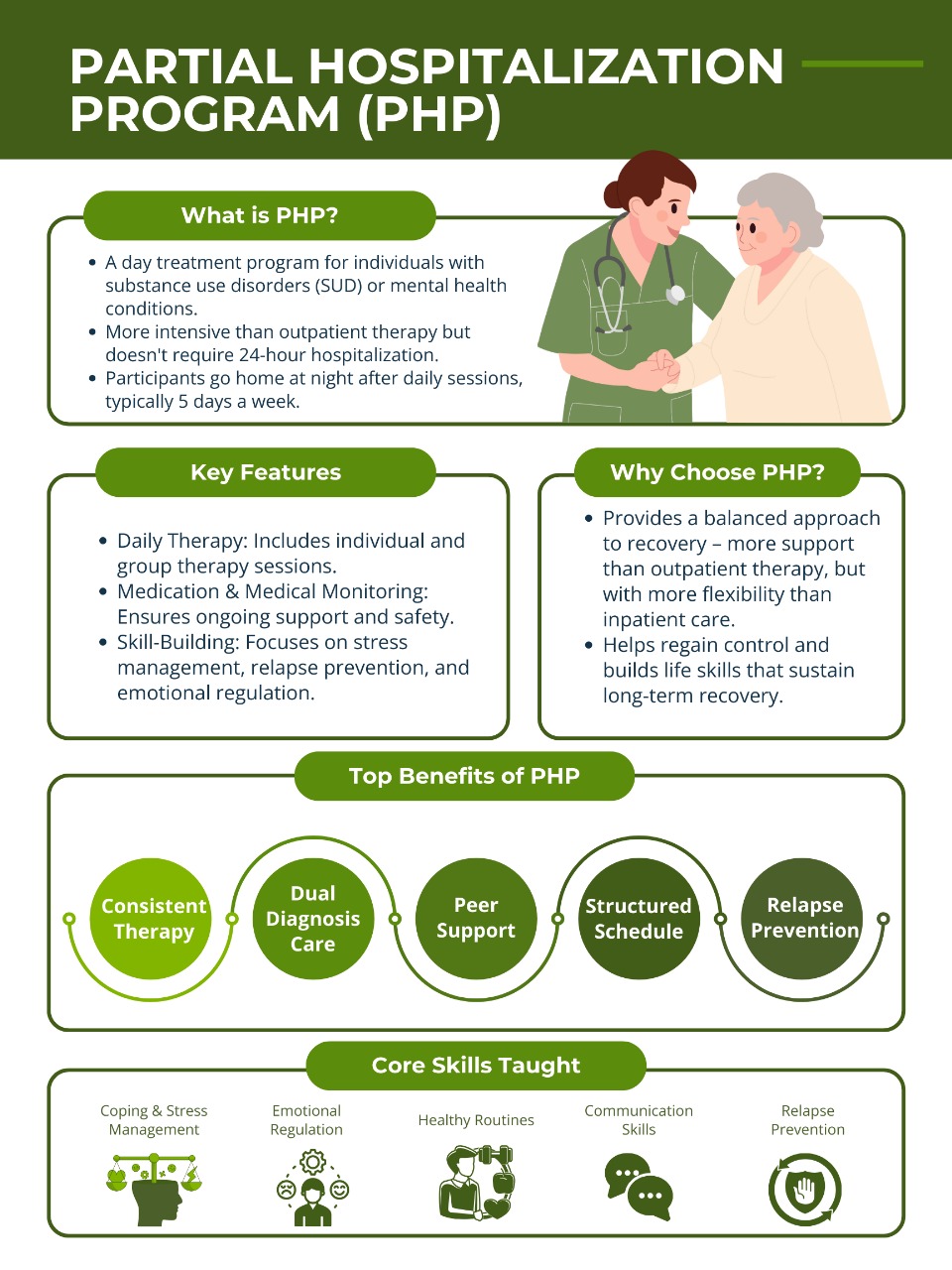
A Partial Hospitalization Program (PHP) is one of the most structured outpatient options available.
Clients attend treatment:
- 5 to 6 days per week
- Several hours per day
PHP includes:
- Individual therapy
- Group therapy
- Medication management, if needed
- Mental health monitoring
It’s often used as a step down from inpatient care, or as a starting point for people who need strong support but don’t require overnight supervision.
Intensive Outpatient Program (IOP)
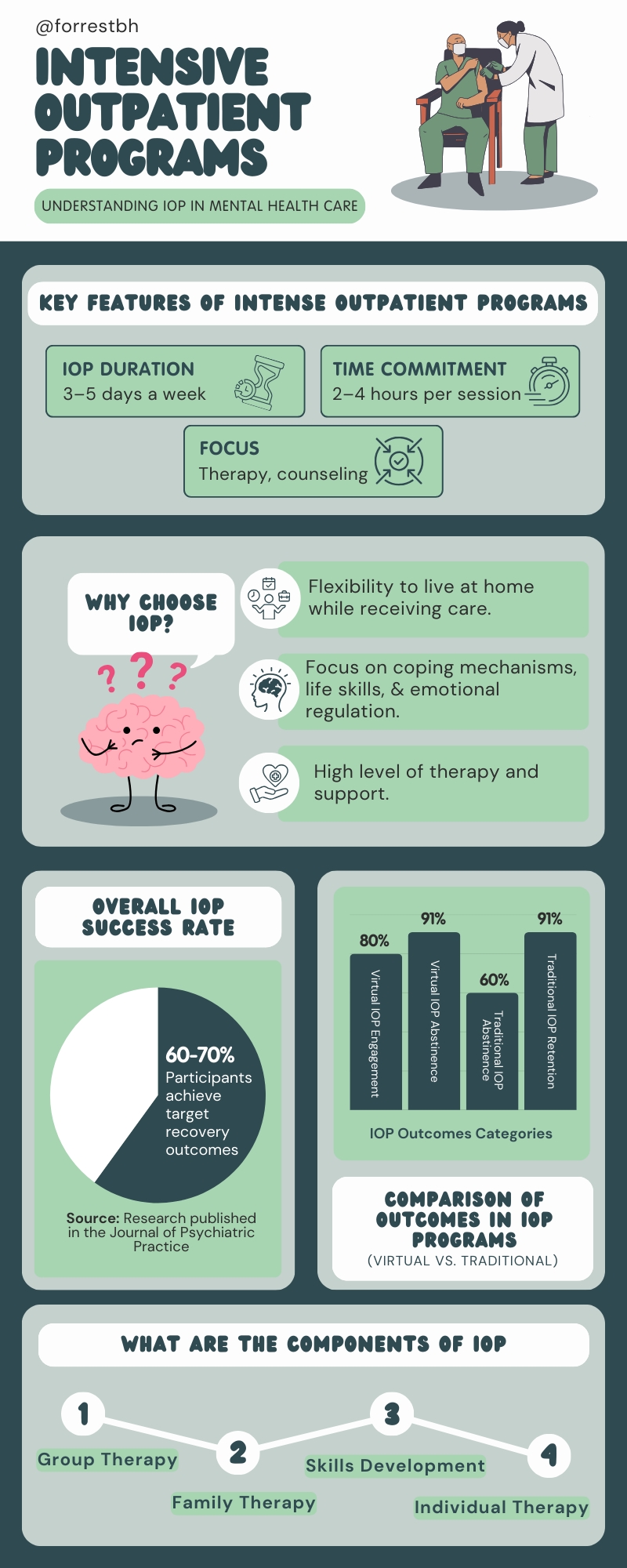
An Intensive Outpatient Program (IOP) is less time-intensive than PHP but still structured.
Clients usually attend:
- 3 to 5 days per week
- 2 to 4 hours per session
IOP focuses on:
- Therapy and coping skills
- Relapse prevention
- Emotional regulation
- Real-life application of skills
It provides more flexibility than PHP while still providing consistent support.
Standard Outpatient Treatment
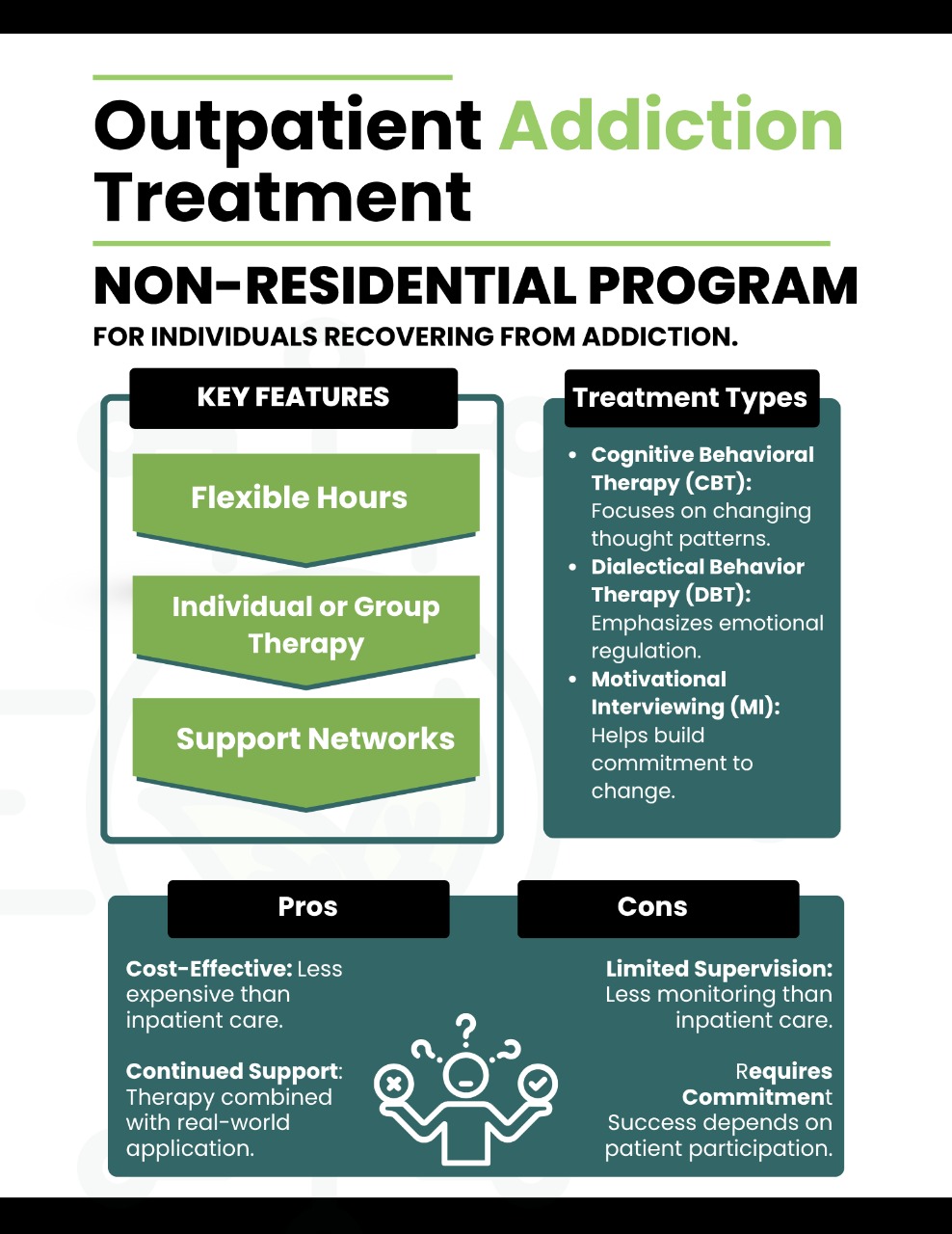
Standard outpatient care is the least intensive level.
It usually involves:
- 1 or 2 therapy sessions per week
- Individual or group counseling
Outpatient care is designed for people who:
- Have stable symptoms
- Are managing daily responsibilities
- Need ongoing support rather than intensive care
What is The Difference Between PHP and IOP?
Understanding the difference between PHP and IOP is important when deciding where to start.
The main differences come down to time, structure, and intensity.
Time Commitment
PHP requires a larger time commitment. It often feels similar to a full-time schedule during the day.
IOP, on the other hand, is more flexible. Many programs offer morning or evening sessions so clients can continue working or attending school.
Level of Support
PHP provides more hands-on support. Clients are monitored more closely, and care teams can respond quickly if symptoms change.
IOP still offers strong support, but with more independence. Clients are encouraged to apply what they learn outside of sessions, in real life.
Who It’s Best For
PHP is best for situations when:
- Symptoms feel overwhelming
- Daily functioning is difficult
- You’re stepping down from inpatient care
- You need more structure to stay stable
IOP is a better fit if:
- You’re stable but still need regular support
- You’re stepping down from PHP
- You can manage daily responsibilities with guidance
Outpatient vs PHP: What’s the Real Difference?
When comparing outpatient care to PHP, the differences are clearer:
Structure
PHP is highly structured. You’re engaged in treatment most of the day.
Outpatient care is more flexible and minimal. You attend sessions but spend most of your time outside of treatment.
Clinical Support
In PHP, therapists monitor your progress closely and adjust treatment as needed.
In standard outpatient care, support is less frequent. The progress depends more on what happens between sessions.
Stage of Recovery
PHP is often used earlier in recovery or during periods of instability.
Outpatient care is typically used when:
- Symptoms are more manageable
- You’ve already built coping skills
- You need stability rather than intensive support
How to Choose the Right Program?
Choosing between PHP, IOP, and outpatient care isn’t about picking the best option. It’s about choosing the right level of support for where you are right now.
Here are a few things to consider:
How Stable Do You Feel Day to Day?
If your symptoms feel unpredictable or overwhelming, PHP may provide the structure you need.
If you’re more stable but still need support, IOP or outpatient care may be enough.
Can You Manage Daily Responsibilities?
If work, school, or family responsibilities feel difficult to manage, PHP can help stabilize things first.
If you’re functioning but struggling internally, IOP offers a balance.
Have You Tried Lower Levels of Care Before?
If weekly therapy hasn’t been enough, stepping up to IOP or PHP provides more consistent support.
What Does Your Environment Look Like?
A supportive home environment can make outpatient or IOP more effective.
If your home or work environment includes triggers or instability, a more structured program like PHP may be safer.
How Forrest Behavioral Health Supports Every Level of Care?
At Forrest Behavioral Health, we don’t have the same treatment plan for everyone.
Our treatment is based on your current needs, and we design programs that adjust as you progress. Many of our clients begin at a higher level of care and step down gradually as they gain stability.
Our programs include:
- PHP for daily support
- IOP for flexible but consistent care
- Outpatient therapy for long-term support and stability
The goal isn’t just to help you feel better temporarily; it’s to help you build a level of stability that lasts beyond treatment.
Final Thoughts: It’s About the Right Fit, Not the Highest Level
It’s easy to assume that the more treatment you get, the better.
But the right program is the one that matches your needs, not the one with the most hours!
Understanding the difference between PHP and IOP, and how outpatient vs PHP compares, helps you make a more informed decision.
If you’re unsure where to start, that’s normal. Most people don’t have a clear answer right away.
Therefore, a professional assessment can help you understand which treatment makes sense and what will give you the best chance at long-term progress.
If you’re considering treatment, reach out to us and take the strong first step. We will help you regain control of your life and build a healthier future!