
When Anxiety Starts Affecting Your Daily Life: Treatment Options in Illinois
We often confuse overworrying or feeling unsure before something with anxiety, but the actual Generalized Anxiety Disorder is more serious than feeling knots in the stomach before a presentation.
Your brain runs a threat detection system that activates when you’re in danger. However, if someone has anxiety, that system is stuck in threat mode. Your cortisol hormone circulates constantly, and your muscles stay braced for potential impact (which doesn’t come because it’s all anxiety playing and no real danger is there).
When this false alarm becomes common for your body and brain, your cognitive function, sleep, and digestion are disrupted. And sadly, your brain adapts to this overdrive situation and starts treating it as the baseline.
Because of all these changes, your body forgets what normal feels like, and that distressed state starts affecting your daily life. That said, multiple treatment options exist to uproot this condition so your nervous system is back to normal.
If anxiety is affecting your daily life and has become more than just a little over-worrying, keep reading to understand your treatment options.
Anxiety Treatment Options in Illinois
The National Institute of Mental Health (NIH) states that around 31.1% of US adults experience anxiety at some point in their lives. Even though anxiety disorders are the most common mental health disorders in the world, only 1 in 4 people receive treatment for them, as per the World Health Organization (WHO).
But fortunately, the healthcare sector is actively working to fix this situation and make treatment accessible for the masses.
If you’re in Illinois, here are some anxiety treatment options to seek before it takes over your life:
Psychotherapy
Psychotherapy is the main treatment method for anxiety because it connects you with a licensed therapist. You have structured and goal-driven sessions with the expert where you work through the catalysts behind your anxiety.
Here are the main therapy options that mental health treatment centers will offer:
Cognitive Behavioral Therapy (CBT)
Anxiety makes you believe that only the worst-case scenario is a possible outcome of something about to happen. It tells you that since you cannot cope with the situation, avoiding the scary thing is safer (even if it’s as small as calling someone).
Therefore, experts use CBT to directly challenge these distortions. During cognitive behavioral therapy, you learn to examine your anxious thoughts like evidence. You ask yourself questions like, Is this thought actually true? Is my brain just overestimating? If you continue with this evidence-based path, you can interpret situations on more realistic grounds instead of perceived fear.
Exposure Therapy
Experts say if you delay or avoid something that scares you, it keeps the anxiety alive. That’s because your brain registers it as confirmation that the threat was real, and you cannot see it as something normal.
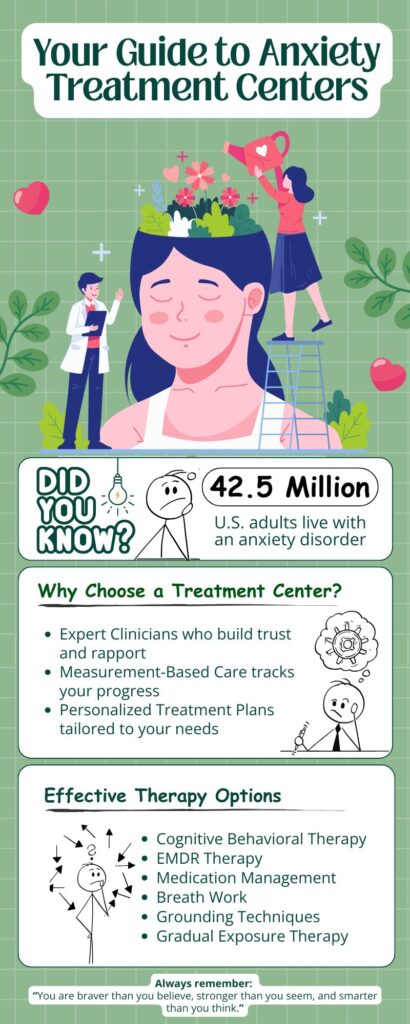
Therefore, exposure therapy is a main anxiety treatment option because it can break this cycle. During this therapy, the therapist builds a structured hierarchy and guides you through it. For instance, they may list your triggers from least to most anxiety-provoking and help you gradually face them. Since your nervous system also learns through these repeated experiences that the feared trigger isn’t dangerous, you come to terms with it.
Acceptance and Commitment Therapy (ACT)
Acceptance and commitment therapy is for people who have exhausted themselves fighting their anxiety. Instead of trying to eliminate anxious thoughts, this therapy changes your relationship with them.
You learn to observe thoughts with an expert’s guidance without treating them as facts or commands. Moreover, this therapy needs your commitment to value-driven actions despite the anxiety, and eventually, it stops being the thing that decides what you do and don’t do.
Medications
When anxiety is severe enough to affect your daily functioning, therapy alone may not suffice. That’s when your mental health treatment center will recommend medication to reduce anxiety’s neurological and physical intensity. Sure, these medicines do not eradicate the root cause behind all that anxiety, but they help you function better. Note that a psychiatrist or primary care doctor prescribes these according to your symptom severity, medical history, and how chronic your anxiety is.
Here are the main categories of meds used for anxiety treatment:
SSRIs/SNRIs
SSRIs/SNRIs are the first medication doctors reach for anxiety because they increase the serotonin availability in your brain, i.e., the chemical that regulates your mood and stress response. Also, since these meds are not addictive, you might be put on these for the long term. But the catch is that they easily take 2-6 weeks to reach full effect, so there is no immediate relief with them.
Buspirone
Buspirone is another non-sedating medicine for generalized anxiety disorder. It won’t make you drowsy or impair your functioning, and it carries no dependency risk. Also, similar to SSRIs, Buspirone also works gradually and suits people who need steady anxiety management.
Beta-Blockers
Beta-blockers target the physical symptoms your body produces because of anxiety. For example, they help you with a racing heart, trembling hands, or a flushed face before a high-pressure situation. Beta-blockers suppress different stress responses by blocking adrenaline’s effect on your body, so you take them situationally (like before a high-pressure event, but only after a prescription).
Benzodiazepines
Benzodiazepines can calm an acute anxiety episode within 30 minutes by slowing your central nervous system, so they’re used for more emergency situations. However, they’re highly addictive and easy to abuse, so doctors only prescribe them short-term.
Lifestyle Adjustments
Therapy and medicines control your anxiety symptoms, but when you also pair a healthy lifestyle with them, the results are more sustainable. It might sound repetitive, but healthy habits reflect in your physical and mental health, so never take them for granted. Sure, these things don’t resolve anxiety, but they lower your baseline so the condition doesn’t have as much fuel to run on.
Here are some changes mental health experts recommend:
Regular Aerobic Exercise
Anxiety floods your body with cortisol, and exercise can control this problem. Put simply, aerobic activity, i.e., running, cycling, or brisk walking, can release endorphins (happy hormones) in your body to stabilize your mood. And if you’re exercising regularly, it retrains your stress response so your body stops treating everyday situations like emergencies.
Sleep Hygiene
Bad sleep and anxiety can make each other worse. For instance, if you don’t sleep well, your brain’s threat detection is affected, and everything might feel harder to handle. On the other hand, if your sleep schedule is consistent, you limit screens before bed, and keep your room cool and dark, it will help your nervous system recover.
Dietary Changes
Here are some simple facts about our daily life:
- Caffeine overstimulates your nervous system
- Alcohol disrupts your sleep
- Skipping meals causes blood sugar crashes
If you control these aspects, it can help reduce your anxiety flare-ups and also improve your physical health.
Things Can Take a Turn for the Better
Once you decide to fix your mental health, you’ll know that there are multiple accessible options right here in Illinois. Forrest Behavioral Health is also one call away, so stop delaying the treatment and regain control over your life.