

What Makes an IOP Program Effective for Mental Health Treatment?
The American Psychological Association (APA) reports that cost, lack of time, and concerns about confidentiality are the main reasons people avoid getting mental health treatment. Since this treatment also has a reputation for pulling you out of your life, many delay and face challenges that could have been easily avoided.
Therefore, models like intensive outpatient (IOP) treatment for mental health exist so you don’t have to pause your life. Instead, you can actively complete treatment milestones and overcome your mental health challenges without much disruption to your normal routine.
However, some assume that following the IOP path means the results wouldn’t be as great, and that’s what this article addresses. Keep reading to understand how this plan is sufficiently effective and practical when your mental well-being isn’t at its best.
How Does an Intensive Outpatient Program Work for Mental Health Treatment?
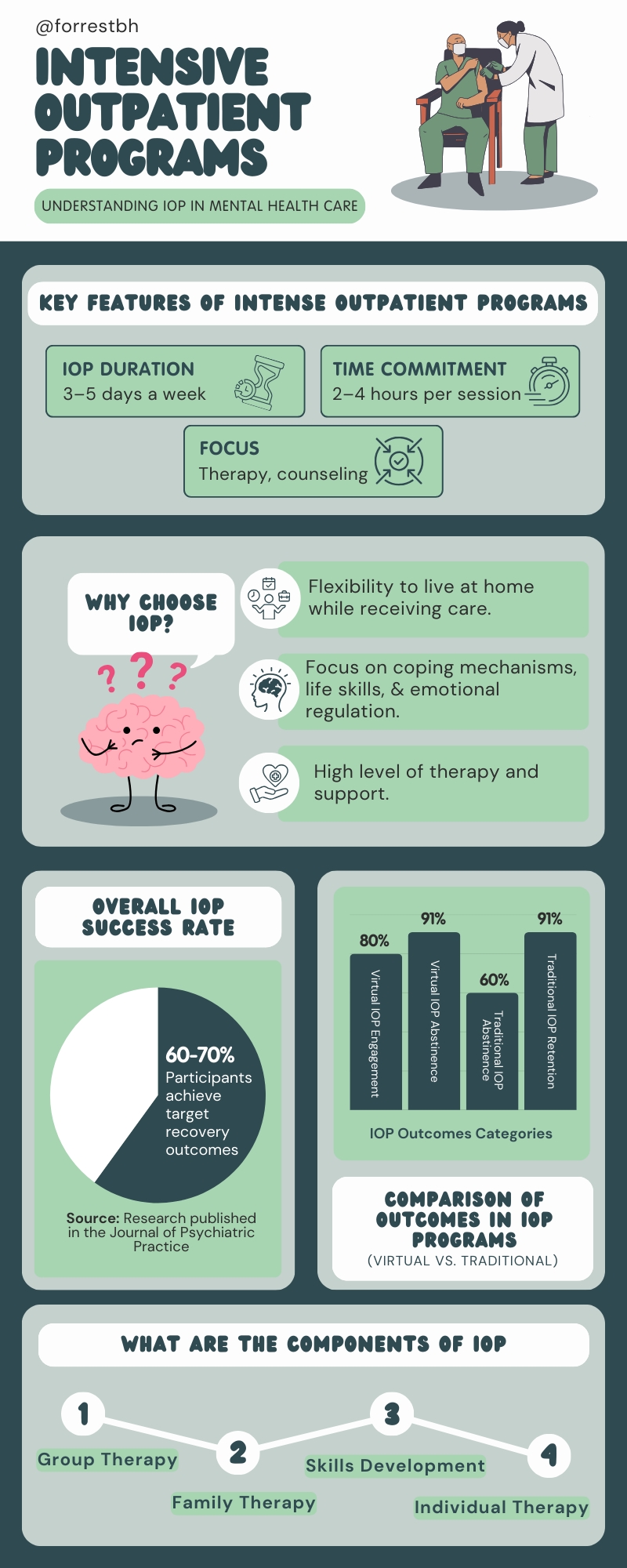
An intensive outpatient program is a middle ground between seeing a therapist once a week and being admitted to a treatment center. During IOP, you come in 3 to 5 days a week for almost 3-hour sessions and return home afterward. Notably, most intensive outpatient mental health programs last about 8 to 12 weeks.
Not to mention, you don’t have to step away from your responsibilities while receiving treatment and can maintain your normal life. That said, here are some facts that make an intensive outpatient program effective for mental health treatment:
Clinical Intensity Without Hospitalization
Sometimes, weekly therapy for mental health doesn’t suffice because the symptoms are too frequent and disruptive. At the same time, getting admitted to a treatment center isn’t the right answer either because it’ll pull you away from your standard life and responsibilities.
Therefore, a credible mental health treatment center will recommend that you start an IOP program.
During the 3-5 hours you spend at the center, you receive the level of clinical care that matches the seriousness of what you’re going through. Also, your progress is closely tracked, and any issues are addressed before they escalate.
Group Therapy at the Core
Some mental health treatment models offer group therapy as an add-on, but an intensive outpatient program is different. Since clients are attending three to five days a week for several hours at a time, group therapy becomes a consistent experience.
When you repeatedly show up with the people dealing with challenges similar to yours, it builds a level of trust and honesty that weekly programs rarely achieve. And that environment matters deeply for mental health recovery because isolation and shame are two of the strongest forces keeping people stuck.
Concurrent Individual Therapy
Sure, group therapy builds connection and breaks isolation, but it cannot go deep into your history, trauma, or triggers that might be driving your struggles. You need a private and focused conversation for these aspects. Therefore, individual therapy runs alongside group work throughout an intensive outpatient program.
Eventually, the coping skills you develop during group sessions are reinforced, and your therapist understands your full picture. Both components, i.e., group and individual therapy, inform each other and produce a level of care that neither format can deliver alone.
Skill Testing Between Sessions
Learning a coping skill in a therapy session is one thing, but using it when your anxiety peaks or when you face a difficult conversation is something else. Luckily, an intensive outpatient program closes this gap because you return home after every session, and your real life becomes part of the treatment.
Since you practice your coping skills in situations that challenge you, instead of a controlled environment, they solidify faster. Also, you come back to the next session having tested what you learned and can ask real questions to work through. Surely, that back-and-forth between clinical guidance and lived experience soon starts feeling like growth.
Active Family Involvement
Mental health struggles ripple into relationships and the way families communicate and respond without even realizing it. Even if one person makes genuine progress in treatment, they might still come home to an environment that unknowingly pulls them backward.
But luckily, IOP fixes this aspect because family involvement is a critical part. The experts leading your mental health treatment explain your condition and triggers to your close people so they can respond instead of reacting. If your family learns to support your recovery instead of unknowingly working against it, those difficult moments become easier to navigate.
Evidence-Based Treatments
Talking through your feelings has value, but that support alone doesn’t bring a lasting change if there’s no clinically proven framework backing it. That’s why IOP programs are built around evidence-based treatments like Cognitive Behavioral Therapy (CBT) and Dialectical Behavior Therapy (DBT).
These therapies are structured clinical tools with measurable outcomes and can help rewire one’s mental health. For example, CBT rewires your thought patterns that could drive destructive behavior, and DBT builds emotional regulation skills. If your emotions have felt unmanageable for years, having these methods applied consistently compounds the results.
Integrated Medication Management
If you’re put on medicines for mental health, know that they require observation and adjustment based on how you’re functioning day to day. And since a psychiatrist making these decisions based on a 15-minute appointment might not consider the whole picture, IOP delivers a more integrated approach. A psychiatrist is part of your treatment plan and sees how you are responding to therapy and the changes in your symptoms.
The Right Help Changes Everything
Struggling with your mental health and doing nothing about it can be a slow decline. Every week you spend without the right level of care is another week of unnecessary suffering. Luckily, an intensive outpatient program exists for when you’re feeling like you’re hanging on but know you need more. If you’re ready to fix your life and make things better for your future self, Forrest Behavioral Health is a call away. Let’s discuss and plan a treatment that works for your situation.