

Steps to Starting Bipolar Disorder Treatment in Lexington, MA
If you or someone you care about is beginning the journey toward Bi Polar Disorder Treatment, it can feel overwhelming. Still, it also marks the first step toward stability, clearer thinking, and a more manageable life.
This guide walks you through practical, local, and evidence-based steps to get started in Lexington, Massachusetts: how to find providers, what treatments to expect, how to prepare for your first appointments, the kinds of community resources, and follow-up care that make long-term recovery possible.
Why Starting Treatment Matters
Bipolar disorder affects quite a share of adults: roughly 2.8% of U.S. adults experience bi polar disorder in a given year; roughly 4.4% will also experience it at some point in their lives.
Early, consistent treatment reduces relapse, improves functioning between episodes, and lowers risks – such as hospitalization and suicide. These are not small benefits; treatment changes lives.
Recognize the Signs and Gather Your History
Typical Symptoms to Watch For
Bipolar disorder usually involves mood swings between mania/hypomania, high energy, reduced need for sleep, impulsivity, racing thoughts, and depression: low mood, low energy, loss of interest, and concentration problems.
If you notice these patterns, especially if they impair work, relationships, or safety, it’s time to seek professional help.
You might also want to consider recording specific examples of how these phases have affected your daily life, dates, duration, and triggers. It’s because clinicians rely on these details.
Collect Personal and Family Medical History
Before your appointment, it helps to collect your personal and family medical history in one place.
Try to put together a simple timeline of your mood episodes, including approximate dates and how long each episode lasted.
Note down any medications you’ve tried in the past, along with their doses, side effects, and whether they helped or not.
Also include information about substance use, such as alcohol, cannabis, or stimulants. Recording your usual sleep patterns also helps. Finally, do not forget to record major life stressors.
Bringing all of this together makes it easier for clinicians to understand what’s going on and provide the right treatment quickly.
What to Expect at Your First Psychiatric Appointment
Assessment and Diagnosis
At your first psychiatric appointment, you can expect a detailed assessment that includes a diagnostic interview, your mood and episode history, current symptoms, safety screening for suicidal thoughts, and your medical history.
You may also be given standardized questionnaires.
The clinician might clarify whether physical labs or tests are needed, such as thyroid function or metabolic panels, since medical conditions can mimic or influence mood symptoms.
Discussion of Immediate Risks and Safety
If you are experiencing suicidal thoughts, self-harm urges, severe mania, or psychosis, the clinician will prioritize safety.
This often includes creating a safety plan, reviewing emergency contacts, and arranging urgent care or hospitalization if necessary.
Initial Treatment Outline
After the assessment, the clinician will explain the initial treatment approach, which may include starting or adjusting medications such as mood stabilizers or certain antipsychotics, along with scheduling psychotherapy.
Labs may be ordered before or after medication begins, especially for treatments like lithium or for monitoring metabolic health. You will also receive a follow-up plan, typically within 1–4 weeks, to ensure close monitoring as treatment starts.
Understanding Evidence-Based Treatments
Medications
Medications play a central role in helping people with bipolar disorder maintain stability and prevent mood episodes.
Lithium is one of the most well-known options; it helps reduce mood swings and the risk of relapse, and research also shows it can lower the risk of suicide. Because it requires regular blood tests to ensure safety, your doctor will closely monitor your progress.
If lithium isn’t suitable, other options like valproate, lamotrigine, or certain atypical antipsychotics may be recommended.
Antidepressants are sometimes also used, but usually alongside a mood stabilizer to avoid triggering mania.
Finding the right combination of medications can take time, and it often involves adjustments based on how your body responds, side effects, and changes in your symptoms. Close communication with your psychiatrist ensures that your treatment plan is both safe and effective for your individual needs.
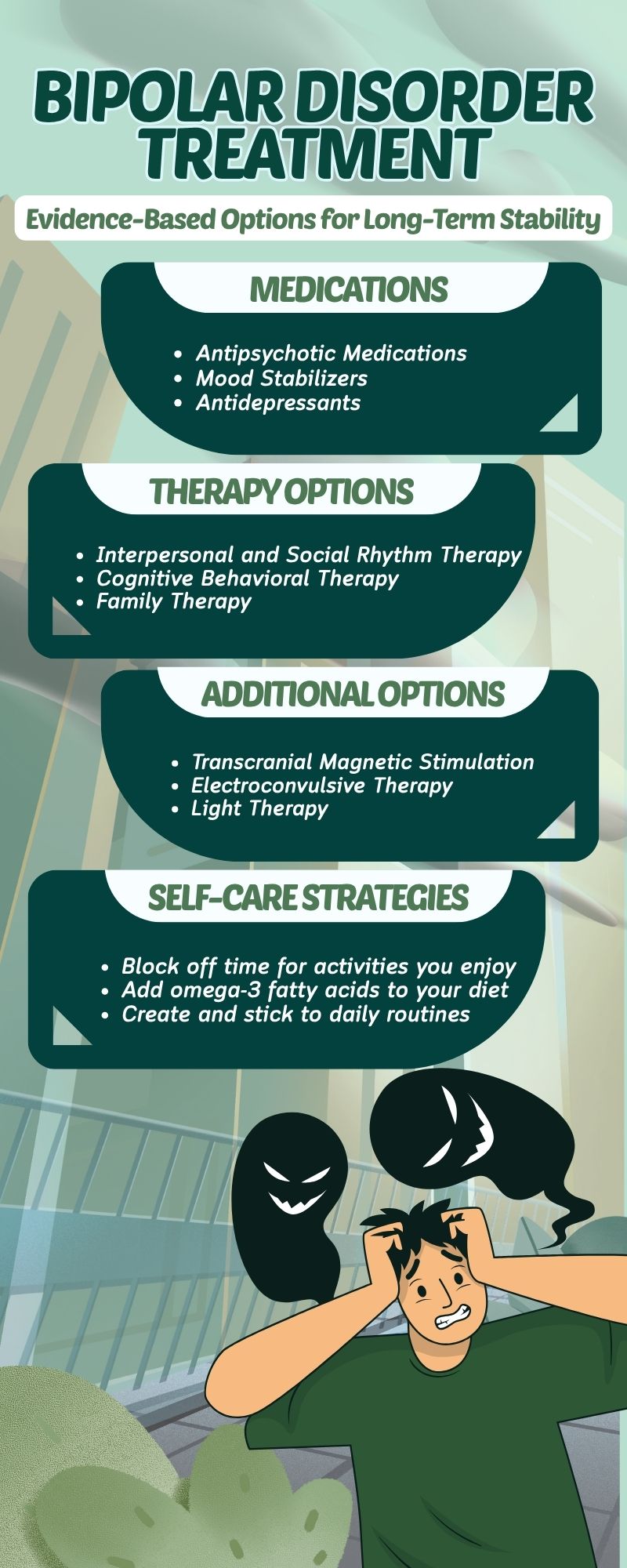
Psychotherapy, Skills, and Structure
Therapy isn’t just “talking about your feelings”; it actually teaches you tools you can use in real life.
CBT, for example, helps you notice patterns in your thoughts and gives you ways to handle depressive moments or stress. Keeping your sleep, meals, and activities consistent can seriously reduce the chances of mood episodes.
There’s also family-focused therapy, which brings your family into the process so they understand what you’re going through and how they can support you better.
Understanding the Evidence
Bi polar disorder is more common than many people realize. According to the NIMH, about 2.8% of U.S. adults experience it in a given year, and roughly 4.4% will experience it at some point in their lives. This highlights the importance of having treatments that are accessible and effective.
Research consistently shows lithium to be a highly effective mood stabilizer; it can reduce relapses and lower suicide risk, though it requires regular blood monitoring and personalized care.
Experts and guidelines from organizations like CANMAT, ISBD, and the VA/DoD emphasize that the best outcomes usually come from combining medication with psychosocial support that’s customized to the individual’s history, needs, and preferences.
If you’re ready to take the next step toward professional support in Lexington, Forrest Behavioral Health offers compassionate, evidence-based treatment for bi polar disorder, including medication management, therapy, and personalized care plans to help you regain stability and improve quality of life.
Final Thoughts
Starting treatment for bipolar disorder can feel daunting, but it’s also the first step toward a more balanced and manageable life.
With the right support, including medications, therapy, and personalized care, many people learn to recognize their mood patterns, prevent relapses, and regain control over daily life.
Being prepared for your first appointment, knowing your history, and reaching out to compassionate providers like Forrest Behavioral Health can make a huge difference.
Remember, progress often comes in small steps, and seeking help is a sign of strength. You don’t have to navigate this journey alone.