

Bipolar Disorder Treatment in Burlington, MA – What to Expect and Where to Start
The first step to managing bipolar disorder isn’t medication. It’s understanding. Learn what recovery looks like in Burlington, MA.
Bipolar disorder treatment often feels overwhelming the first time you look for help. There are various medications, therapeutic styles, emergency plans, and lifestyle changes to consider.
This guide is designed to explain what to expect in Burlington, Massachusetts; how bipolar disorder is diagnosed; effective, evidence-based treatments; local resources in and near Burlington; and practical tips for initiating care and staying safe.
Quick Facts You Should Know Up Front
About 2.8% of U.S. adults had bipolar disorder in the past year, and roughly 4.4% will experience it at some point in their lives. These numbers remind us that bipolar disorder is common and treatable.
Bipolar disorder increases the risk of suicide and other co-occurring problems – such as substance use and anxiety. Early, continuous treatment reduces risk and improves daily functioning.
Expected Outcomes and Realistic Timelines
Treatment doesn’t offer an instant “cure,” but it can significantly reduce the frequency and severity of mood episodes and improve quality of life. Many people achieve good stability with the right medication regimen and therapy within weeks to months, though fine-tuning often continues over years. Regular follow-ups and honest communication with your clinician are essential.
Statistically, early and continuous treatment improves long-term outcomes and reduces emergency visits and hospitalizations. Because bipolar disorder is a mood-regulating condition, long-term maintenance treatment is frequently recommended to prevent relapse.
Safety Planning and Crisis Prevention
When you’re living with bipolar disorder, it really helps to have a plan for the tough days.
A safety plan isn’t about expecting bad things to happen; it’s about being ready, just in case your mood changes or you start feeling unsafe. Think of it as something that gives you a bit of control when things feel out of control.
You can make a safety plan with your therapist, doctor, or even a trusted family member. It’s personal, something that makes sense for you.
Here’s What It Usually Includes:
→ Noticing Your Early Warning Signs.
Maybe you start sleeping less, talking faster, feeling extra restless, or getting more irritable. Catching these signs early can help you slow things down before they get harder to manage.
→ Having Small Coping Steps Ready.
These are simple things that help calm your mind: taking a break, sticking to your sleep routine, calling someone who listens, or doing something that grounds you, like a walk or a drive.
→ Keeping A Few Important Contacts Close.
Write down the names and numbers of people you can reach when things feel too heavy: a close friend, a family member, your therapist, or a local helpline.
→ Making Your Surroundings Safe.
This could mean putting away anything that might harm you, or asking someone you trust to help. It’s just a way to protect yourself when your mind feels unsteady.
Having a plan doesn’t mean you’re weak; it means you’re being kind and proactive about your mental health.
If you’re looking for caring, professional support, you can reach out to the team at Forrest Behavioral Health. Our team offers compassionate, evidence-based care for people living with bipolar disorder and other mental health challenges.
You don’t have to face this on your own; help is available, and healing truly can begin with just one step.
Lifestyle and Self-Help, Supports That Matter
Small daily habits can make a big difference alongside medical treatment.
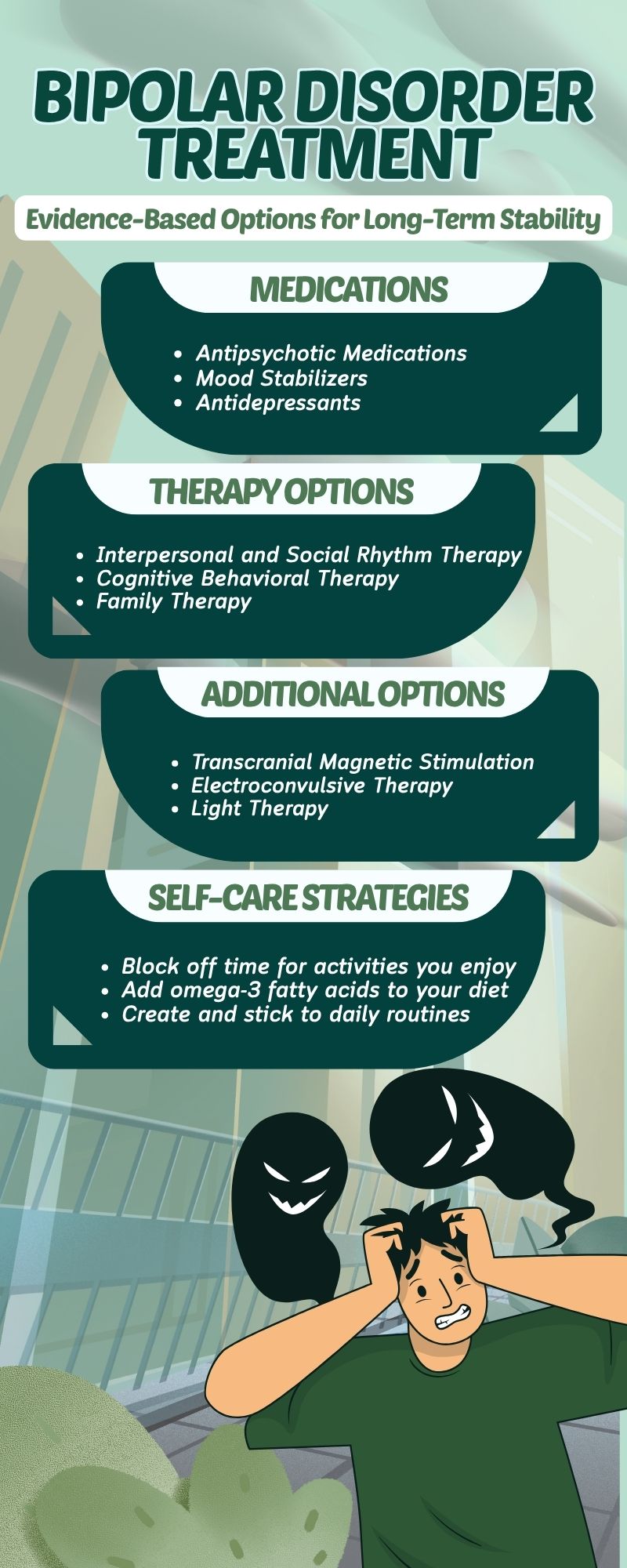
Keeping a regular sleep and wake schedule helps lower the risk of mood episodes, while limiting alcohol and avoiding recreational drugs can prevent mood swings from worsening.
Tracking your moods and triggers, whether through a journal, chart, or app, can help both you and your clinician spot patterns and act early.
Building a support network is also important; family-focused therapy and local support groups can reduce feelings of isolation and encourage you when you need it most.
For children and teens, schools and employers may offer accommodations, like flexible scheduling. In Burlington, for example, Public Schools work with local behavioral health programs, so if a student needs extra help, a school counselor can provide guidance and support.
Common Questions People Ask
Will I Have to Stay on Medication Forever?
This is one of the most common and completely understandable questions people have. The truth is, it depends on your unique situation. Bipolar disorder is a condition that needs consistency, and sudden changes can trigger mood swings. Think of your treatment plan as something flexible that grows with you and your goals over time.
Is Bipolar Disorder Curable?
Bipolar disorder doesn’t have a simple cure, and honestly, that can feel frustrating or scary. That might be a mix of medication, therapy, keeping a routine, and having people you can lean on when things get tough. Over time, you start noticing the little warning signs, maybe you’re sleeping less, feeling more wired, or slipping into low moods, and you learn ways to deal with it before it spirals.
Recovery isn’t about never having symptoms. It’s about learning how to live with them without letting them run your life. You can still have fun, work, love, and enjoy life; bipolar disorder just becomes one part of your story, not the whole thing.
How Do I Find the Right Psychiatrist or Therapist?
Finding the right mental health professional can take a little time, but it’s worth it. You’ll want someone who makes you feel safe, understood, and respected, and who has real experience treating mood disorders like bipolar disorder.
Final Thoughts
Living with bipolar disorder can feel overwhelming at times, but you don’t have to face it alone. With the right combination of treatment, support, and daily habits, stability and balance are absolutely possible. Small steps, like keeping a routine, tracking your moods, and reaching out for help when you need it, can make a real difference in your day-to-day life.
Finding a trusted psychiatrist or therapist, building a support network, and having a safety plan are all key pieces of managing bipolar disorder successfully. Remember, recovery isn’t about perfection or never having symptoms; it’s about learning to live well, feeling supported, and taking control of your mental health one step at a time.