

Understanding Bipolar Disorder and Where to Find Help in Bedford, Massachusetts
If you or someone you love is living with mood swings that are more than “just a bad day,” it’s okay to look for answers.
In this article, we’ll explain what bipolar disorder is, how common it is, what Bipolar Disorder Treatment typically looks like, and importantly, where people in and around Bedford, Massachusetts can find compassionate, practical help.
What is Bipolar Disorder?
Bipolar disorder is a mental health condition that causes noticeable shifts in mood, energy, and the ability to carry out daily tasks. These mood shifts can range from emotional highs, mania or hypomania to lows, depression.
During manic phases, people may feel extremely energetic, talkative, or impulsive; during depressive phases, they may feel very low, exhausted, and hopeless.
The pattern, frequency, and intensity can vary a lot from person to person.
There are different types, most commonly Bipolar I, which includes full manic episodes, and Bipolar II, which includes hypomania and more prolonged depressions, but the important thing to remember is that bipolar disorder is treatable, and there are many ways to manage it so people can live meaningful, stable lives.
How Common is Bipolar Disorder?
In the United States, an estimated 2.8% of adults had bipolar disorder in the past year, and about 4.4% of adults will experience bipolar disorder at some point in their lives. These national estimates come from large, trusted surveys and help put the condition into perspective.
Mental healthcare has improved in recent years, but many people with mood disorders still face barriers to getting consistent treatment. In 2020, about 20.3% of U.S. adults received some form of mental health treatment in the previous year, therapy, medication, or both.
Why Timely Treatment Matters
Bipolar disorder is not just “extreme moodiness.”
Left untreated or insufficiently treated, it can lead to major disruptions: lost work or school time, broken relationships, substance misuse, and a higher risk of self-harm and suicide.
Studies show people with bipolar disorder have a much higher risk of suicidal behavior compared with the general population; estimates often cited put the suicide rate many times higher.
Some reviews suggest a 10 to 30-fold greater risk!
This is why early, consistent treatment and safety planning are crucial.
What Does Bipolar Disorder Treatment Look Like?
Treating bipolar disorder isn’t something that happens overnight; it’s a step-by-step process that combines different types of care to help each person find stability.
Since everyone’s experience with bipolar disorder is unique, treatment plans are carefully adjusted to fit their individual needs. The primary goal is to bring moods into balance, reduce the frequency of mood swings, and make daily life feel calmer, steadier, and more enjoyable.
Below are the key parts of treatment, shared in simple, easy-to-understand terms
Medication, Stabilizing Mood
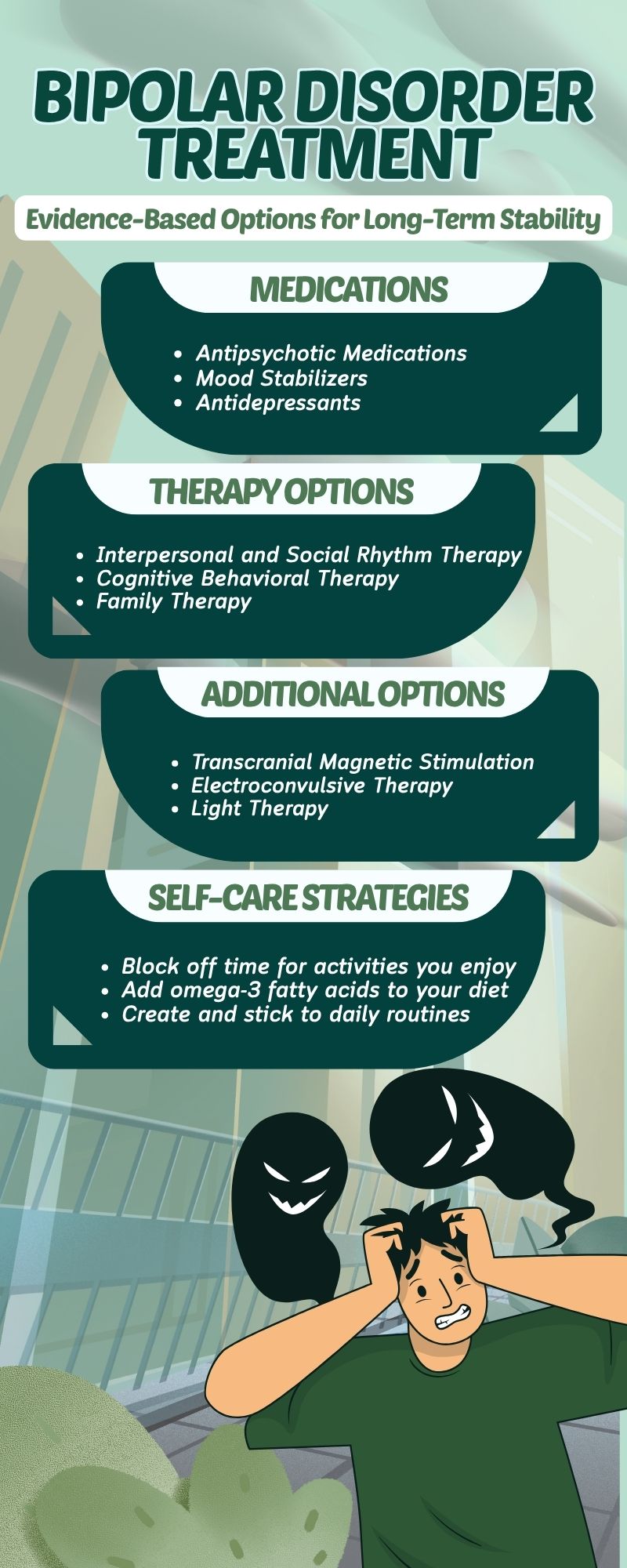
For most people, medication is the foundation of bipolar disorder treatment because it helps bring stability to extreme mood swings.
The most common medicines include mood stabilizers like lithium or certain anticonvulsants, and second-generation antipsychotics, which can help control both manic and depressive phases.
According to the American Academy of Family Physicians (AAFP), these medications are often the first step in reducing the intensity and frequency of mood episodes.
Psychotherapy, Learning Tools for Everyday Life
Several kinds of therapy can make a big difference. Cognitive Behavioral Therapy (CBT) helps you notice negative thoughts and replace them with more realistic and positive ones.
Interpersonal and Social Rhythm Therapy (IPSRT) focuses on creating steady daily habits like getting regular sleep, eating at consistent times, and maintaining a routine, which can help keep your moods more stable.
Family-focused therapy also plays an important role, as it brings your loved ones into the process so they can better understand bipolar disorder and learn how to give you the right kind of support.
Lifestyle and Self-Care, Small Things That Make a Big Difference
Along with medication and therapy, everyday habits play a huge part in managing bipolar disorder. Keeping a regular sleep schedule, eating healthy meals, and doing light exercise can all help keep your mood more balanced.
Even simple changes, like going to bed at the same time each night or spending a few minutes outside in the sunlight, can have a surprisingly positive effect on how you feel.
It’s also really important to stay away from alcohol and drugs, since they can make mood swings worse and reduce the effectiveness of medications.
Many people find it helpful to keep a mood journal, where they note how they feel each day, how much they slept, and what activities they did.
Crisis and Safety Planning, Getting Ready for Tough Moments
Living with bipolar disorder can sometimes bring really hard days, moments of deep sadness, confusion, or overwhelming energy.
That’s why having a safety plan ready is important.
A safety plan is simply a personal guide that reminds you what to do and who to reach out to when you start feeling unsafe or out of control.
It can include names and phone numbers of trusted family members or friends, your therapist’s contact information, and local or national helplines you can call right away.
And if you’re looking for compassionate, expert help to manage bipolar disorder or any other mental health concern, you can reach out to Forrest Behavioral Health. The team offers personalized care, therapy, and treatment plans designed to help you find balance and feel better one step at a time.
Final Thoughts
Living with bipolar disorder can be tough, but with the right help and support, finding calm and balance is possible.
It’s not a sign of weakness; it’s a condition that can be managed with care, patience, and understanding. Every step counts, whether it’s going to therapy, taking your prescribed medications, or keeping a healthy daily routine. Each action helps you feel steadier and improves your overall quality of life.
If you’re in Bedford, Massachusetts, support is nearby. Reaching out to a professional or asking for guidance can make a real difference. Forrest Behavioral Health offers caring, personalized treatment for people dealing with bipolar disorder and other mental health concerns. Their team helps you regain stability, build confidence, and live life with more hope and ease.
Remember, asking for help is brave, and with support, recovery is possible.