

From Mania to Crash: How Outpatient Treatment for Bipolar Disorder Helps in MA
Three days ago, Ethan didn’t sleep. Didn’t need to.
He reorganized his entire apartment by color at 2 a.m. The walls hummed with energy. His brain was a firework show. He texted his boss about launching five new projects because why not? He could do anything. Everything. God, he felt alive.
This morning, he can’t remember why he got out of bed.
That person from three days ago? The one who felt invincible? He doesn’t recognize him. The ideas that seemed brilliant now feel embarrassing. Stupid, even. The energy that burned so bright just… vanished.
Bipolar disorder is like having two entirely different individuals in one body. The discussion today is about how the outpatient treatment in Massachusetts will assist you in handling your symptoms.
Bipolar Disorder: What It Feels Like
There is one thing that we should be clear about. Bipolar disorder is not mood swings. Everyone has those.
Mania makes you think that you have broken the code to life itself. Sleep? Why do you want it when there is so much to be done? To create. To live. Confidence does not simply present itself. It floods you.
And then. The depression hits.
Not sadness. Not a bad day. The kind of emptiness that makes brushing your teeth feel impossible. Where the person you were last week feels like a sick joke your brain played on you. You don’t remember what happy feels like. Or what anything feels like, really.
Some people have Bipolar I. The manic episodes are bad enough to blow up your whole life. Others possess Bipolar II, in which the highs are not as severe, but the lows slice just as deep. Both are exhausting. Both make you wonder when you will ever feel normal again.
How Therapy Helps (When You Find the Right Kind)
Bipolar disorder is manageable. The cycling can slow down. The extremes can soften. You can actually learn to see the warning signs before you’re already in the middle of an episode, making decisions you’ll regret for months.
Outpatient treatment means you get help while still living your life. You’re not locked away somewhere. You’re learning how to exist in the world differently.
At Forrest Behavioral Health, we don’t do cookie-cutter treatment. That’s not how it works!
Cognitive Behavioral Therapy
CBT is where you learn to spot the lies your brain tells you. The grandiose thinking before mania kicks in fully. The hopeless spiral that signals depression is coming.
In group sessions, someone shares about wanting to quit their job to start three businesses at once. The group asks gentle questions. “When’s the last time you slept?” “Does this still sound good when you write down actual steps?” “What would you tell your best friend if they said this?”
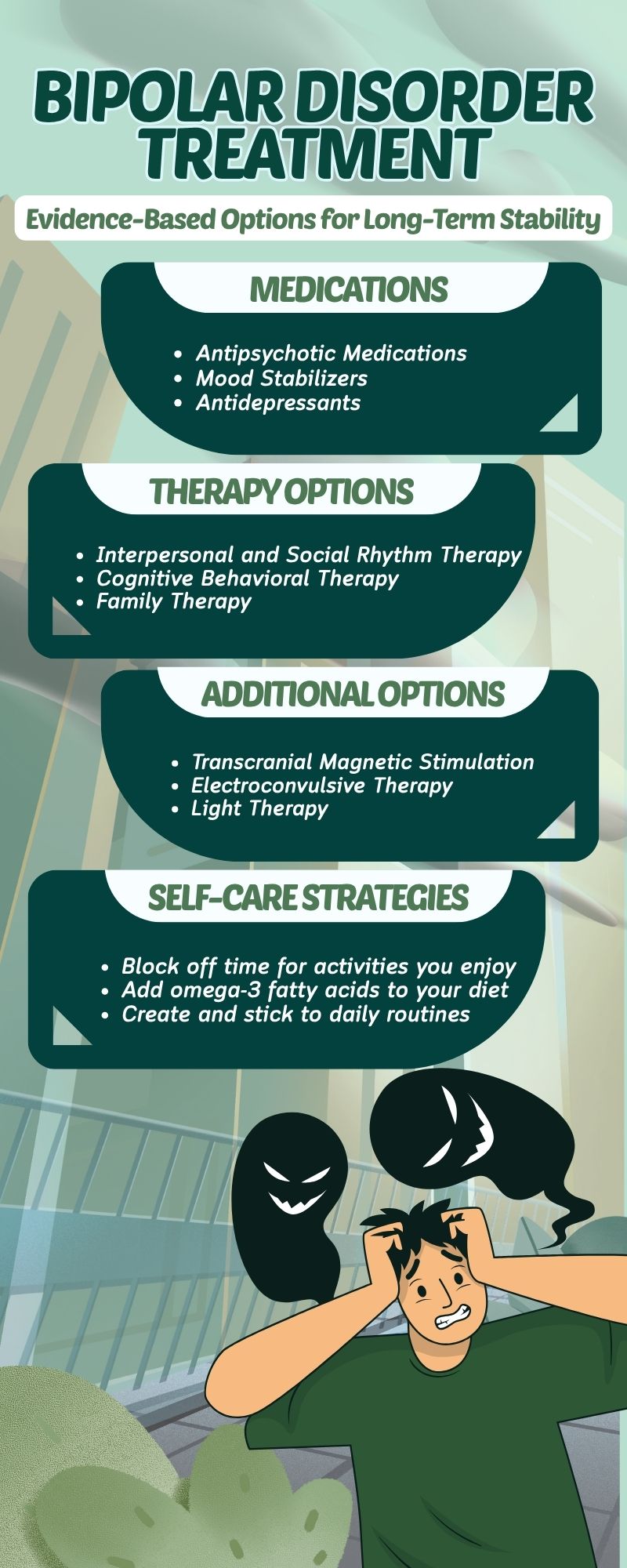
It’s not judgment. It’s pattern recognition. Learning to see the warning signs in yourself.
Family-Focused Therapy
This brings in the people who love you. Your partner never knows what version they will have to wake up next to. Your parents, who’ve seen you suffer and do not know how to assist without complicating things.
Your family gets to experience what mania really is like. They are aware that the depression is not about them. They develop a crisis plan together with you in case things get out of control. Love needs tools. Not just good intentions.
Dialectical Behavior Therapy
DBT teaches you how to ride the wave without drowning in it. Skills for managing the emotional chaos. Ways to pause before making decisions during mania. Concrete actions during depression when your brain screams that nothing matters.
At Forrest Behavioral Health, our expert psychologists focus on four main aspects of DBT. Mindfulness makes you more aware of your thoughts, and thus you are able to exercise self-control, eliminate stress, and become happier. Then, distress tolerance educates you on other methods to deal with your impulses and self-harm desires.
Bipolar disorder is characterized by significant emotional dysregulation, which can overwhelm the patients. Therefore, our trained staff equip you with skills to replace their negative feelings with positive ones. Lastly, interpersonal effectiveness helps you repair damaged relationships.
According to NIH, 88% of the participants enrolled in a 12-week DBT program showed improved emotion regulation and residual mood symptoms.
Why Forrest Behavioral Health Gets It
Standard programs aren’t built for bipolar disorder. They’re built for anxiety or depression that stays relatively stable.
Bipolar doesn’t stay stable. That’s the whole problem.
We specialize in this. The complexity. The co-occurring stuff because lots of people with bipolar also struggle with substances. Not because they’re weak. Because self-medicating the extremes feels like the only option sometimes.
Before you start, you get a thorough assessment. Not a one-size-fits-all treatment plan. An individualized recovery plan built around your specific patterns, triggers, history, and goals. We understand that your bipolar doesn’t look like anyone else’s.
Moreover, we don’t just treat symptoms. We see you. The whole person. Not your diagnosis on a chart. Not a collection of behaviors to fix. The human being trying to navigate a condition that makes you feel like you’re living two lives you never asked for.
Our commitment doesn’t stop when your program does. Hence, we offer aftercare planning. Relapse prevention. And ongoing support. Recovery isn’t a finish line. It’s learning how to keep showing up for yourself.
We accept most insurance. Same-day admissions are also available. No judgment. No shame. Just people who understand what you’re dealing with and know how to help.
Final Words
Recovery isn’t about never having another episode. It’s about spacing them further apart. Making them less severe. Catching them earlier. Building a life that doesn’t collapse every time your mood shifts.
It’s learning to trust yourself again. Even when your brain chemistry stays unpredictable.
Call us at (312) 449-2491. Visit forrestbh.com. The life you want? Where you’re not constantly bracing for the next high or dreading the next crash? It’s possible.
It requires work. Professional help. The right therapy-medication combo. Support that understands what you’re dealing with. IT IS POSSIBLE! And you don’t have to figure it out alone.