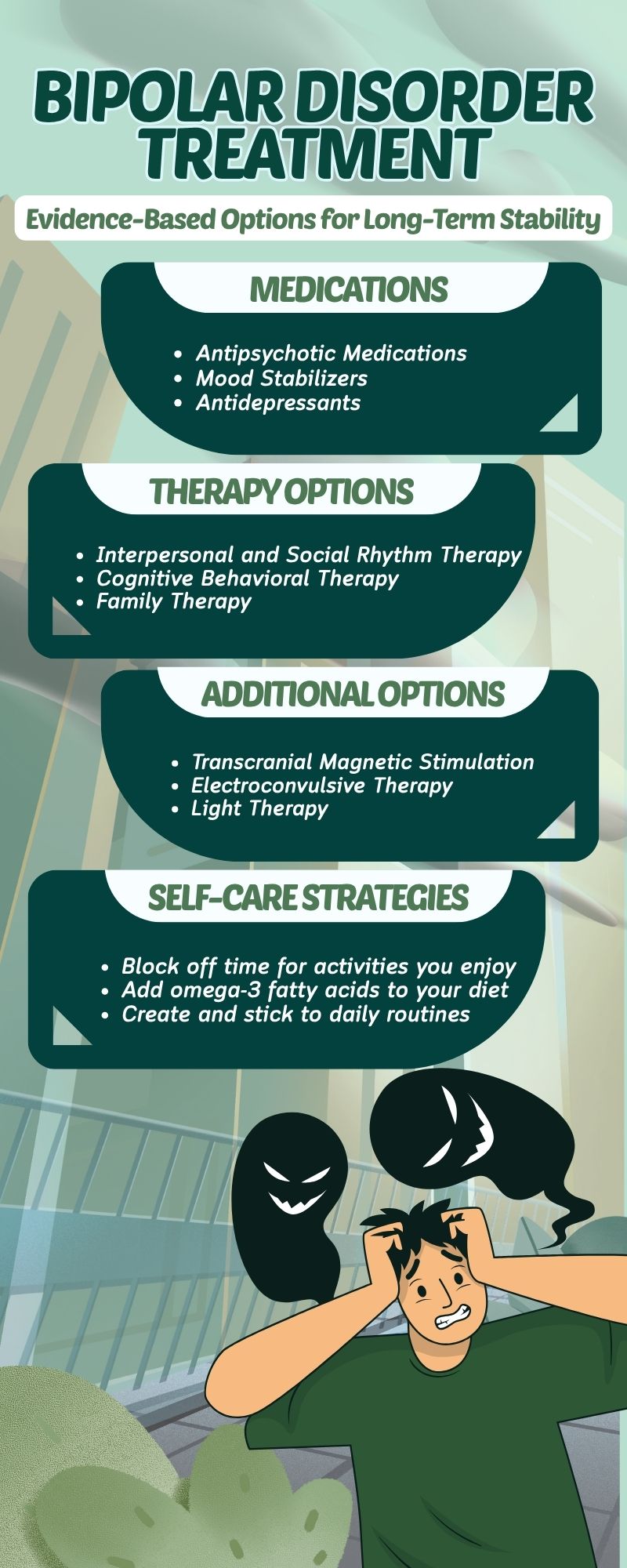
The Neurochemical Bridge:
Bipolar disorder & addiction are linked by a shared biological foundation. Both conditions heavily involve the brain’s reward system and dopamine regulation. This commonality makes the two conditions highly reactive to one another. When a substance is introduced, it hijacks the same neural pathways that regulate mood, leading to more frequent and severe shifts between emotional extremes.
Four Pillars of Integrated Care
1. Expert Medication Management:
This serves as the anchor of our clinical program. It’s vital to know which medications can cause side effects. Some medications for addiction treatment can trigger mood swings.
Specialized expertise is critical here. Our psychiatric team focuses on utilizing mood stabilizers and antipsychotics that are both safe and effective for those in active recovery. We monitor blood levels and side effects closely to ensure your biology is supported rather than hindered.
Dialectical Behavior Therapy (DBT) for Mood Regulation:
DBT is a specifically designed therapy technique to help people manage intense emotional states. We focus on Middle Path skills to help you navigate the extremes of bipolar disorder without falling into crisis.
By developing distress tolerance, we ensure that a sudden mood shift does not automatically trigger a craving. You learn to observe your emotions without being controlled by them.
Cognitive Behavioral Therapy (CBT) for Relapse Prevention:
CBT helps patients identify prodromal symptoms, which are the early warning signs that a mood shift is beginning. We work with you to create a pre-emptive action plan so you can intervene before a full manic or depressive episode takes hold.
We also address the cognitive distortions that occur during different mood states, such as the grandiosity of mania or the catastrophic thinking of depression.
Trauma-Informed Care (EMDR):
Past traumas can often act as a hidden engine for mood cycling. If a traumatic memory is triggered, it can fuel the desire to self-medicate and push the pendulum toward an extreme.
We use EMDR to address these underlying triggers. By processing the trauma, we reduce the nervous system’s reactivity and create a more stable foundation for long-term health.
Why Stability Requires a Specialized Environment
The Importance of Routine:
Bipolar disorder is susceptible to disruptions in the body’s natural rhythms. Our Partial Hospitalization (PHP) and Intensive Outpatient (IOP) programs provide the necessary structure to regulate sleep, nutrition, and social interaction.
This consistency helps reset the biological clock, which is often the first thing to break during a period of addiction.
Peer Support:
There is a unique shame that comes with bipolar-related behaviors, especially those that occur during manic episodes.
Being in a group with others who genuinely understand this struggle is life-changing. Peer support at Forrest Behavioral Health fosters a sense of community where you can discuss your journey without fear of judgment.
Family Education:
Recovery does not happen in a vacuum. We involve the family to help them understand the difference between a clinical mood episode and a behavioral choice.
This education reduces tension at home and fosters a more supportive environment, enabling the family to act as an early warning system rather than a source of stress.
Reclaim Your Balance and Your Future with Forrest Behavioral Health
Living with the pendulum of bipolar disorder & addiction is exhausting, but you do not have to do it alone. By addressing both conditions through a single, integrated clinical lens, we help you find the middle ground that has felt out of reach for so long.
Reclaim your stability today. Contact Forrest Behavioral Health at (888) 324-4054 or visit forrestbh.com to start your path to balance. Your future depends on a stable foundation.