

Burnout vs Depression: How to Tell the Difference
From healthcare workers in Boston to educators in Billerica, the professionals who keep the Commonwealth running are facing unprecedented levels of exhaustion. When you are waking up every day feeling depleted, cynical, and emotionally flat, it can be incredibly difficult to know what you are actually dealing with. Although we live in a state that prioritizes health, over 40% in Massachusetts struggle to articulate what is wrong, leading to delayed or incorrect treatment. It is crucial that a clear diagnostic pathway be available to help individuals achieve the clarity of diagnosis; ultimately, setting up the foundation for the well-being of individuals. Today, let’s talk about the difference between burnout and depression and how it impacts an individual’s well-being:Defining the Nuance of Exhaustion
When you are fundamentally exhausted, the distinction between a toxic job and a clinical mood disorder is often blurred. Both conditions drain your vitality, but they originate from entirely different places and require vastly different clinical solutions.The Roots of Burnout
We must first explain that burnout is primarily situational and systemic. It is not an inherent flaw in your brain chemistry. Burnout is the direct result of chronic workplace stress, an overwhelming workload, or a profound lack of support in a specific environment. You experience burnout when the demands placed upon you consistently outpace the resources you are given to meet them.
This condition builds slowly. It often begins as simple fatigue before evolving into deep frustration and emotional detachment. If you are a medical provider working consecutive double shifts without adequate staffing, or a corporate director managing an underfunded department, your nervous system is trapped in a state of perpetual overdrive.
The exhaustion you feel is a completely logical, biological response to a highly dysfunctional, unsustainable environment.
The Scope of Depression
We contrast this situational fatigue with clinical depression, which is pervasive and structural. Depression does not care if you are at work, at home, or on vacation in a beautiful setting. It casts a dark, heavy net over every single aspect of your life and your self-worth.
While burnout is tethered to your external environment, depression alters your internal operating system. It depletes your brain of essential neurotransmitters like serotonin and dopamine.
You might step away from the stressful job, but the crushing weight on your chest and the deep sense of hopelessness remain entirely intact. Recognizing this pervasive scope is the first step toward securing the correct clinical intervention.
The “Anhedonia Test”
Our clinical team in Bedford utilizes specific diagnostic criteria to separate these two conditions. One of the most effective ways to untangle the web is to evaluate a client’s capacity for joy and where they direct their negativity.
Losing Joy vs. Losing Energy
We detail a key differentiator between the two struggles. A burnt-out individual has lost their energy, but they have not necessarily lost their capacity for pleasure.
If you take a burnt-out person away from their stressors, they may still find immense joy in a weekend hobby, a family dinner, or a quiet morning walk. They are simply too tired to engage in those activities as often as they would like.
A depressed individual experiences something much more profound. They experience anhedonia, which is the complete biological inability to feel joy, regardless of the setting. The activities, people, and passions that used to bring them immense happiness now feel entirely emotionally flat.
Even when all stressors are removed, the world remains gray. This absence of feeling is a hallmark indicator of a clinical mood disorder requiring medical and psychological care.
Cynicism vs. Self-Loathing
We also discuss where the mind directs its frustration. Burnout often manifests as outward anger, sharp cynicism, and deep detachment toward a job, a specific boss, or difficult clients. You feel resentful toward the system that is draining you.
Depression, however, turns that negativity sharply inward. It results in intense self-loathing and overwhelming guilt.
Instead of blaming a toxic workplace, the depressed mind convinces you that you are fundamentally broken, inadequate, and a burden to your family. This internal hostility requires advanced cognitive restructuring to dismantle safely.
The Physical Toll on the Body
You cannot separate the mind from the body. Both chronic burnout and clinical depression create severe physiological damage that cannot be ignored or simply pushed through.
Nervous System Collapse
Both conditions share severe physical symptoms. When your body is flooded with stress hormones for months on end, your system eventually collapses.
Clients dealing with either condition frequently report debilitating insomnia, chronic tension headaches, severe gastrointestinal distress, and a deeply weakened immune system.
We explain how our comprehensive clinical assessments untangle these somatic responses. Our medical and psychological teams evaluate your physical symptoms to determine if they are the result of a situational stress response or a deeper neurochemical imbalance.
By identifying the origin of your physical pain, we ensure that you are not prescribed medication when a lifestyle change is needed; you are not told to simply rest when a medical intervention is required.
The Danger of the Overlap
It is also crucial to acknowledge that these two conditions often collide.
Prolonged, untreated burnout is one of the absolute leading triggers for a major depressive episode. When you force your nervous system to operate in a state of high-alert survival mode for years, your brain chemistry eventually fractures under the pressure.
What began as frustration with your career can easily morph into a severe, generalized mood disorder. Intervening early is critical to preventing this escalation.
Tailored Interventions for True Recovery
Accurate diagnosis is meaningless without precise, targeted treatment. We provide specialized care pathways that address the exact root of your exhaustion.
Customized Clinical Tracks
We explain to our clients that resting over the weekend will not cure clinical depression, and a prescription for an SSRI will not fix a toxic work environment. You need a customized clinical track.
For those dealing with severe burnout, we focus heavily on boundary setting, distress tolerance, and nervous system regulation using Dialectical Behavior Therapy.
For clinical depression, we use advanced dual diagnosis programming and trauma-informed care at Forrest Behavioral Health.
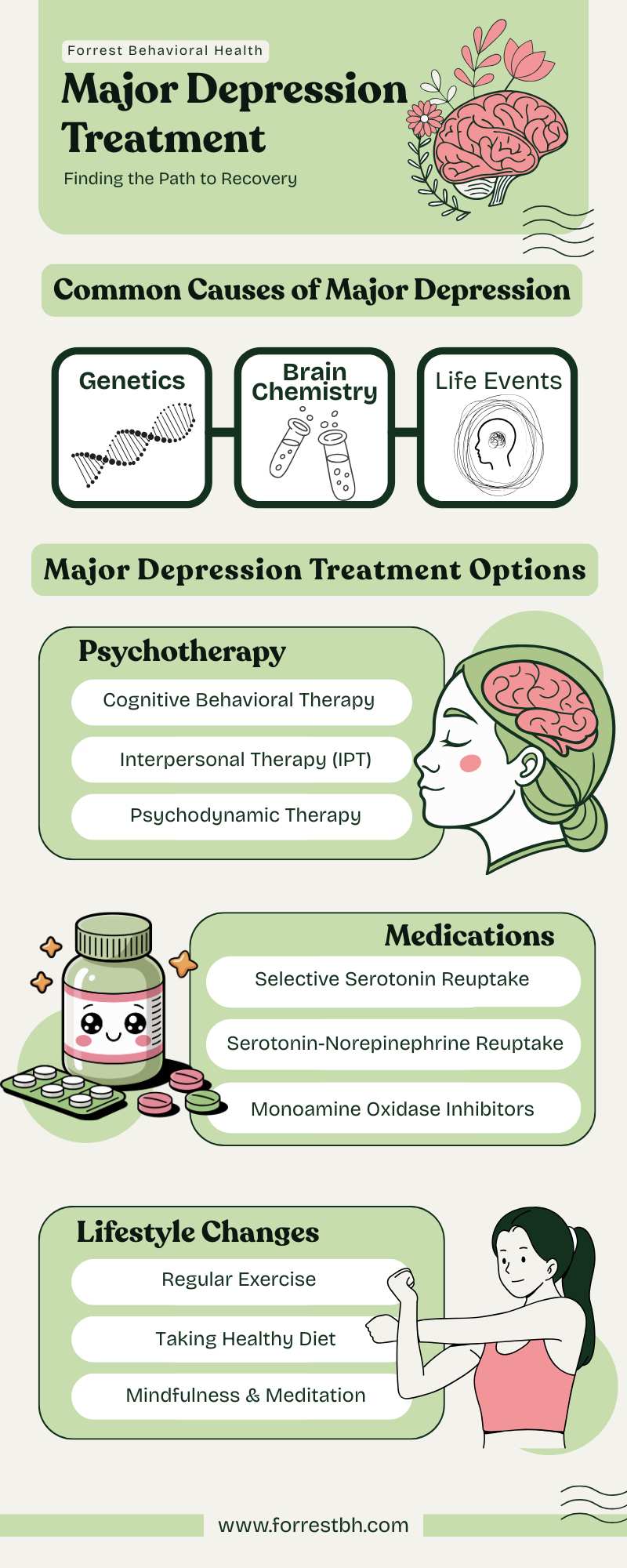
We utilize Cognitive Behavioral Therapy to rebuild your self-worth and Eye Movement Desensitization and Reprocessing to resolve any past trauma fueling the depression. We address the precise root of your exhaustion to ensure you rebuild a foundation that truly lasts.
Catch Depression Before It Deepens
You do not have to figure this out alone, and you certainly do not have to accept chronic exhaustion as your permanent reality.
Whether you are dealing with severe occupational burnout or a complex depressive episode, our clinical team in Bedford is here to help. Reach out for a compassionate assessment to identify the true root of your struggle and find the exact right path back to your baseline.
Visit forrestbh.com or call (781) 570-5781 to speak directly with our admissions team. Let us help you untangle the exhaustion today.