

Mental Health & Addiction Support in Lowell, MA: Is IOP the Right Fit?
According to a recent research by Greater Lowell Health Alliance (GLHA), 1/3rd of the total population reports experiencing mental health challenges. Yet, no remedy seems immediately in sight. Some have to face long wait times or limited access to care, while others struggle with stigma and lack of awareness about treatment options.
In order to overcome these barriers, Lowell residents require a structured, flexible, and supportive treatment program to help them engage consistently with therapeutic care and recovery.
Let’s talk about it today:
Understanding the Local Need in Lowell, MA
While many mental health organizations are hard at work, trying to help residents overcome challenges with mental health and substance use, many problems still exist. The community still faces issues due to anxiety, depression, and high rates of substance-related emergency visits. Following are some of the biggest factors contributing to the local behavioral health crisis:
Urban/Suburban Stress:
Did you know that, according to a community survey, nearly one-third of Greater Lowell residents reported experiencing mental health issues, with 29.4% citing anxiety, depression, and PTSD? There are a number of reasons behind it.
We have job insecurity, housing instability, financial strain, and above all, commuting pressure. This stress of maintaining the daily urban/suburban life is what causes people to fluctuate between functioning and crisis without any structured support system. As a result, individuals are stuck feeling overwhelmed with despair and unable to cope.
Complex Social Needs of Multi-Generational Families:
In Lowell, over 110,000 residents make up a vibrant, interconnected population, and multi-generational families are common. These families come with their own set of expectations, pouring all the pressure onto the generation of current adults who already have a lot on their plates.
Many adults end up feeling stressed and isolated due to the very social expectations and the responsibilities that come from it.
Prevalence of Addiction Challenges:
Already, Lowell and Middlesex County have some of the highest rates of opioid-related incidents and substance use issues in Massachusetts (e.g., 53 opioid overdose deaths in Lowell in 2022), and these individuals are not seeking help.
Why, you ask? Well, for starters, the stigma attached to seeking treatment is still very strong in many communities. People feel ashamed and fear getting judged by others if they accept that they need help. Secondly, the lack of awareness exists. Many individuals don’t even know what options are available for treatment and recovery.
Common Problems Residents of Lowell Face When Trying to Get Mental Healthcare
The individuals who end up trying to get help are often discouraged and overwhelmed by the barriers enroute. Seeking mental healthcare isn’t exactly a straight path that leads from recognition of need to effective treatment. Instead, people face a number of challenges, like:
Limited Access to Ongoing Care:
Since insufficient mental health providers and services are available near them, people have to suffer through long wait times to receive therapy. Moreover, the transportation and scheduling challenges add to the frustration and disengagement.
According to a recent study, many outpatient clinics in Massachusetts report waitlists of two months or longer for an initial assessment, and nearly 14,000 people were on wait lists statewide for care. This can become a huge deterrent in finding timely and consistent treatment.
Inadequate Continuity After Hospitalization:
The second biggest problem is that people are often discharged without any structured follow-up on their mental health needs from inpatient or emergency care. This results in high relapse rates and crisis re-entry into emergency departments or hospitals.
When an individual is admitted to a hospital for inpatient care, it means their condition is acute or severe and requires ongoing support. If such a person is suddenly discharged with no follow-up or continuity plan, it causes them to struggle without guidance, which results in relapse or further crisis.
Lack of Flexible Treatment Options:
Most of the individuals struggling with mental healthcare challenges already have a fragile work-life balance.
Most of the treatment options don’t make this situation any better and offer either group therapy or medication management, not both, or end up just scheduling a few sessions with rigid appointment slots and limited hours. This helps no one, and people end up not seeking treatment at all.
How Does An IOP Near Lowell, MA Help?
Mental healthcare facilities, like ForrestBH, offer structured care, flexibility, and continuity for individuals who require a higher level of support.
Let’s talk about how having a trusted treatment center and an IOP near Lowell, MA can remove barriers to care for the local community and result in better engagement for long-term recovery.
Structured Clinical Support Without Inpatient Stay:
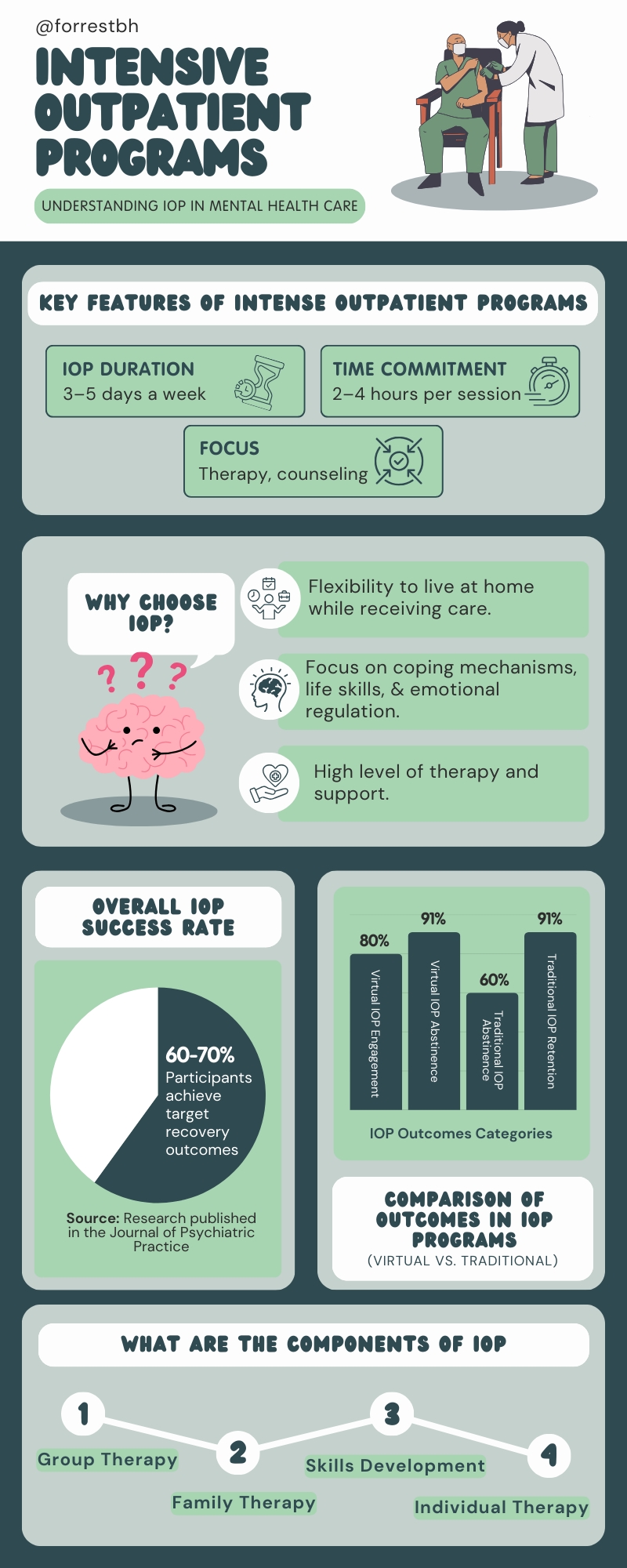
An IOP near Lowell, MA, can offer high-level clinical care and therapeutic structure to individuals without requiring them to disrupt their lives.
Individuals receive structured therapy 3–5 days a week. This includes individual counseling, group therapy, skills-based sessions, and psychiatric support, with flexible treatment schedules.
Flexible Treatment Options:
IOPs are designed to work around your real life. Programs, like ForrestBH, offer morning, evening, and afternoon sessions to allow individuals to attend school, continue working, and manage their family and personal responsibilities.
Continuity & Aftercare Planning:
We do not believe in moving patients abruptly from inpatient care to independent outpatient therapy.
Instead, we offer a progressive plan including relapse prevention strategies, ongoing clinical support, and overall a clear aftercare roadmap for individuals who require long-term stability.
Final Words
In Lowell, mental health challenges are much more deeply connected with the pressures of daily life, as they compete for attention and resources for self-care and wellbeing. In such a situation, long wait times and limited access to care only result in frustration and disengagement, which further takes away time and energy from recovery efforts.
IOPs work like magic here because by offering structured clinical support, ongoing therapeutic guidance, and flexible scheduling, they bridge the gap between crisis and stability, resulting in better engagement and long-term recovery.
If you or a loved one is struggling with mental health or substance use challenges, hesitate no more and call us at (781) 570-5781. You don’t have to navigate this journey alone, and ForrestBH is here to help you achieve sustainable, balanced, and meaningful healing.