
How Detailed Analysis Guides a Partial Hospitalization Program (PHP) in Woburn

If you’re feeling uninterested in doing life, face difficulty focusing on things, and can’t sleep or feel like yourself, make the call and ask for help.
Life can get super hard when there’s a deep-rooted issue that needs to be addressed. But since most people see addiction and mental health treatment as something restrictive, they take a long time to step in the right direction.
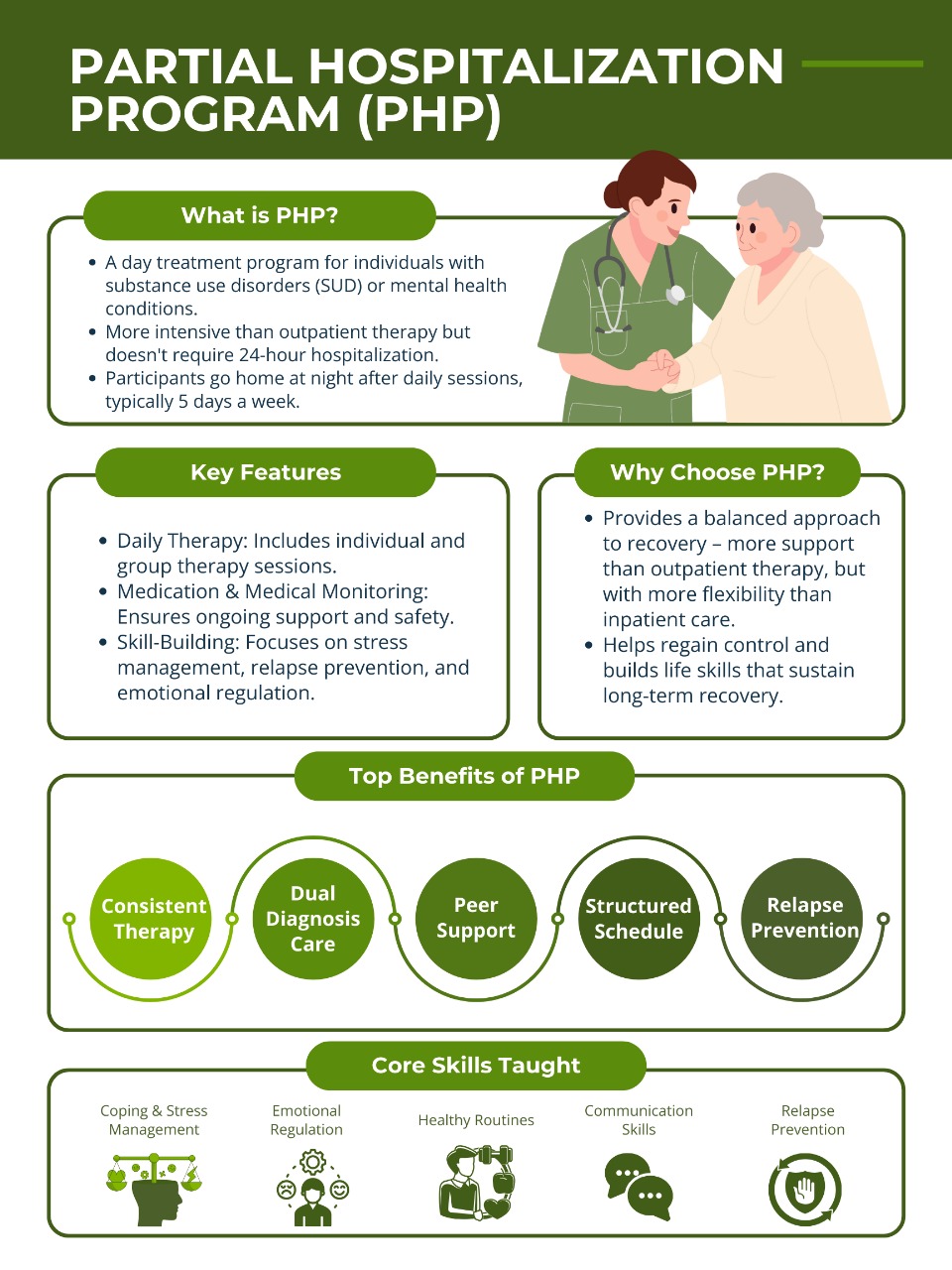
That’s the reason a partial hospitalization program (PHP) in Woburn can be the perfect balance for people worried about feeling overly controlled in treatment. But the question is, how to measure if a person needs PHP or something more rigid (or even better, a more relaxed plan)?
This guide explains how a thorough analysis decides if someone is eligible for a partial hospitalization program (PHP) in Woburn. Keep reading and see how decisions are deliberately made around here.
Tools That Help Decide if You Need a Partial Hospitalization Program (PHP) in Woburn
Deciding whether a partial hospitalization program (PHP) is the right fit for you is never left to chance at Forrest Health. The process is built on what you’re experiencing and how it affects you, among many other factors.
Here are some standard tests that clinicians do to guide your future path for better and sustainable results:
PHQ-9
The PHQ-9 is one of the most widely used tools for understanding depression. It has nine questions and gives doctors a detailed picture of how depression may be affecting your daily life. Each question asks how frequently you’ve experienced certain symptoms in the past two weeks, and you rate them from “not at all” to “nearly every day.”
Here are the questions included in a PHQ-9 paper:
- Little interest or pleasure
- Feeling down, depressed, or hopeless
- Trouble falling asleep or sleeping too much
- Feeling tired or having little energy
- Poor appetite or overeating
- Feeling bad about yourself
- Trouble concentrating on things
- Moving or speaking super slowly or being so restless that it’s hard to sit still
- Thoughts that you would be better off dead or of hurting yourself in some way
You give each item a score from 0 to 3, and here’s how that scoring goes:
- 0 = Not at all
- 1 = Several days
- 2 = More than half the days
- 3 = Nearly every day
Since each answer is scored between 0 and 3, this questionnaire’s total score is between 0 and 27. The higher the score, the worse the depression, and doctors use this score to decide your further treatment. If your symptoms are mild, outpatient therapy is recommended. Or if the symptoms are too severe, inpatient care will be more effective.
But if you’re in between these two stages and don’t need 24/7 monitoring (which indicates that you’re not in crisis), clinicians will make you start a partial hospitalization program (PHP) in Woburn. The PHQ-9 standard tracks your progress, and if your scores improve, it means that therapy and medication are working.
GAD-7
Living with anxiety can take over your whole routine. Constant worrying and racing thoughts can make even daily tasks feel heavy. Many people keep pushing through, unsure whether what they’re experiencing “counts” as serious enough for structured care.
That’s why the GAD-7 test is used to give you and the clinician a clear picture of how much anxiety is interfering with your life. It puts your symptoms into a framework that guides what level of care might help, whether that’s standard outpatient care or a partial hospitalization program (PHP) in Woburn.
The GAD-7 asks you to reflect on the past two weeks and rate how regularly you’ve experienced the following issues:
- Feeling nervous, on edge, or anxious
- Not being able to stop worrying
- Worrying too much about different things
- Trouble relaxing
- Being restless all the time
- Becoming easily annoyed
- Feeling afraid, as if something bad might happen
Like the PHQ-9 test, each category is scored from 0 to 3 in GAD-7, and when the scores are added, the total ranges from 0 to 21. Here’s a quick breakdown of these scores:
- 0–4: Minimal anxiety
- 5–9: Mild anxiety
- 10–14: Moderate anxiety
- 15–21: Severe anxiety
These scores are important because the impact of anxiety can go unseen, and this way, they’re recorded as measurable numbers.
A moderate or severe score suggests that anxiety is affecting major pillars of your behavior, like concentration, sleep, and energy, etc. In these cases, a partial hospitalization program (PHP) in Woburn may work since it gives you access to daily therapy and medical support while still letting you live at home.
ASAM Criteria
The ASAM is a nationally recognized framework to remove guesswork from addiction care. It helps clinicians look closely at your situation to identify the safest level of support. That care in your case could be a short stay in inpatient detox or a structured partial hospitalization program (PHP) in Woburn, where you don’t feel tired, but your symptoms are treated carefully.
Here are some areas that the ASAM criteria evaluate:
- Withdrawal risk: Will stopping or reducing use put you at medical risk?
- Health conditions: Are other medical problems adding complexity to treatment?
- Mental health needs: Do depression, anxiety, trauma, or other disorders coexist with addiction?
- Relapse risk: What are the chances of returning to use without structure?
- Readiness to change: How motivated and prepared are you for treatment?
- Home environment: Does your current setting support recovery, or make it harder?
When expert clinicians examine these dimensions together, it helps make sure you’re not over- or under-treated. It also encourages doctors/clinicians to not see you as just “an addiction case,” since your environment, health, and mental well-being all impact your coping strategies.
Let Us Get You Out
When mental health problems or substance use take over, it’s easy to feel like no one sees the weight you carry. But you deserve care that is chosen thoughtfully, with real attention to the realities you face every day.
At Forrest Behavioral Health’s partial hospitalization program (PHP) in Woburn, the battles you fight are recognized as they should be.
We know there are long nights, restlessness, loss of control, and the fear behind all that. That’s why our team takes the time to truly understand where you are and guide you into the care that fits best. Your struggles are real, but so is the possibility of change.
Call us at (781) 570-5781 or email info@forrestbh.com, and let’s find a solution together.