

A Practical Guide to Bipolar Disorder for Concord, MA: Symptoms, Triggers, and Treatment
If you’re searching for Bipolar Disorder Treatment in Concord, Massachusetts, you’re probably looking for answers that feel practical and easy to understand. Bi polar disorder can be confusing, especially when mood swings start affecting your daily life. This guide explains how local providers, including clinics like ForrestBH, fit into your treatment options.
What is Bipolar Disorder
Bipolar disorder is a medical mood condition, not a personality issue. It causes strong shifts between high moods (mania or hypomania) and low moods (depression). These changes affect energy, sleep, thoughts, and behavior.
Some people experience intense manic episodes. Others have milder hypomania combined with depression. Every person’s pattern looks a little different. The condition is long-term, but with the right treatment, most people do get better control over their mood swings.
Symptoms to Watch For
Symptoms can vary, and they may change over time.
During manic episodes:
- people may feel a burst of energy,
- speak very quickly,
- need very little sleep, or
- take risks without thinking.
- Some feel unusually confident or irritable.
Depressive episodes look very different. They can bring:
- sadness,
- tiredness,
- loss of interest in normal activities,
- sleep changes, and
- trouble concentrating.
- In severe cases, there may be thoughts of self-harm.
Some people have mixed episodes, where manic energy and depressive hopelessness show up at the same time. A proper diagnosis is important because the symptoms can resemble anxiety, ADHD, or depression.
Some people have mixed episodes, where manic energy and depressive hopelessness show up at the same time. A proper diagnosis is important because the symptoms can resemble anxiety, ADHD, or depression.
Why Bipolar Disorder Occurs
There isn’t a single cause. Researchers believe a mix of genetics, brain chemistry, and environmental triggers plays a role. Bipolar disorder often runs in families. According to studies, people with a close relative who has bi polar disorder have a 10%–15% higher chance of developing it themselves. Stress, major life changes, lack of sleep, and substance use can trigger or worsen episodes.
Scientists at the World Health Organization explain that bi polar disorder is linked to changes in brain circuits and chemical messengers, not personal weakness or poor character. It’s a medical condition that needs medical support.
How Bipolar Disorder Impacts Daily Life
When symptoms flare up, they can spill into almost every area of life, relationships, school, work, finances, sleep, and physical health.
During manic episodes, judgment can be affected, sometimes leading to spending sprees, arguments, or risky behavior.
During depression, daily tasks can feel impossible.
Without treatment, episodes may become more frequent or more intense. The Mayo Clinic notes that untreated bipolar disorder increases the risk of hospitalization and can make daily functioning harder. With proper support, many people regain stability, confidence, and routine.
Family education also plays a big role, because loved ones often notice early warning signs before the person does.
Treatments
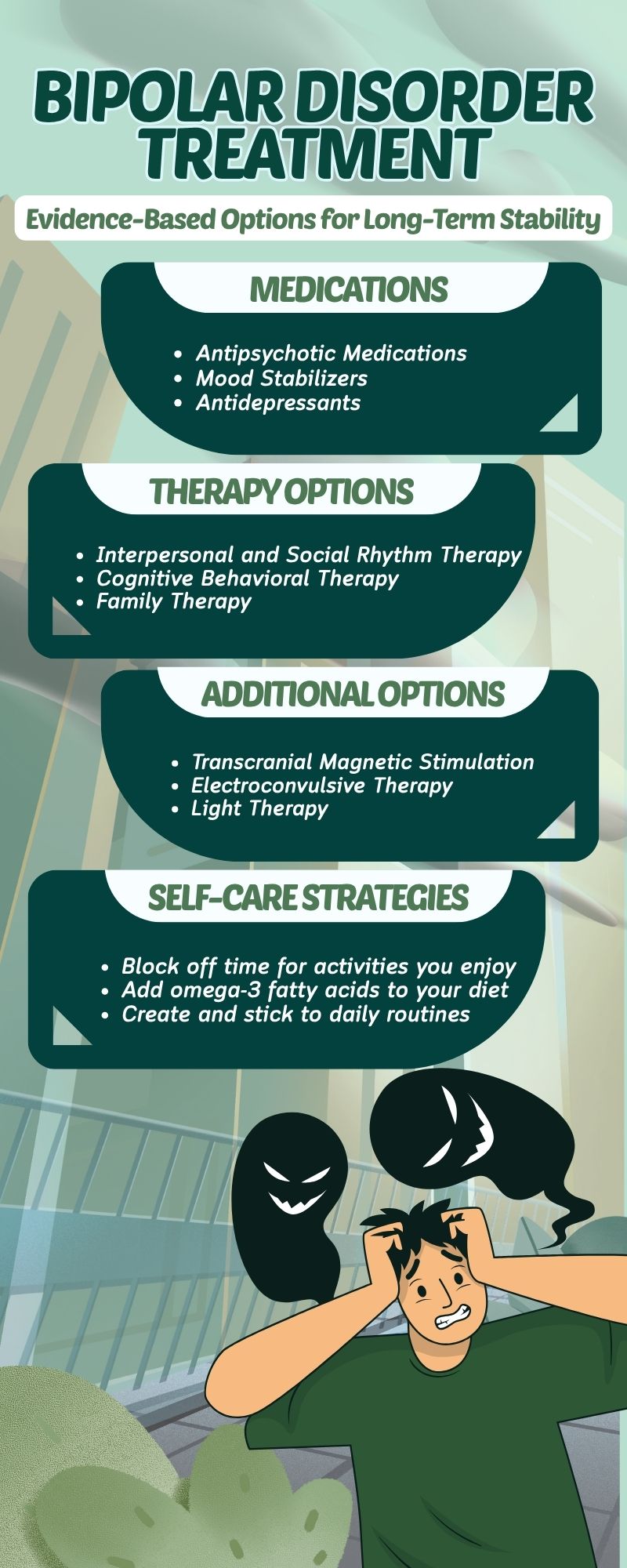
Most experts agree that a combination of treatments works best. Medication helps stabilize mood, and therapy teaches skills to manage daily life. Routine, sleep, and stress management also strengthen long-term stability. Mood stabilizers like lithium, certain anticonvulsants, and atypical antipsychotics are commonly used. Each medication works differently, so finding the right one may take time. Antidepressants are used with caution because they can trigger mania if taken alone.
Therapy helps people understand their patterns, manage stress, rebuild routines, and prevent relapse. Treatments need consistent follow-ups because bi polar disorder can shift with time.
Important Medication Notes
Lithium has been used safely for decades and is linked to lower suicide risk. It’s one of the most studied treatments in mental health. However, it requires blood tests to monitor levels, thyroid function, and kidney health.
Atypical antipsychotics, like quetiapine or olanzapine, are often used for mania or for ongoing maintenance. Anticonvulsants such as valproate or lamotrigine can also help, depending on whether a person struggles more with depression or mania. Medication choices should always be guided by a psychiatrist or psychiatric nurse practitioner who understands bipolar disorder.
Holistic and Self-Help Supports That Matter
Lifestyle habits can make a big difference, especially for long-term stability. Keeping a regular sleep schedule, managing stress, exercising, eating balanced meals, and reducing alcohol or drug use all help strengthen treatment results.
Some people explore complementary approaches like omega-3 supplements or mindfulness practices. These can support well-being but should never replace medical treatment. The American Psychiatric Association suggests checking with your doctor before using supplements because some interact with medications. Peer support groups and family education sessions also help people feel less alone and more confident about managing symptoms.
Forrest Behavioral Health
Forrest Behavioral Health and similar clinics offer practical, everyday support for people living with bi polar disorder. They provide diagnostic assessments, medication management, CBT and DBT therapy, and sometimes group or dual-diagnosis programs.
A clinic like ForrestBH helps coordinate care so you’re not trying to navigate bipolar disorder alone. They help with safety planning, routine adjustments, and referrals when a higher level of care is needed. Many clinics near Concord also offer telehealth visits, which can be helpful if transportation or time is an issue.
How Common is Bipolar Disorder, and Recovery Outlook
Bipolar disorder is more common than many people realize. The National Institute of Mental Health reports that about 5 to 6 million Americans live with it. Globally, the WHO ranks bi polar disorder among the top 20 causes of disability in young adults.
But recovery is very possible. With consistent treatment, people often see fewer episodes, shorter episodes, and better functioning. Recovery doesn’t always mean symptoms disappear; it usually means gaining stability, control, and a life that feels manageable and meaningful.
How to Choose the Best Treatment in Concord
Choosing a provider is a personal decision. Look for someone who understands bipolar disorder well and can coordinate medication and therapy. Ask if they have experience with mood stabilizers, complicated cases, or mixed episodes.
Good providers explain treatment options clearly, review side effects, and set up a crisis plan. They should also be comfortable working with your primary care doctor for labs and monitoring.
If cost is a concern, explore sliding-scale clinics, community mental health centers, or telehealth providers in the Concord area. Trust your instincts. If a provider listens, respects your concerns, and explains things in simple language, that’s usually a good sign.
Final Thoughts
Bipolar disorder can feel overwhelming, but you don’t have to manage it alone. With the right mix of medication, therapy, and daily routine, life can become more stable and predictable. Keep asking questions, stay consistent with treatment, and reach out to supportive providers in Concord. You deserve steady, reliable care.