

Bipolar Disorder Treatment Massachusetts: 5 Common Myths Debunked
Bipolar disorder is one of the most common and most misunderstood mental health conditions. Many people have heard the term, but they don’t know what it exactly is and how does it affect a person. Much of what they know comes from movies, television, social media, or outdated stereotypes.
These myths can make it harder for people to understand the reality of bipolar disorder. This may cause someone to overlook important symptoms, delay getting treatment, or struggle to support a loved one who is having a difficult time. In some cases, these misunderstandings can even stop people from reaching out for the help and support they need.
The truth is that bipolar disorder is a real mental health condition that affects around 7 million US residents each year. While it has its own set of challenges, many individuals are able to successfully manage their symptoms, get stable, and enjoy a healthy, meaningful life with proper bipolar disorder treatment Massachusetts.
Let’s take a look at 5 common myths about bipolar disorder and the facts behind them.
Myth #1: Bipolar Disorder Is Just Mood Swings
One of the most common misconceptions is that bipolar disorder is simply having frequent mood swings.
Everyone experiences ups and downs from time to time. Feeling happy one day and stressed the next is a normal part of life. However, bipolar disorder is much more than that!
People with bipolar disorder can experience noticeable changes in their mood, energy, activity levels, and behavior. These changes can make everyday tasks more difficult and may affect relationships, work, school, and overall quality of life.
Episodes may last for days, weeks, or even longer, making them very different from the everyday mood changes that everyone experiences.
Myth #2: People with Bipolar Disorder Are Always Either Happy or Depressed
Many people believe that someone with bipolar disorder is constantly switching between feeling extremely happy (mania) and extremely depressed.
In reality, bipolar disorder is not like that.
Many individuals spend long periods feeling stable between mood episodes. Symptoms can look different from one person to another, which means everyone’s experience with bipolar disorder is unique.
However, with proper treatment, many people are able to maintain emotional balance and stability over time.
Myth #3: People with Bipolar Disorder Cannot Live Normal, Successful Lives
This is one of the most damaging myths about bipolar disorder.
The truth is that many people with bipolar disorder have successful careers, healthy relationships, families, and fulfilling lives. While the condition can bring challenges, it does not prevent someone from achieving their goals or building the life they want.
Like many other health conditions, bipolar disorder can be managed with treatment and support.
Myth #4: Treatment Is Only Needed During a Crisis
Some people believe bipolar treatment Massachusetts is only necessary when symptoms become severe, and things spiral out of control.
However, bipolar disorder is often easier to manage with ongoing treatment.
Even when someone is feeling well, continuing treatment can help them stay on track and remain emotionally stable. Regular treatment can also help people better understand their symptoms, recognize changes early, and learn healthy ways to manage challenges before they become overwhelming.
Myth #5: Asking for Help Is a Sign of Weakness
Unfortunately, many people delay treatment because they worry about what others might think.
Getting help is not something to be ashamed of. It takes strength to understand that you need support and take steps to care for your mental health.
The sooner someone reaches out for help, the sooner they can begin learning effective ways to manage symptoms and improve their quality of life.
Everyone deserves support when they are faced with a mental health challenge.
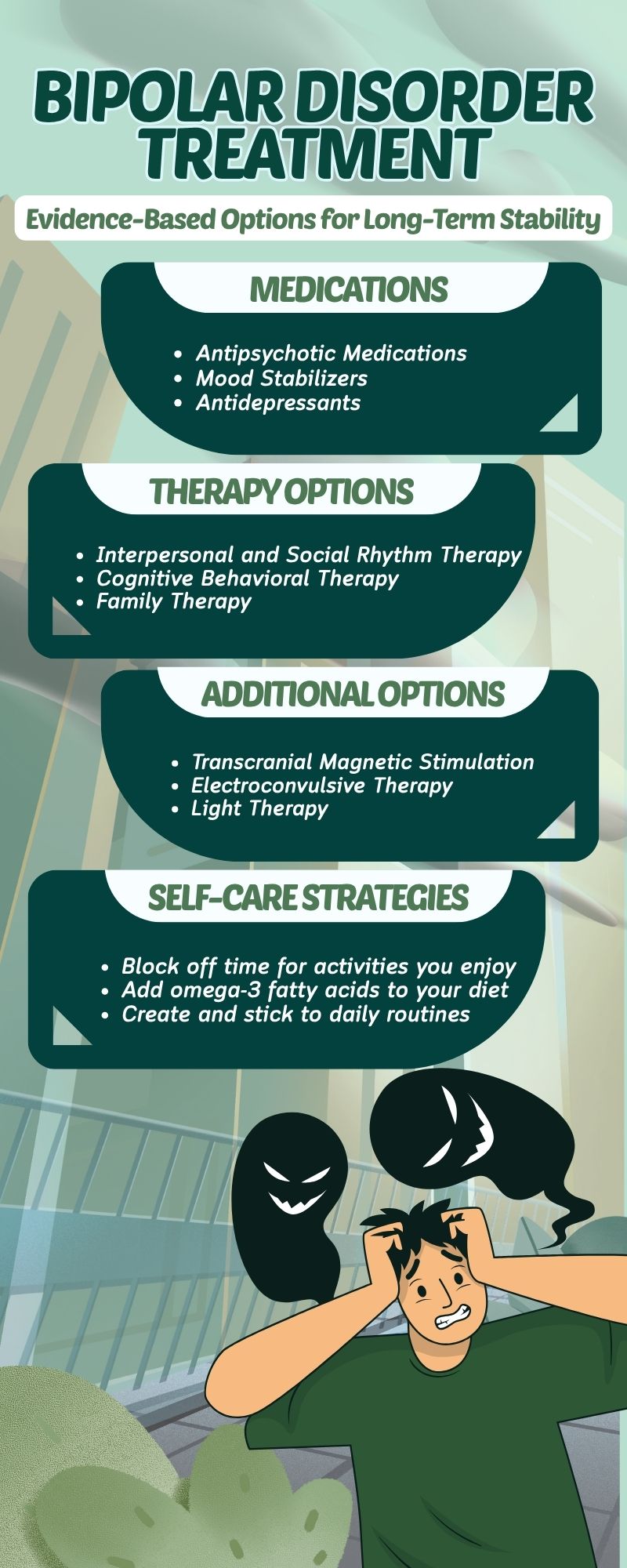
What Bipolar Disorder Treatment Massachusetts May Include?
Treatment for bipolar disorder is different for everyone. A mental health professional will usually create a treatment plan based on your symptoms, needs, lifestyle, and personal goals.
This may include:
Assessment and Diagnosis
When you reach out to a mental health provider, they usually run an evaluation or initial assessment. This is usually the first step and helps them understand your symptoms and experiences, and recommend a treatment that may be the best fit for you.
Individual Therapy
Therapy can help people better understand their condition, learn healthy ways to manage challenges, and build routines and habits for long-term well-being.
Medication Management
Sometimes, when the symptoms are severe and cannot be managed by therapy alone, doctors suggest taking medications to support recovery. They prescribe medicines, track progress, and adjust them accordingly.
Education and Skill Building
Learning about bipolar disorder can help people better understand their symptoms, identify things that may trigger mood changes, and find effective ways to manage everyday challenges.
Family Support
Bipolar disorder can affect loved ones as well. Family education and support can help improve communication, understanding, and relationships.
Structured Outpatient Programs
For some individuals, weekly therapy alone doesn’t really work. Therefore, they enroll in structured outpatient programs. These provide additional guidance and therapeutic services while allowing them to continue living at home.
Understanding Bipolar Disorder Is the First Step
There are many misconceptions about bipolar disorder, but the truth is that it is a manageable mental health condition. With the right treatment, support, and ongoing care, you can easily manage your symptoms and live full, meaningful lives.
If you are struggling with symptoms of feeling extremely depressed or hyper for long periods, it’s time to get professional help.
At Forrest Behavioral Health, we believe that treatment should be personalized because every person’s experience is different. By taking the time to understand each individual’s needs, we create a plan that supports lasting progress.
If you or someone you care about is looking for bipolar disorder treatment Massachusetts, contact us today. Our team is here to answer your questions, discuss your options, and help you take the first step toward a healthier, more stable future.