Kratom Addiction: Can You Become Dependent?
Coffee gives you a little bit of a kick. Four cups make you jittery. Ten cups and you’re in a corner shaking and regretting your life choices. Now take that same substance with a second setting altogether, not merely “more jittery” but a total personality shift whereby past a certain dose it stops speeding you up and starts slowing you down instead. No coffee does that. Kratom does.
The strange thing is that they market and sell it as one simple product, a leaf you brew or a capsule you swallow, but its effects are split right down the middle depending on how much you take. In small doses, it is a stimulant. Take a bigger dose; it acts like an opiate, sedating and numbing pain. Over time, your body begins expecting it rather than just enjoying it. One leaf, two totally different personalities, and most people find out the hard way.
Understanding Kratom: Origins and Effects
Kratom is a product of the Mitragyna speciosa tree, native to Southeast Asia, and used for centuries, first for energy, then for pain, by chewing and brewing. In the U.S., it’s sold as a supplement, which sounds comforting until you remember that “supplement” mostly means no one’s checking. It’s the compounds mitragynine and 7-hydroxymitragynine doing the work, and they’re partly why kratom can’t seem to figure out what it wants to be.
Vendors sort kratom by vein color like it’s produce. Red for relaxation and pain relief. White for energy and focus. Green for “I couldn’t decide.” Cute marketing, mostly beside the point.
Potency and dosage frequency, not the color of the bag, are what really determine addictive potential. The occasional cup of red vein tea and a concentrated extract taken multiple times a day are both technically considered to be kratom use. The stronger and more frequent the dose, the faster someone slides toward the opioid-like end of the spectrum, and that’s the end where dependence sets up camp.
Dependence vs. Addiction — Not the Same Thing, Still Bad News Either Way
Short answer: Yes, it is very possible to get addicted to kratom.
At low doses, it acts as a stimulant. In higher doses, it binds to the brain’s opioid receptors just like prescription opiates, and your body doesn’t care that kratom is from a tree and not the pharmacy. It adapts anyway. Over time, tolerance increases; hence, more is needed for the same effect. Eventually, the body treats kratom as a baseline requirement, not a choice.
Dependence is physical: your body expects the substance. Addiction is a step further that manifests as compulsive use, failed attempts to quit, and cravings that start running the show. Approximately 31% of frequent kratom users eventually fit the definition of a substance use disorder. Therefore, dependence does not always equate to addiction. However, when the two appear together, it’s rarely a coincidence.
Signs It’s Gone Past “Just Using It”
- Needing more to feel what a smaller dose used to give you
- Using it to avoid withdrawal, not for the original effect
- Rearranging your schedule (or your budget) around sourcing it
- Hiding the habit from people who’d ask questions if they knew
Withdrawal: The Bill Comes Due
Withdrawal can start within about 48 hours of the last dose, and it doesn’t ease in gently. Muscle aches, nausea, chills, and restlessness.
Basically the flu, minus the sympathy. Anxiety and low mood tend to follow the physical symptoms, and while most of the body-level stuff fades within a week, the psychological piece can linger longer than anyone wants. None of that means you did something wrong. It means the substance was rewriting brain chemistry the entire time you thought it was just “helping.”
The Jekyll and Hyde Problem
Most people don’t start using kratom to get high. They start because of chronic pain, anxiety, or an attempt to wean off actual opioids, and at a low dose, kratom plays along. Helpful, manageable, exactly what it promised on the label. That’s Jekyll.
Then tolerance creeps in, the dose creeps up with it, and the same leaf starts rewiring reward and pain pathways until stopping isn’t “difficult”; it’s closer to physically nonnegotiable. That’s Hyde, and he doesn’t announce himself. He just shows up one day wearing Jekyll’s face.
Getting Help in Massachusetts and Illinois
There’s no FDA-approved medication built specifically for kratom addiction, which throws people off. Surely there’s a pill for this? Not yet. Instead, therapy, support groups, and, for more severe dependence, supervised detox or structured treatment are what work for the majority of substance use disorders. This is exactly the kind of dependence Forrest Behavioral Health helps people navigate. We serve people in Bedford, Lexington, Burlington, Rosemont, Chicago, and beyond.
Treatment usually includes a full assessment of multiple aspects of the patient’s history. Mainly the amount, frequency, duration, and side effects of kratom use. Our clinicians have observed that several clients who develop dependence begin by self-medicating for pain, anxiety, or an untreated opioid problem.
From there, care is developed around the person, not a script for everybody. For some, it means outpatient counseling and support groups as they continue to work and live at home. For others, especially those who used more heavily and for a longer period of time, it means a higher level of care, including medically supervised detox to safely manage withdrawal before the real work of therapy even begins.
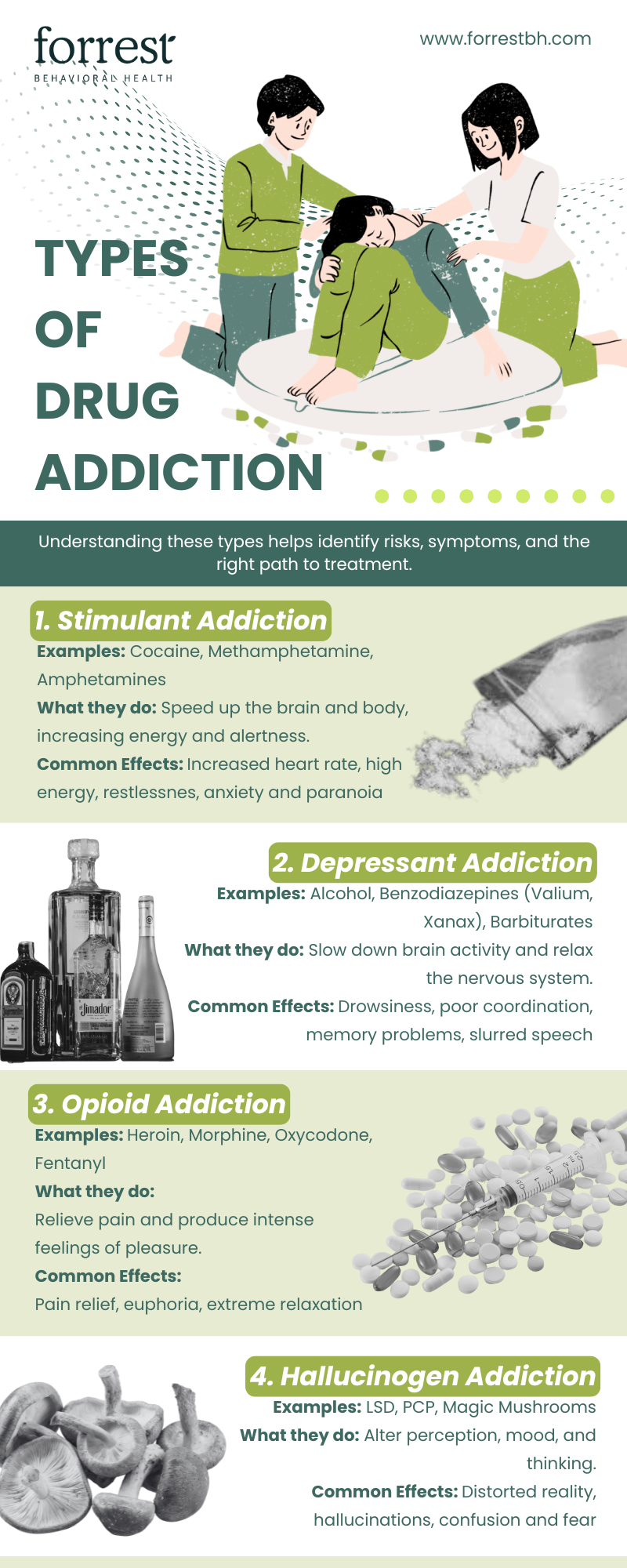
Individual counseling helps unpack the “why” behind the use; group support helps with the part of recovery programs that gets right that willpower alone doesn’t. Family involvement is often part of the picture too, since kratom dependence rarely stays contained to just the person using.
Final Words
Kratom’s low-dose reputation as “the safer option” isn’t entirely made up; that’s what makes it dangerous. It really can feel helpful at first. Nevertheless, give it enough time and enough dose creep, and the same leaf that seemed harmless starts running your nervous system instead of the other way around. If Hyde’s already shown up in your life or someone else’s, that’s not a character flaw; it’s just how this particular chemistry works. And it’s exactly the kind of thing Forrest Behavioral Health knows how to help undo.