

The Role of Family Involvement: Challenges in Outpatient Mental Health & Addiction Care in MA
You are a mother sitting outside a clinic in Massachusetts, waiting for your son to finish his outpatient treatment. You want to help him and be the stable rock he needs. However, you can’t help but think about whether you’re doing enough.
Am I helping him, or am I doing enough for him? Thoughts like these, keeping your mind occupied? It’s never easy for families to help a loved one who is struggling with mental health or addiction issues.
Both the patient and their family must be committed to outpatient support programs to work. Getting care in Massachusetts can be hard in its own way, but getting support from family is still a big aspect of healing.
We at Forrest Behavior Health think that families are partners in the healing process, not just bystanders. They can take care of their loved one and stay healthy at the same time if they have the necessary tools and help.
In this article, we’ll talk about how important it is for families to be involved, some of the problems that come up, and how outpatient support for mental health and addiction may make recovery stronger.
Why Is Family Involvement Important in Outpatient Treatment?
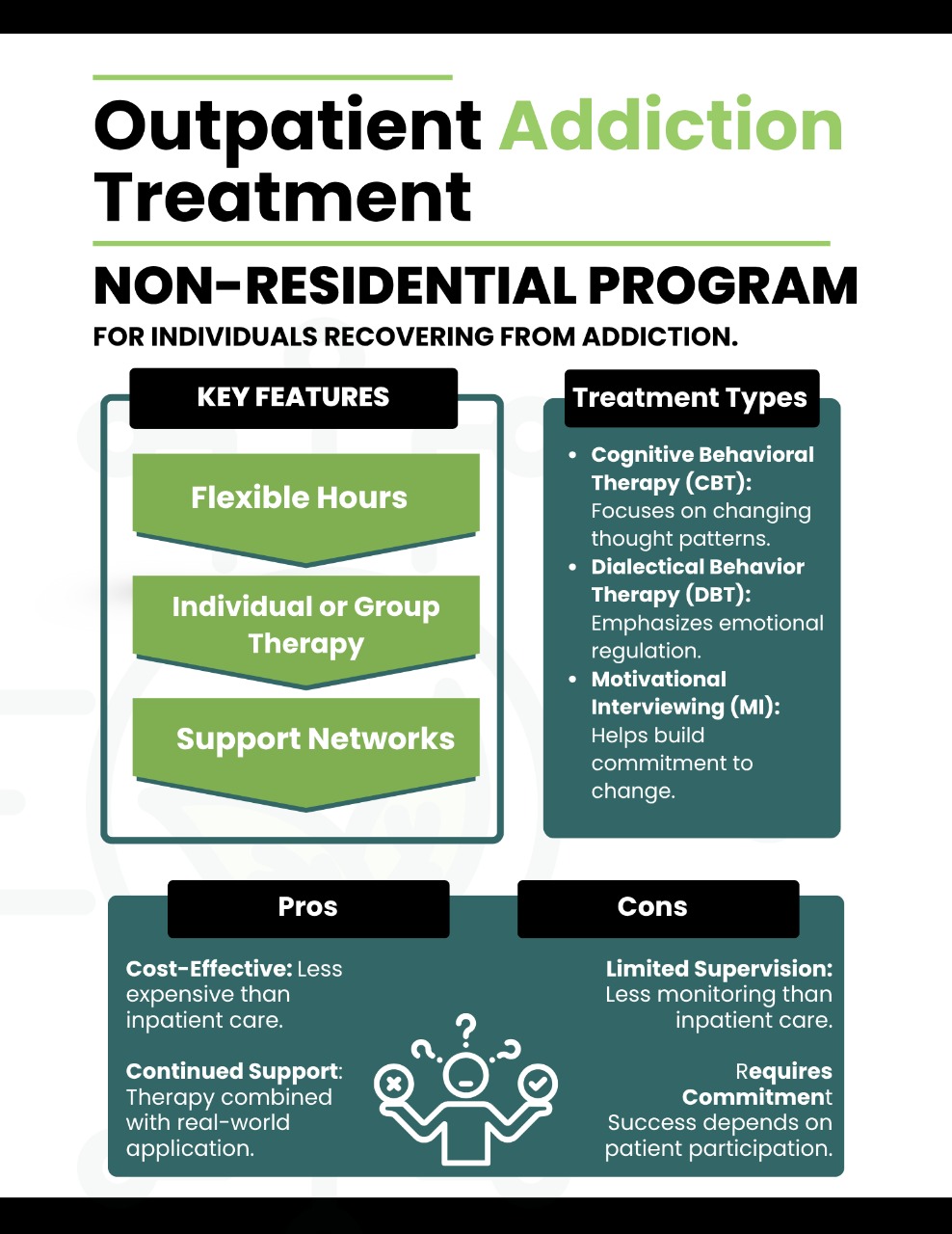
Outpatient addiction and mental health programs let people obtain therapy while they live at home, but a lot of how well they work depends on how much support they get from their family.
Families often act as caregivers and motivators, helping their loved ones follow their appointments and get healthier. In Massachusetts, though, difficulties including weariness, stigma, and money issues make it challenging to seek outpatient help for mental health and addiction.
Quick Fact! NAMI reports that family involvement can cut relapse rates by nearly 50%, yet many Massachusetts families lack guidance on supporting loved ones without burning out. |
Key Challenges Families Encounter in Outpatient Mental Health & Addiction Care in MA
1. Balancing Support Without Enabling
Families often do things with the best of intentions, but assistance can occasionally turn into enabling, or it might make things worse. The goal is to establish a balance between promoting responsibility, setting appropriate limits, and being involved without taking over.
In outpatient support for mental health and addiction, having family members involved all the time can make recovery a lot better. When families keep this balance, patients are more likely to stick with their care, have fewer setbacks, and make things better for everyone involved.
2. Lack of Education About Mental Health and Addiction
Even though places like Boston, Worcester, and Springfield in Massachusetts offer some of the greatest hospitals and treatment centers, many families still don’t know how outpatient recovery works.
If you do not receive adequate assistance, it is easy to misinterpret symptoms for exhaustion or a lack of willpower.
This might lead to conflicts and unhappiness at home.
Families who have access to outpatient mental health and addiction care can help their loved ones recover in healthy ways.
3. Emotional Burnout for Caregivers
Many families in Massachusetts cities, such as Boston, Worcester, and Springfield, struggle to understand how outpatient programs function. This is true even though the state has some of the best hospitals and treatment centers.
If you think your symptoms are just laziness or not trying hard enough, it might cause problems, fights, and stress at home. Access to outpatient mental health and addiction help in Massachusetts provides families with the knowledge and skills they require to promote recovery while avoiding caregiver fatigue.
4. Cultural and Community Stigma
There is still a stigma around mental health and addiction, even in places like Massachusetts that are open-minded. A lot of families are afraid of being judged by their neighbors, coworkers, or relatives, which can make them feel alone and not want to ask for help.
This stigma also makes it difficult for caregivers to attend support groups or speak openly, making it difficult for MA to receive outpatient mental health and addiction treatment.
5. Navigating Insurance and Financial Barriers
Massachusetts has expanded healthcare access, but gaps remain. Insurance may cover outpatient visits, yet not family counselling or travel costs, leaving families under financial strain. Accessible outpatient support for mental health and addiction, MA can ease these burdens and strengthen recovery.
How Can Families Support a Loved One Without Burning Out?
Families are a core part of the human society and social system. Family members play a vital role in supporting recovery, but it’s equally important that they safeguard their own mental health. Below are practical strategies to help keep a balance between personal and family life.
Educate Oneself
Knowledge is power, and it reduces one’s inner fears. In Massachusetts, free education, guidance, and resources to support families in understanding technicalities related to mental health and addiction are offered by organizations such as the Department of Mental Health and NAMI (National Alliance on Mental Illness) chapters.
Setting up Healthier Boundaries
Clear, compassionate boundaries help maintain trust while preventing unhealthy dynamics. Maintaining better boundaries, such as refusing to donate money that could facilitate destructive behaviours, may safeguard both the individual in recovery and the family.
Utilizing Community Resources.
Family therapy and support groups are significant parts of outpatient programs in Massachusetts. These sites help individuals get better by giving caregivers information, useful tools, and a community of support. They also offer outpatient mental health and addiction support, MA.
Taking Care of Yourself
Taking care of yourself should be the most important thing for caretakers. Families can help their loved ones recover faster by taking time for treatment, exercise, or short trips. This saves them from being burned out.
What Makes Massachusetts’s Outpatient Care Different?
Massachusetts is unique because it has a solid healthcare system. You will find world-class medical facilities and outpatient programs in the two cities of Cambridge and Boston. But smaller towns generally rely on health centers in their area.
In Western Massachusetts, places like Amherst and Northampton offer both clinical care and community-based support. This makes it easier for families to get involved. But families who live far away may have fewer options and longer waitlists, so their participation is even more important for outpatient treatment to work.
Final Remarks!
This article talked about how important families are in helping their loved ones get outpatient mental health and addiction care in Massachusetts. It looked at problems including burnout, stigma, and money issues, and gave useful tips for how to be involved in a balanced way.
At Forrest Behavior Health, we think that families are important participants in recovery and that they have the necessary tools and support to help their loved ones heal.
Call us today at (781) 570-5781 to learn more about how our programs can aid your family and get specialized help. Read on to find out more about how involving family can help you heal faster.
Read Next: Finding Your Tribe: Dual Diagnosis Group Therapy in Massachusetts