
Forrest Behavioral Health

Post-Detox Transition: What to do after Hospital Discharge

Post-Detox Transition: What to do after Hospital Discharge
 

Post-Detox Transition: What to do after Hospital Discharge

Definition: The post-detox transition is the period immediately followed by completing medical detox treatment. While detox stabilizes the body, it must be followed by post-detox care to support long-term recovery and prevent relapse.

What is Post-Detox Transition?

The post-detox transition is the period after completing medical detox, during which the patient requires proper advice and supervision. While Detox restores the body’s balance and eliminates the substance, it does not address the emotional or psychological aspects of addiction. 

You will receive a structured post-detox treatment plan to guide you toward long-term recovery and emotional balance. This plan may include outpatient programs, counseling, and peer support. The post-detox care helps reduce the risk of relapse and supports long-term recovery.

Key Takeways

  • Detox is the initial phase of recovery, but full recovery requires ongoing post-detox care. 
  • This care begins immediately after hospital discharge.
  • The structured plan that includes outpatient programs, counselling sessions, and peer support. 
  • In Massachusetts, aftercare programs are carefully followed to help maintain patient stability and support long-term recovery.

Why is After-Detox Care Important?

After completing the detox phase, it is very important to follow a post-detox transition. As the patient is just leaving the hospital, there is a high risk of relapse if proper aftercare is not followed consistently. 

In Massachusetts, there is structured aftercare provided to outpatient programs and counselling support. This is actually a guide to strengthen the recovery process.

How Post-Detox Treatment Is Provided Across Different Treatment Levels in Massachusetts (MA)?

1. Inpatient Residential Treatment

Inpatient residential treatment is a full-time, intensive program where the patient stays at the hospital 24/7. The treatment follows a structured daily routine that is designed to support recovery. 

Post-detox care is carried out under full supervision, along with patients living in a safe and trigger-free environment. Therapists engage them in daily therapy sessions and help them develop coping skills. To prevent relaps strategies are taught and practiced regularly.

2. Partial Hospitalization Programs (PHP)

PHP provides support for individuals with mild to moderate substance use challenges. The patient will be medically detoxed without staying in the hospital for 24 hours.

Moreover, the post-detox care continues through daily therapies, medical monitoring, and coping skills training. In all those treatment phases, the patient can visit the hospital in the morning and leave in the evening.

3. Intensive Outpatient Programs (IOP)

An Intensive Outpatient Program (IOP) is designed for individuals who want to continue treatment while staying at home. IOP provides structured post-detox care while allowing patients to live with their families and maintain daily responsibilities. 

It includes consistent therapy sessions, work on the emotional pattern which trigger substance use. This level of care focuses on reducing cravings, identifying triggers, and strengthening coping skills to support ongoing recovery.

4. Outpatient Therapy and Counselling

Outpatient therapy and counselling are offered as part of post-detox care, allowing individuals to follow a scheduled plan of individual and group therapy sessions. This level of care focuses on emotional healing and behavioural improvement

Through outpatient therapy and counselling, therapists also help patients manage stress and maintain sobriety by teaching effective coping techniques and recovery strategies.

“Post Detox Transition is a bridge between detox and long-term recovery.”
How to Transition Safely After Detox?

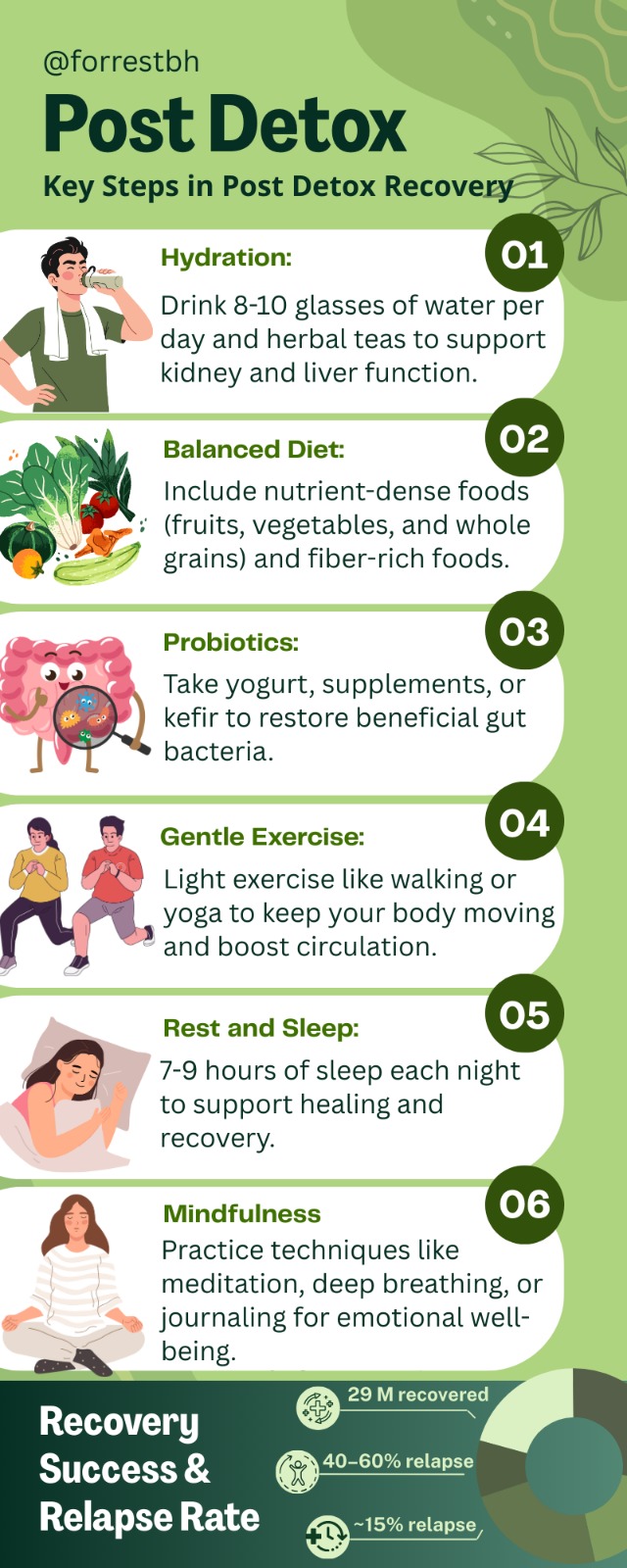
Every individual wants to transition safely after medical detox and continue their emotional therapy. Patients begin this journey by following a structured post-detox program. Before leaving the hospital, they are monitored thoroughly to ensure stability. 

Post-detox treatment includes sufficient sleep, nutritious food, and therapy sessions continues after the hospital’s medical detox. Family members must be careful to minimise or remove triggers in the patient’s environment to maintain stability. 

According to the PubMed Report, out of 510 individuals released from compulsory detoxification, approximately 267 maintained recovery, while about 243 relapsed and required further treatment. This emphasizes the critical role of structured post-detox care.

Post-detox care in Massachusetts follows medical detox. This is essential for building a foundation for a new and healthy life.

How is a Strong Post-Detox Plan is Followed in Massachusetts?

  • Role of Care Coordinators:
    The experts play an important role in implementing treatment plans, along with providing guidance. It will ensure that patients follow the recommended care.
  • Therapy and Psychiatric Care:
    This care includes individual therapy and group therapy. The main goal is to address emotional and behavioral needs.
  • Family Involvement:
    Involving family gives emotional space to the patient and a level of care and connection. As they provide encouragement and accountability in a supportive environment.
  • Sober Living Homes:
    Post-detox plan offer living home facility for patients. They provide a safe transition for patients when they transition from detox programs to independent living. 

Who Supports You After Detox?

After completing medically supervised detox and rehab, individuals transition into the post-detox phase to continue their recovery journey. In this phase, various professionals and support systems help you move forward with life and maintain recovery.

  • Addiction Specialists:
    These professionals provide ongoing guidance and support. Their experience allows them to analyze cravings, identify relapse triggers, and help you stay on track.
  • Mental Health Professionals:
    The recovery often involves a team of mental health experts – including therapists, counselors, and psychiatrists. They address the emotional and behavioral challenges that may contribute to substance use.
  • Peer Recovery Coaches:
    Connecting with peers who have experienced addiction can be highly encouraging. Peer recovery sessions offer practical strategies and share personal experiences. It provides motivation to help you feel more stable in your recovery journey.
  • Family and Trusted Support Systems:
    Support from loved ones plays a crucial role, especially in the early stages of recovery. Family and trusted friends provide motivation, understanding, and a sense of stability. You can strengthen your commitment to sobriety.

    “Recovery continues after detox through therapy.”

The Next Step in Your Recovery Journey

A strong post-detox transition is essential for restoring your mental health. After medical detox, maintaining stability is crucial, which is why a structured post-detox plan is provided and needs to be strictly followed. From inpatient treatment to outpatient treatment, post-detox support guides you through your recovery journey. In Massachusetts, post-detox programs are designed to help individuals continue their mental health recovery while maintaining a substance-free lifestyle.

Want to learn more about structured post-detox programs in Massachusetts? Visit Forrest BH to explore your recovery journey.

Forrest Behavioral Health

Are you ready to overcome your addiction or learn more about our treatment programs? We are here for you.

leaf

Need treatment?

Get a call to start your recovery journey.

"*" indicates required fields

Other Posts

Verify Approval for www.forrestbh.com

Are you ready to overcome addiction? We encourage you to request a phone call from a recovery specialist.

"*" indicates required fields