Postpartum Depression Treatment near Lexington, MA: You Don’t Have to Struggle Alone
We’ve all heard just how tiring the first few weeks with a baby can be. No one ever speaks about what comes after exhaustion and hopelessness.
You may feel totally exhausted even after getting some rest.
You may feel love for your baby, but you feel disconnected.
Feelings of guilt may arise even if you are expected to be happy. It doesn’t mean that you’re a bad parent.
Postpartum depression can impact your thinking, feeling, sleeping, and functioning after the birth of your baby.
It can be treated, too. Massachusetts considers PMDDs to be common and treatable disorders.
Massachusetts health officials estimate that almost 1 in 5 pregnant and birthing parents experience postpartum depression.
You aren’t alone if you’re seeking postpartum depression treatment in Lexington, MA. It means that you are selfless and caring for yourself and your family.
It May Be More Than the Baby Blues
Childbirth can be an emotional roller coaster in the first weeks.
The National Institute of Mental Health states that the majority of cases of perinatal depression start 4-8 weeks after giving birth.
For anyone who has experienced hormonal changes, sleep deprivation, physical recovery, and caring for a newborn baby, it can be an overwhelming situation.
The “baby blues” typically are mild and temporary. Postpartum depression is not like that.
NIMH predicts that during postpartum depression, sadness, anxiety, fatigue, guilt, trouble sleeping, difficulty concentrating, and difficulty bonding with the baby are symptoms.
You may be feeling like:
- “This isn’t something I can do very well.
- “So why am I not feeling happy?”
- “I should be able to take care of this.”
- “There’s something not right with me.”
These thoughts cannot be judged; they are worthy of attention.
When New Parents Do Not Ask for Help
For some reason, it is expected that early parenthood is supposed to be easy.
You might feel you’re taking care of your baby, going to appointments, seeing everyone, and telling them how great you’re doing.
However, inside you feel like you’re holding on by a thread.
Some parents fear others will doubt their ability to care for their child if they admit they have issues. Others think that they just need to get more sleep or time to get used to it.
This hesitation can postpone treatment.
Postpartum depression is nothing to be ashamed of and has nothing to do with not loving your baby. It is a psychological illness that needs help from professionals.
Don’t wait until it is too painful to reach out for help.
What Can Postpartum Depression Treatment Look Like?
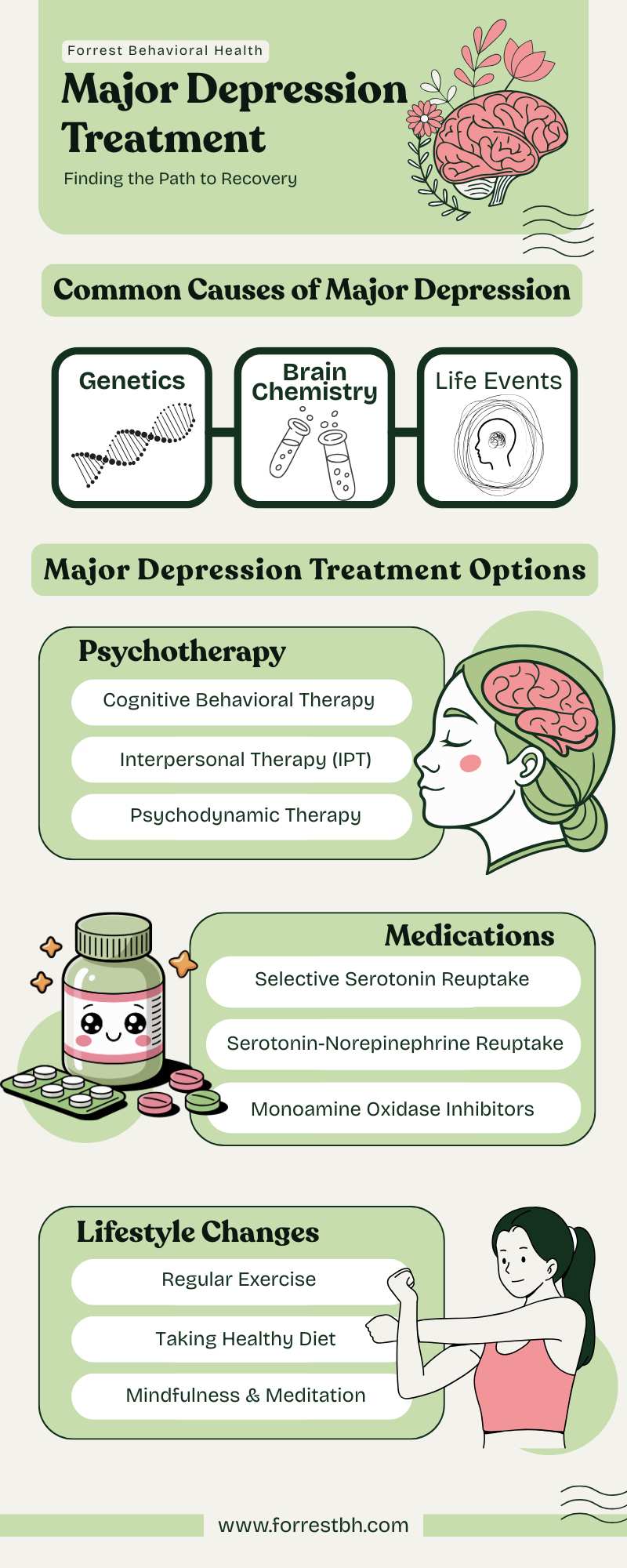
Treatment should be tailored to the individual and not the diagnosis. Therapy can help you to understand your emotions better.
Therapy is a safe environment to discuss ideas that you might not be able to talk about anywhere else.
This may be possible through evidence-based treatments, like cognitive behavioral therapy (CBT) and interpersonal therapy (IPT), that can help alleviate depressive symptoms and improve relationships.
This may be particularly helpful post-pregnancy.
You’ve had a change in your relationships. You are now on your way to a new set of responsibilities. You might’ve even experienced a change in your identity.
Therapy can assist you in navigating through those changes without “faking it till you make it”.
Medication May Be Part of Treatment
For some, medication is used in addition to therapy. Depending on the person’s situation, antidepressants can be used to treat postpartum depression.
In addition, some drugs are especially formulated for treating postpartum depression.
Your provider (physician or nurse practitioner) can talk to you about your symptoms, medical history, and treatment.
Sometimes You Need More Structured Support
Depression can make everyday activities hard to do.
Sleeping becomes difficult. It is hard to get out of bed. Work becomes harder. Relationships become strained.
In such cases, a structured outpatient course might help provide more support without requiring you to leave your home and family.
Treatment needs to be tailored to your symptoms and needs.
Looking for Postpartum Depression Treatment in Lexington, MA
Living in the Lexington area provides access to mental health services across the greater Boston area. However, convenience is not the only factor to consider.
You want treatment that recognizes the emotional nature of parenthood.
You will need a place to share some of your feelings of guilt, anxiety, exhaustion, and relationship changes, along with some tough thoughts without being judged.
You also want care that takes a holistic approach, instead of just one symptom.
Postpartum depression can coexist with an anxiety disorder and other perinatal mental health conditions.
Massachusetts lists depression, anxiety, OCD, PTSD, bipolar disorder, and postpartum psychosis as examples of perinatal mood and anxiety disorders.
Taking a comprehensive evaluation can help identify what you really are feeling.
You Don’t Have to Wait Until You Feel Like Yourself Again
You may think that next week will be easier.
You may believe you need to go through this period.
You may be running on the outside but feeling overwhelmed on the inside.
But you need help right now!
Treatment at Forrest Behavioral Health can provide you with a safe place to learn about what is happening and have ideas about how to cope with it.
The point is to make no judgments about your parenting.
It is for your benefit to be more stable, connected, and capable again.
For information about mental health care treatment, visit Forrest Behavioral Health; you can explore options that might be right for you.
Reaching Out Doesn’t Make You A Bad Parent
When you’re suffering from postpartum depression, you will have doubts about almost everything.
It can cause you to feel bad that you are tired.
It can leave you wondering about your relationship with your baby.
It can make you feel worse.
Such emotions can be very strong. Don’t take them as signs of failure.
Postpartum depression can be treated, and looking for help is a wise step to take to overcome the depression.
Massachusetts also has specific resources available for parents with PMDs. If you are having trouble after giving birth, you are not alone. The right support can get you back to normal.