

Mindfulness That Clearly Sticks: What Burlington Residents Get Wrong About Meditation and Mental Health
Kung Fu Panda has a scene that most people remember for the laugh but then kind of skip over the lesson part. Like yeah, they notice the funny moment, but they don’t really stay with what it’s pointing at. Master Oogway hands a peach seed to Master Shifu, asking him to go meditate. Shifu really doesn’t want to. He’s got problems to handle, threats to face, plus a panda to train, like right now. Yet somehow he still goes.
And there, under that peach tree, he sits. Breathing. Looking at how things grow on their own schedule, slow and steady, not rushed. Then this thing inside him, that for decades had been tied up in knots, finally starts to loosen. Not all at once, but it softens, and it feels… honest.
Most people in Burlington have tried some version of this. The app downloaded on a Sunday night with good intentions. The YouTube video queued up before bed. The three-day streak that dissolved quietly somewhere around Tuesday. Finally, they reach the conclusion that maybe mindfulness just isn’t something you’re built for.
That is wrong, though. In fact, it isn’t your fault for reaching this stance. Studies of popular meditation apps have found that approximately 95% of active users discontinued within the first month. That’s not because meditation doesn’t work, but because the way most people are introduced to it is missing something essential.
What Are Mindfulness and Meditation, and Why Do People Confuse Them?
It’s similar but not exactly the same, and yes, it counts.
Meditation is the practice. You sit, you breathe, you choose a place to focus, and you bring your mind back to that when it starts to wander. Mindfulness is a form of practice that becomes clearer with time. In 1979, Jon Kabat-Zinn, who introduced it to clinical medicine, defined it as “awareness that arises by paying attention in an intentional way, in the present moment, and non-judgmentally to the unfolding of experience from moment to moment.”
This means that you are here, noticing what is going on with your body and mind right now, without rushing to mend it or to get away from it right away. Nonetheless, there are a lot of apps that teach you how to meditate. Like, inhale on the count of four, hold, and then exhale. That’s not wrong; it’s just not complete.
True mindfulness is about anchoring your awareness to sensory experiences – which is why many people find it much easier to practice while engaged in a highly tactile, physical task. Exploring the physical and psychological mechanics behind active meditation, such as the concepts detailed in the ultimate guide to therapeutic cleaning: why pressure washing is great for mind and body, reveals that clearing your mind can often start with a single-point focus in your own backyard.
How Does Mindfulness Exercise a Positive Effect on the Brain and Body?
Now things get really interesting, and “mindfulness is good for you” turns into something beyond a wellness mantra.
Being mindful consistently alters your nervous system’s response to stress. Your amygdala, the part of your brain that triggers your fight or flight alarm, isn’t as active. The prefrontal cortex (the part of the brain that is responsible for reasoning and regulating emotions) is much more active. In simple terms, the ‘time lag’ between an event and a response to it increases, and in that gap is where choices live.
Well-designed clinical studies have found benefits for patients in a few key areas like depression, chronic pain, and anxiety, with effects that are comparable to other established therapies. Mindfulness-Based Cognitive Therapy (MBCT) has also been shown to cut the chances of depression relapse by roughly half.
The other part is that mindfulness teaches you how to quit waging war with your own internal “weather.” It does not erase hard emotions, and it also doesn’t block stress. Instead, it shifts your bond to those experiences, leaving a little space between what happens and how you react. Some people who are sure they will arrive at permanent serenity feel disappointed when anxiety, anger, and sadness keep showing up, even after training.
3 Evidence-Based Mindfulness Exercises Worth Trying for Mental Health
These aren’t from an app. They’re the same exercises used in clinical programs like MBSR and MBCT. The difference is knowing why you’re doing them.
1. The Body Scan
Lie down or sit comfortably. Starting at the top of your head or the soles of your feet, move your attention slowly through each part of your body. The goal is not to relax it or fix anything, just to notice what’s there. Tightness in your chest. Jaw you didn’t realize you were clenching. The way your shoulders have been creeping toward your ears for the last three hours.
The body scan works because most people carrying anxiety or depression have become disconnected from their physical experience. This exercise rebuilds that bridge.
2. Mindful Breathing
Breath-centered attention is about noticing the natural flow of breathing, like an anchor, so your concentration stays in the now. It can reduce mind wandering, and it helps cultivate a calm, focused awareness.
Realizing that your mind has drifted off doesn’t mean you messed up. It means you notice, then you come back. That noticing, then returning, is the real practice. Each time you do it, you’re basically training the same brain muscle that keeps you from getting pulled into spirals when something becomes complicated all of a sudden.
3. Sitting with Difficult Emotions
This is the one you never see in wellness content because it’s not easy to sell. Rather than attempting to avoid negative emotions, the practice teaches you to change your relationship to these emotions.
You sit with whatever shows up – the grief, the irritability, and the low-grade dread – and you observe it instead of becoming it. As one participant who participated in a clinical MBCT program stated, “I am better able to separate and observe my thoughts and feelings rather than being overwhelmed.”
That’s no small thing. That’s the difference between being swept out to sea and standing at the waterline watching the waves.
Final Words
Burlington residents dealing with mental health issues don’t need a better app. They need what Master Shifu needed under that peach tree: the right conditions, the right guide, and enough structure to stay in the room when it gets hard.
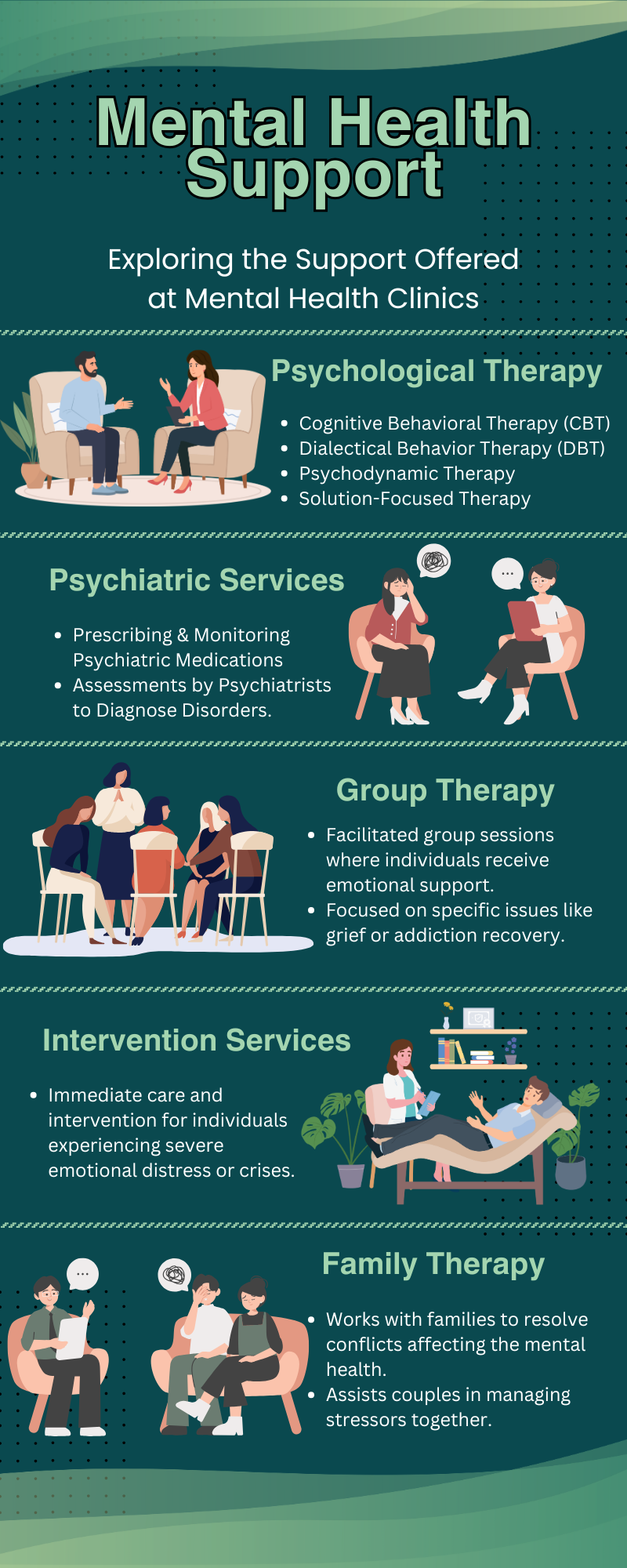
Forrest Behavioral Health in Burlington offers clinical mindfulness as part of its mental health treatment programs as evidence-based therapeutic work integrated with individual therapy, psychiatric evaluation, and care that meets you where you are.
You don’t need to figure out if you’re doing it right. You don’t need to try everything else first. “You just have to decide that the gap between how things are and how they could be is worth walking toward.
That is all. Call Forrest BH today to hear more about the technique.