
Mastering the Mind: DBT Skills for Emotional Regulation in an IOP Near Billerica, MA
Riding an emotional rollercoaster every day wears down even the most driven executives in Billerica and across Greater Boston. From the outside, everything looks fine. The career is on track, and the calendar is full. Inside, though, it can be a constant cycle of sudden anxiety spikes and depressive episodes that make it hard to get out of bed. In 2026, research indicated that forty-five percent of corporate professionals in Massachusetts reported clinical symptoms of emotional dysregulation that required medical intervention.
If you struggle to calm yourself down, that says nothing bad about your character. In most cases, it is your brain’s predictable response to chronic stress, trauma, or untreated adult attention-deficit/hyperactivity disorder (ADHD). The good news is that you do not have to stay at the mercy of these automatic triggers. Just minutes from Billerica, MA, Forrest Behavioral Health uses evidence-based Dialectical Behavior Therapy (DBT) to teach high performers practical skills for regulating their nervous system. Read on to find out how it works.
The High-Achiever’s Struggle With Emotional Dysregulation
Why Is Masking Your Emotions at Work So Exhausting?
Keeping your emotions hidden all day takes a lot of mental effort. Many Billerica professionals spend hours holding a calm, confident face through high-stakes meetings. Meanwhile, their prefrontal cortex is working overtime to hold back rising panic or frustration during difficult client calls.
That kind of constant effort drains your brain’s resources, including key chemical messengers like dopamine and serotonin. Holding back your natural threat response also keeps adrenaline flowing. Thus, the moment you walk through your front door at night, the emotional crash hits hard.
Trying to look perfect all the time adds to your allostatic load, the total wear and tear that chronic stress puts on your body. Your heart and blood vessels take much of that strain. Many executives deal with unexplained high blood pressure or constant tension headaches long before they realize their nervous system is struggling.
At home, spouses and children often end up on the receiving end of sudden outbursts, or they watch a panic attack come out of nowhere. The problem is that your body cannot keep a flawless professional mask on forever. All of that held-back stress has to come out somewhere.
The Danger of Self-Medicating Emotional Swings
A dysregulated nervous system is always looking for quick relief. So, many professionals start drinking in the evening to force their racing thoughts to quiet down. Then, during the day, they reach for unprescribed stimulants to fight the brain fog and push past the exhaustion underneath.
Using alcohol to slow down an overactive mind seriously disrupts your natural sleep cycles. Your brain spends less time in the restorative REM sleep it needs to consolidate memories. Therefore, you wake up tired, and that exhaustion makes it far more likely that your emotions will spike the next day.
Over time, alcohol and other depressants also change the way your GABA receptors work. Your brain gradually loses its natural ability to calm itself without a substance doing the work. Once the alcohol leaves your bloodstream, a glutamate rebound sets in and triggers intense morning panic.
This cycle throws your brain chemistry off balance quickly. It makes your everyday emotional swings worse and can pull you into a dual diagnosis, where substance use and a mental health condition feed into each other.
What Is Dialectical Behavior Therapy (DBT)?
How Is DBT Different From Traditional Talk Therapy?
Standard talk therapy gives you a valuable space to explore childhood memories and work through past trauma. Cognitive Behavioral Therapy (CBT) is effective at targeting negative thought patterns and distorted thinking. DBT builds on these approaches with a structured format designed for immediate, everyday use.
DBT is an action-oriented, skills-based therapy. Its focus is on concrete changes in behavior that you can start practicing right away. It works from two ideas held at the same time: you are doing the best you can, and you also need to learn new ways of coping.
Above all, DBT teaches you exactly what to do when you are in the middle of an emotional crisis. You walk away with practical tools for handling conflict and pressure without falling back into self-destructive habits.
What Are the Four Core Modules of DBT?
Our Intensive Outpatient Program (IOP) teaches all four core skill areas of DBT:
- Mindfulness: Trains your brain to stay grounded in the present moment without judging passing thoughts.
- Distress Tolerance: Helps you get through an active crisis without making it worse through impulsive actions.
- Emotion Regulation: Teaches you how to recognize sudden feelings and bring their intensity down.
- Interpersonal Effectiveness: Gives you a framework for handling workplace conflict and asserting healthy boundaries.
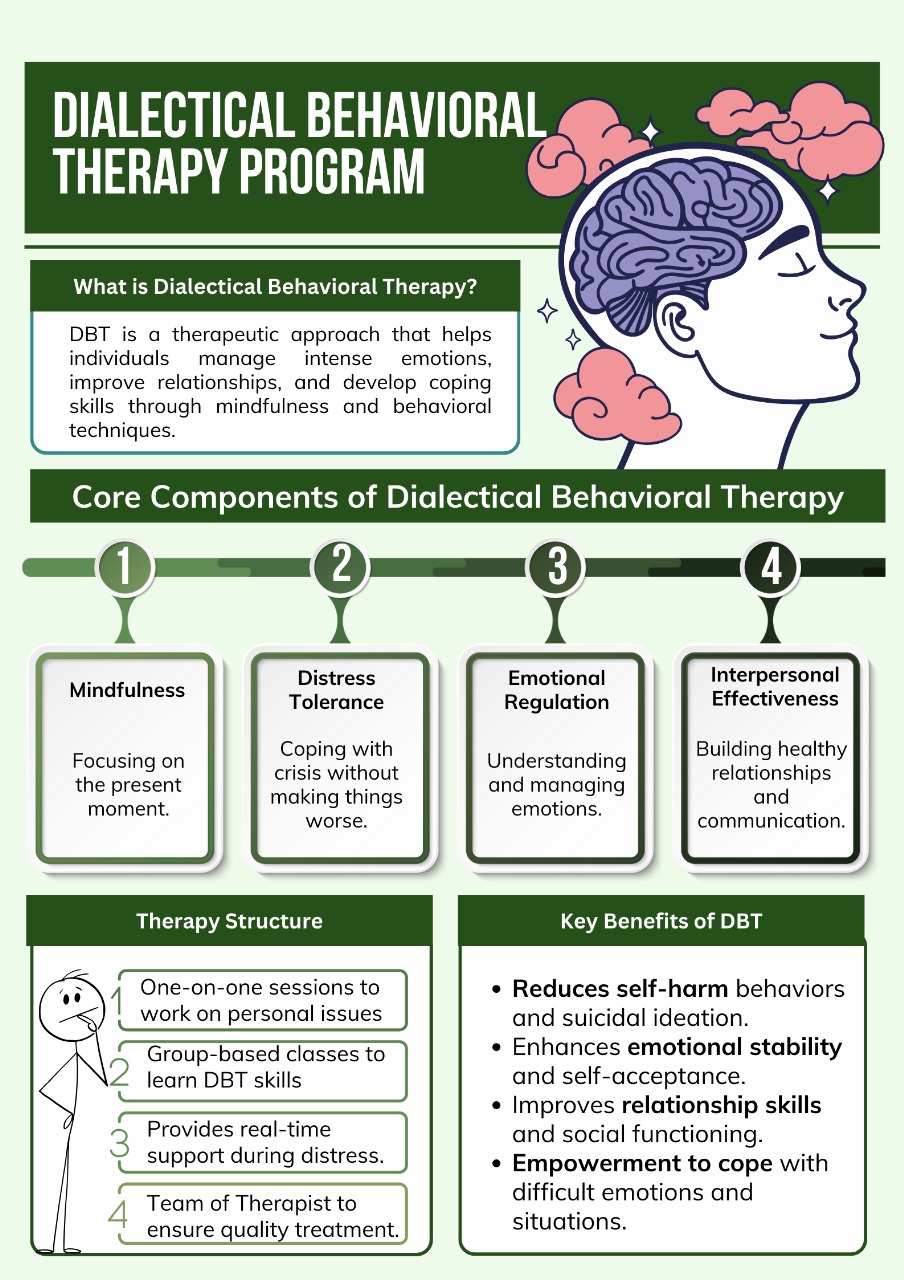
With regular practice, these skills can help strengthen the pathways in your prefrontal cortex that support self-control. Over time, these healthier responses can start to feel more natural, and many people find it easier to catch a panic spiral before it gains momentum.
Applying DBT Skills in a Flexible IOP Near Billerica
Distress Tolerance Skills for Corporate Burnout
Before you can change how you behave in a stressful moment, you need a way to calm your body down. That is why clients learn body-based techniques like the TIPP skill, which stands for Temperature, Intense exercise, Paced breathing, and Paired muscle relaxation.
For example, splashing cold water on your face can trigger the mammalian dive reflex, which slows your heart rate within a short time. You can use these techniques right before you send an email you might regret or snap at your spouse.
Slowing your body down this way can help engage your vagus nerve and gives the logical part of your brain time to catch up. Many people find these skills help them ease the intensity of a panic attack and regain control more quickly.
Take Control of Your Emotions and Protect Your Career Today
Strong leadership starts with steady control over your own emotions. If you keep white-knuckling your way through emotional dysregulation, the risk of a serious burnout and lasting damage to your reputation keeps growing. You can take control of your mental health starting today.
Please reach out to the discreet executive admissions team at Forrest Behavioral Health. We offer a confidential, zero-pressure clinical assessment to talk through our specialized IOP tracks. Our financial coordinators will also quickly handle the Verification of Benefits for your commercial insurance, so the paperwork stays off your plate.
Contact Forrest Behavioral Health at 4 Preston Ct, Unit 101, Bedford, MA 01730 by calling (781) 570-5781 or visiting forrestbh.com.
Read Next: Overcoming Chronic Burnout and Panic Attacks: Outpatient Mental Health Solutions in Concord, MA