
Overcoming Chronic Burnout and Panic Attacks: Outpatient Mental Health Solutions in Concord, MA
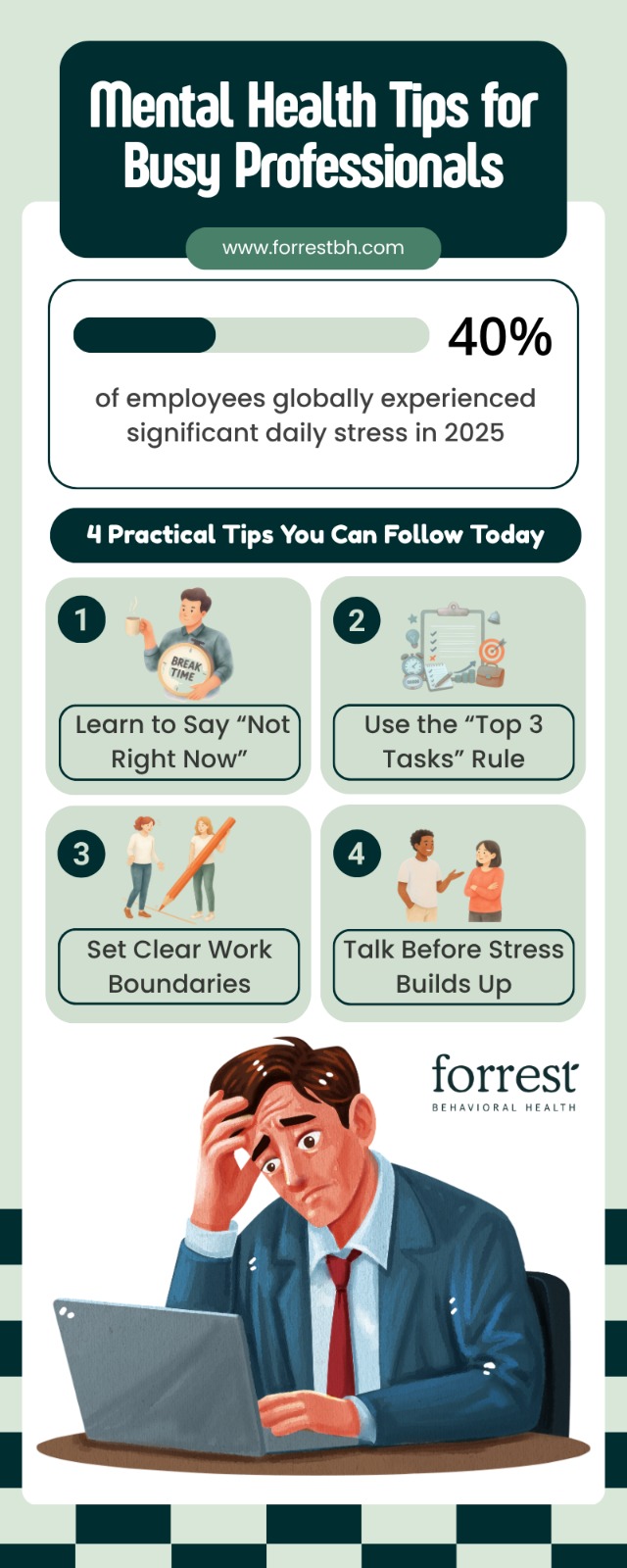
For many professionals in Concord, the pressure at work never really lets up, and eventually the body starts to give out under it. In 2026, research showed that over forty percent of corporate executives in Massachusetts experienced burnout symptoms that required clinical intervention.
A week off at the beach will not fix chronic burnout, because what you are dealing with is an acute crisis in your nervous system. Panic attacks work the same way; they are a physical overload that can feel exactly like a heart problem. The thing is, you cannot outwork a dysregulated nervous system. At Forrest Behavioral Health in Bedford, our Intensive Outpatient Program (IOP) and Partial Hospitalization Program (PHP) help you overcome burnout and panic without putting your career on the line. So, let’s talk about what is happening inside your body and how treatment can help.
The Breaking Point: When Stress Turns Into Burnout and Panic
What Does Chronic Burnout Do to Your Brain?
Long stretches of high-stakes stress set off a chain reaction in your body. Your hypothalamic-pituitary-adrenal (HPA) axis keeps releasing cortisol to help you keep up with constant workplace pressure. Over time, keeping that output going wears down key neurotransmitters like dopamine and serotonin.
When those chemicals run low, your brain struggles to find motivation or feel simple joy. Many professionals start to feel emotionally numb, and a steady brain fog settles in. Meanwhile, the hormonal imbalance takes a toll on the hippocampus, which makes it harder to form new memories.
Your gut feels it as well. Ongoing workplace stress can disrupt the gut-brain axis, and since your gastrointestinal tract produces a large share of your body’s serotonin, a stressed gut microbiome tends to reflect the same exhaustion your nervous system is carrying.
The problem is that modern work rarely lets the brain rest. Answering emails at midnight keeps your sympathetic nervous system switched on long after it should have powered down. Thus, your brain never gets the signal that the workday is over.
When your allostatic load, the total wear and tear from chronic stress, gets too heavy, your body starts demanding a pause. If you keep ignoring those internal alarms, a physical crash becomes much more likely.
Why Do Panic Attacks Feel Like a Heart Attack?
A panic attack is a frightening physical event. Your autonomic nervous system mistakes an everyday stressor for a threat to your survival, and within moments, you feel tightness in your chest and start to hyperventilate.
Fast, shallow breathing quickly shifts the pH balance of your blood. That shift brings on tingling in your hands and feet along with intense dizziness. Put together, these symptoms can closely mimic a heart attack.
Many people also go through derealization during an episode. The room around you suddenly feels fake or far away, because your brain is trying to protect itself by detaching from what is happening.
Meanwhile, your vagus nerve does not send the signal that you are safe, so your heart rate stays high. Convinced they are dying, many high-achieving adults rush to the emergency room. Doctors run cardiac panels, find nothing wrong with the heart, and send the patient home with an anxiety diagnosis.
However, walking out of the hospital without a psychiatric follow-up plan leaves you open to another attack. Your amygdala stays on high alert and keeps scanning your surroundings for the next hidden danger.
Outpatient Burnout and Panic Treatment at Forrest BH in Bedford
Flexible PHP and IOP for Concord Residents
Forrest Behavioral Health offers structured outpatient programs built around the schedules of busy executives. Our PHP gives you strong daytime support to break an acute cycle of panic. You take part in evidence-based therapy throughout the day without checking into a residential facility.
Our IOP offers focused therapy blocks spread across several days a week. The flexible schedule lets Concord professionals get the care they need while still meeting their work obligations. You also get to sleep in your own bed, which protects your natural circadian rhythm.
Working through recovery with other driven executives can be eye-opening. You quickly see that you are not the only high-achiever whose nervous system has been pushed past its limit, and hearing others share their stories helps ease the isolation that burnout creates.
When something stressful comes up at work, you bring it back to your therapist the next morning so you can make quick adjustments to your plan together.
How CBT and DBT Help Retrain Your Nervous System
Our licensed clinicians use practical, evidence-based therapies to help repair your brain’s threat detection system. Cognitive Behavioral Therapy (CBT) helps you break down catastrophic thought loops step by step. With CBT, your prefrontal cortex learns to question a panic trigger objectively before it takes over your physical response.
Consistent practice may also support changes in gray matter in the frontal lobe. In other words, you are helping your brain build new, more resilient patterns. Over time, these healthier responses can become your natural way of reacting to stress.
We combine cognitive restructuring with Dialectical Behavior Therapy (DBT) to teach you grounding techniques that work through the body. DBT gives you specific tools to stop a panic attack before it fully builds. You learn how to engage your vagus nerve and bring your heart rate back down.
Your therapist will also teach you temperature and paced breathing techniques. These exercises help activate your parasympathetic nervous system, the part responsible for rest and recovery, so you can start to feel physically steady again.
Reclaim Your Health, Career, and Peace of Mind Today
Strong leaders know when it is time to ask for professional help. Running on panic and exhaustion every day cannot last forever. Letting go of the need to look perfect allows you to put your long-term health and your family first.
Please reach out to the discreet executive admissions team at Forrest Behavioral Health today. We offer a confidential clinical assessment, and our staff will quickly handle your Verification of Benefits to map out your commercial insurance coverage.
Contact Forrest Behavioral Health at 4 Preston Ct, Unit 101, Bedford, MA 01730 by calling (781) 570-5781 or visiting forrestbh.com.
Read Next: Trauma-Informed Care for PTSD: Finding Evidence-Based Outpatient Healing in Woburn, MA