
Navigating the Post-Grad Cliff: How an Intensive Outpatient Program Helps Young Adults in Reading, MA
Graduating from college is supposed to feel like a big win. However, for many young adults coming home to Reading, it feels more like stepping off a cliff. In 2026, clinical data indicated that over 50% of recent college graduates reported clinical symptoms of anxiety or depression during their first year after graduation.
So, when a bright, educated young adult spends day after day alone in their childhood bedroom, frozen by the job search, laziness is rarely the real explanation. In most cases, the brain is reacting to severe transition anxiety, untreated ADHD, or burnout from four years of academic pressure.
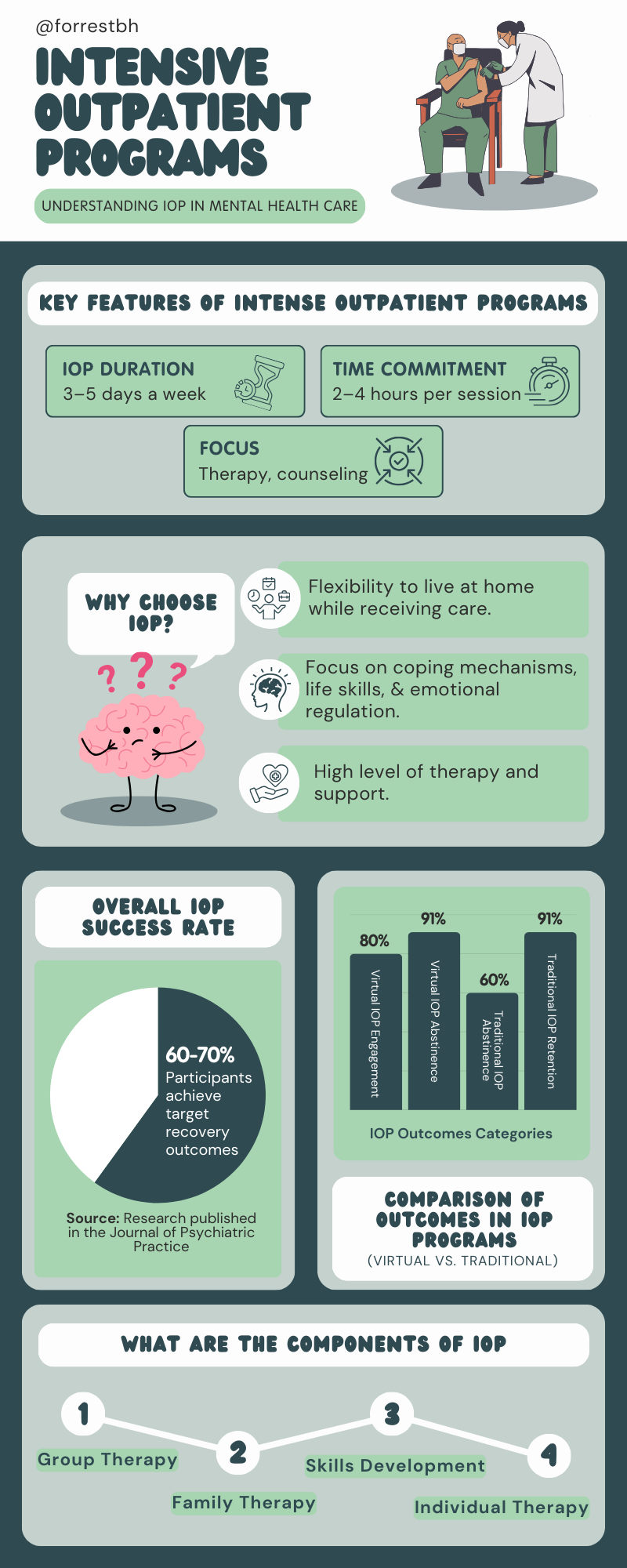
Just a short drive away in Bedford, the Intensive Outpatient Program (IOP) at Forrest Behavioral Health gives young adults the clinical structure and psychiatric care they need to stabilize and start building their careers. Read on to find out what is really going on, and what helps.
The Hidden Mental Health Crisis of the College Transition
Why Does Executive Function Fall Apart After Graduation?
For four years, a young adult’s day is held together by syllabi, set class times, and outside deadlines. That academic structure does a lot of the organizing work for the brain, and for some students, it quietly covers up real struggles with attention and planning. Then, almost overnight, that structure disappears, and so does much of the motivation and momentum it created.
For people living with undiagnosed ADHD or high-functioning anxiety, executive function can slip badly once college ends. Without a professor setting the schedule, the prefrontal cortex struggles to put even basic daily tasks in order. Suddenly, updating a resume or formatting a cover letter feels like pushing a boulder uphill, and many people freeze completely.
Living without a predictable routine also throws off your natural circadian rhythm and makes restful sleep harder to come by. A tired brain has a harder time starting goal-directed tasks. As a result, many young adults pull away and isolate, hoping their families will not notice how much they are struggling to organize their days.
Perfectionism and Paralysis in the Boston Job Market
Breaking into the competitive Greater Boston job market puts a heavy mental load on recent graduates. Watching friends land impressive roles along the Route 128 tech corridor or in downtown Boston can set off intense perfectionism. Meanwhile, the fear of choosing the wrong career path or falling behind keeps the nervous system stuck on high alert.
Your amygdala can start treating an unanswered application or a rejection email as a threat to your future. In response, your body releases cortisol and adrenaline. When stress hormones stay high for weeks, physical panic attacks and strong avoidance often follow.
Perfectionism also tells young adults that if they cannot make a flawless career move, they should not try at all. The problem is that avoidance eases anxiety for a moment while the career gap keeps growing. Pressure from parents rarely breaks this cycle; targeted clinical support usually works far better.
How Do Symptoms Escalate Into a Dual Diagnosis?
The Slippery Slope of Self-Medicating Isolation
Moving back into a childhood bedroom while college friends scatter across the country can feel deeply isolating. Social connection plays a real role in helping us regulate our emotions, and losing a built-in network of friends almost overnight leaves many young adults without that support.
To numb the shame of living at home, many turn to heavy drinking or high-potency cannabis. Depressants quiet racing thoughts for a while and bring on a temporary numbness. However, the brain adapts quickly to these substances by turning down its own natural calming systems.
Thus, when the substance wears off, excitatory glutamate activity rebounds, and many people wake up with a heavy sense of dread. Using substances to manage transition anxiety can quickly turn into a dual diagnosis, where substance use and a mental health condition feed into each other. Self-medicating also gets in the way of memory and focus, which are the very skills you need to do well in a job interview.
Why Is Weekly Therapy Often Not Enough for Recent Grads?
A standard 45-minute weekly session often cannot provide enough support to rebuild a daily routine that has fallen apart. When a young adult is caught in an active cycle of avoidance and isolation, one hour a week barely scratches the surface. Instead, the session tends to turn into a recap of the past week, and there is little time left to build practical life skills.
After the session ends, they head back to six unstructured days of unmanaged anxiety and endless scrolling. Changing deeply rooted avoidance habits takes frequent, consistent practice, which is exactly what a structured, multi-day program offers.
Without regular accountability, small setbacks can easily undo early progress. A higher level of outpatient care gives you the steady momentum needed to break the spiral.
How the IOP at Forrest BH Helps Rebuild Post-Grad Confidence
Our licensed clinicians go further than passive talk therapy and focus on practical, skill-based methods. We use Cognitive Behavioral Therapy (CBT) to break down the imposter syndrome and catastrophic thought loops that chip away at post-grad confidence. CBT trains your prefrontal cortex to look at a career setback logically and see it as a temporary hurdle you can work through.
We also use Dialectical Behavior Therapy (DBT) to build real-time distress tolerance and emotional regulation skills. Almost everyone entering the workforce will face rejection, constructive criticism, and some friction with coworkers. DBT teaches young adults grounding techniques that can help calm the body, including the vagus nerve, during high-stakes interviews.
Clients learn how to sit with uncomfortable emotions without retreating into avoidance or reaching for a substance. Over time, these skills give you a steadier base for a long, healthy career.
Step Off the Sidelines and Start Your Future Today
When young adults and their families see intensive outpatient care as an investment in the future, it becomes much easier to move forward together. Months spent stuck in avoidance and anxiety tend to make things harder. Getting proactive clinical care is one of the most reliable ways to step into independent adulthood with confidence.
Please reach out to the discreet admissions team at Forrest Behavioral Health today. We offer a confidential, zero-pressure clinical assessment for young adults, and our financial coordinators will quickly handle the Verification of Benefits for your commercial insurance.
Contact Forrest Behavioral Health at 4 Preston Ct, Unit 101, Bedford, MA 01730 by calling (781) 570-5781 or visiting forrestbh.com.
Read Next: Mental Health Assessment Before the Holidays: Same-Day Outpatient Intake in Wilmington, MA