

Depression Treatment Program in Bedford, MA: When “Pushing Through” Isn’t Working
You ever feel like you’re moving through your days underwater? Everything’s muffled. Slow. Heavy. You wake up already exhausted. The thought of showering feels like climbing a mountain. And all those things you used to care about? They just sit there now. Collecting dust in your mind.
Maybe people tell you to snap out of it. To be grateful. To try yoga or journaling or whatever worked for their cousin’s friend. However, depression doesn’t care about gratitude lists. It doesn’t care how good your life looks on paper. It just sits there on your chest. Day after day. Making everything harder than it should be.
If you’re here reading this, you already know that part. You’re tired of pretending you’re fine. You want something real. Not a lecture. Not another article about self-care that makes you feel worse for not being able to fix yourself. You want real help that works.
Why Bedford Needs to Talk About This
Bedford looks pretty good from the outside, doesn’t it? Nice neighborhoods. Good schools. The kind of town where everyone waves at each other at the farmers’ market. Nevertheless, here’s what most people fail to notice.
Depression is everywhere. Approximately 260,000 adults live with acute mental illness in Massachusetts alone. There are thousands of struggling teens. One of them may be your neighbor. Your kid’s teacher. The person bagging your groceries. You.
The pandemic made it worse. Way worse. Isolation turned into loneliness. Loneliness turned into something darker. In 2021, thirty percent of 363,000 adults in Massachusetts continued to suffer in silence due to the inability to afford therapy.
Bedford has resources, sure. The Edinburg Center does good work. Crisis lines exist. Yet, sometimes a weekly therapy session isn’t enough. Sometimes you need more. Intensive treatment that digs into what’s keeping you stuck. Not just surface-level coping strategies that wear off by Tuesday.
This isn’t about being weak. Depression doesn’t discriminate based on how well you have it together. It just shows up anyway.
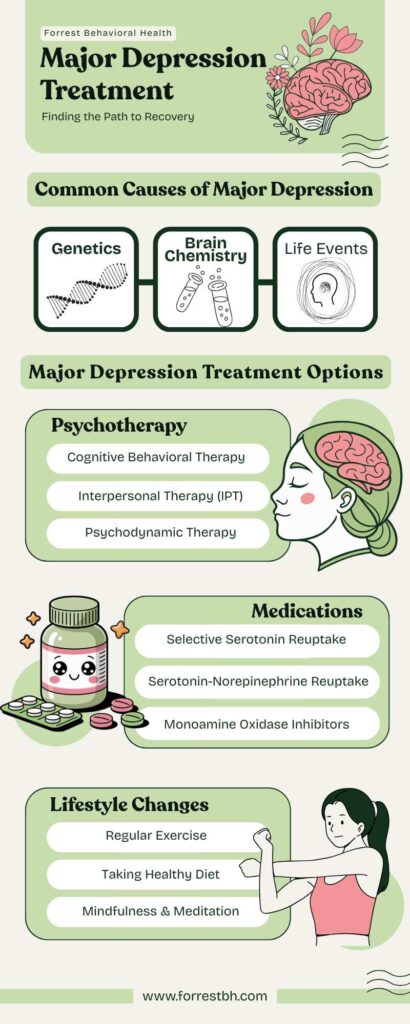
Evidence-Based Treatment Options That Can Help When You’re Drowning
Let’s cut through the noise. You don’t need vague promises or complicated theories. You need treatment that’s been proven to work. Here’s what treatment looks like at Forrest Behavioral Health and other mental health centers in Bedford.
Cognitive Behavioral Therapy
Your brain lies to you when you’re depressed. It tells you you’re worthless. That nothing will ever get better.
Over time, you begin to believe those thoughts.
CBT helps you catch those lies.
Not by slapping a positive affirmation over them, but by teaching you to question them.
To look at the actual evidence.
You work with a trained therapist who helps you see the patterns. The automatic thoughts that spiral you downward. Then you learn to challenge them. Replace them with something that’s really true.
Research backs this up. CBT works for depression. In fact, it tends to stick better long-term than medication alone.
It’s not easy work. But it’s real work.
The kind that can completely change things.

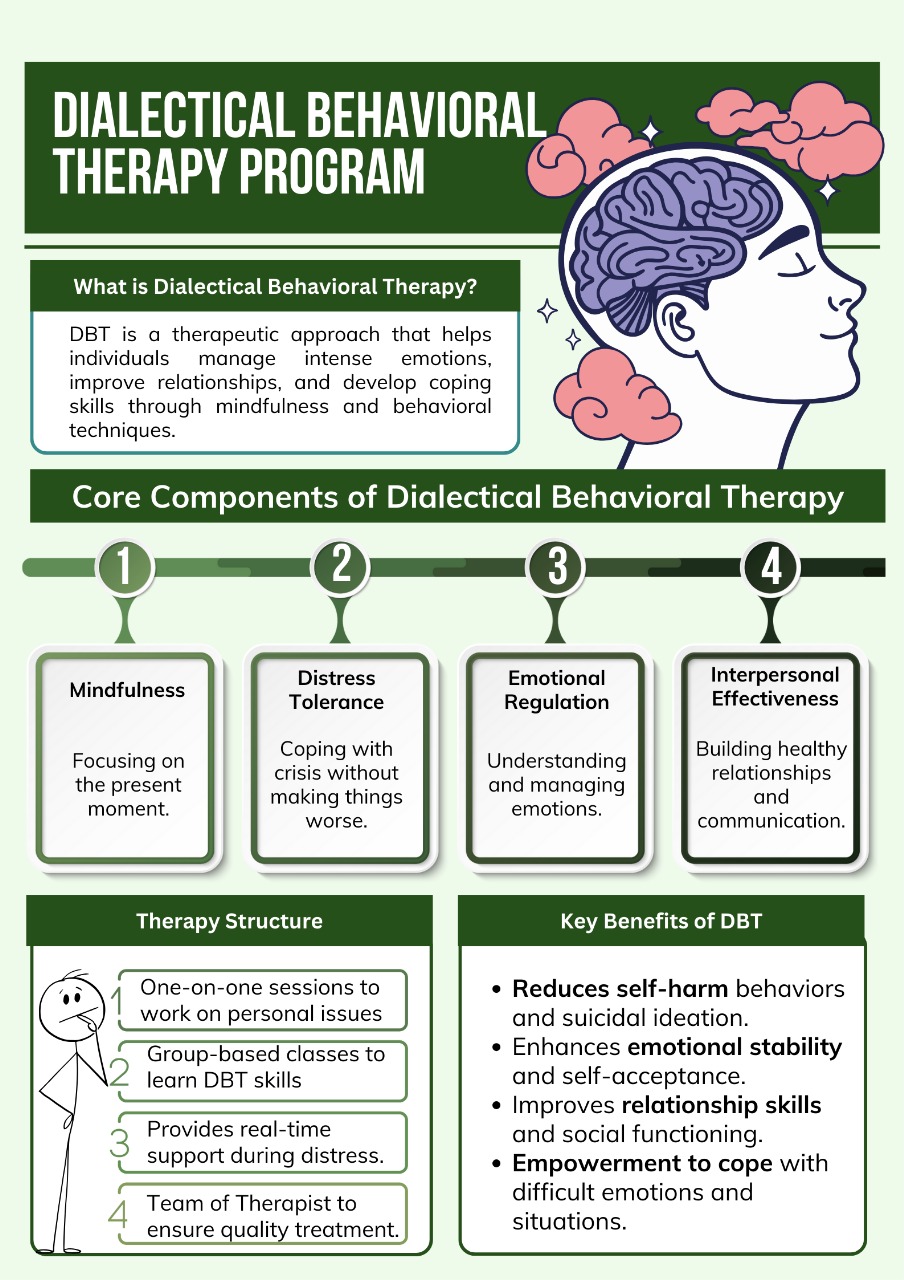
Dialectical Behavior Therapy
Some people feel everything at full volume. One small thing goes wrong. And BOOM! All of a sudden you’re in a complete meltdown. Oscillating between “my mind is like a racing engine” and “I’m feeling numb.” DBT was made for that.
You learn four basic concepts. Mindfulness breaks negative thought patterns so you stay present in the moment. Distress tolerance? It helps you to make it through the next hour without breaking down. Emotion regulation makes sure that your feelings do not govern your whole life. And finally, interpersonal effectiveness, or, in other words, learning how to make relationships that will not ruin you.
DBT gives you practical tools. Not concepts. Skills you can use when you’re sitting in your car crying before work. When you can’t stop the thoughts racing through your head at 3 AM. When everything feels like too much.
Interpersonal Therapy
Sometimes depression isn’t just happening inside your head. It’s happening between you and other people. Grief that never got processed. Relationships that are slowly killing you. Loneliness so deep it feels physical.
IPT focuses on that. On the connections that shape your mood. On learning how to communicate what you need. How to set boundaries. How to grieve properly instead of shoving it down until it turns into something worse.
The truth is that depression doesn’t exist in a vacuum. It lives in the space between you and the people around you. And sometimes fixing that space is what finally lets the light back in.
Medication When Your Brain Needs It
Let’s be real about medication for a second. Some people need it. That’s not failure. That’s biology. Depression changes your brain chemistry. And sometimes talk therapy alone can’t fix that, no matter how hard you work at it.
Research shows that combining medication with therapy often works better for moderate to severe depression than either one alone. Our medical team looks at your specific situation. If medication makes sense, we prescribe carefully. Monitor how it’s working. Adjust if we need to.
The goal isn’t to numb you out. It’s to stabilize your brain chemistry enough that therapy can do its job. Think of it like setting a broken bone before physical therapy. Sometimes you need that foundation first.
Take Your First Step With Forrest Behavioral Health
At Forrest Behavioral Health, we treat the whole picture. Not just your symptoms. We use therapies that are backed by research and years of helping people climb out of the same hole you’re in right now. And we do it without the clinical coldness or the toxic positivity that makes you want to scream.
We know you’re exhausted. We know you’ve probably tried before. We know this is hard.
But you’re still here. Still looking. That counts for something.
You do not need to continue acting like everything is fine when you are only barely holding on. Help exists. Real help. The one that comes to you where you are and accompanies you to something better. Call us at (312) 449-2491. Talk to someone who gets it. Take that first step.
Bedford is home. Let us help you feel at home in your own life again!