
How Long Does Alcohol Stay in Your System?
This year, Harvard researchers linked alcohol to 62 diseases, including alcoholic cardiomyopathy and cirrhosis. There is no safe limit because the risk starts with the first drink.
Nationally, excessive alcohol use now accounts for an estimated 178,000 deaths annually in the U.S., and six people die from alcohol poisoning alone every day on average. That is not a scare tactic. You have a room full of epidemiologists and federal health data saying the tide comes in every time you drink, whether you see it or not.
How Is Your Body’s Alcohol Content Measured?
Your liver starts working almost immediately after you drink, breaking down ethanol at a fairly constant rate. Most people can clear about one standard drink every hour. That is the receding water. However, when your body breaks down alcohol, it also creates a metabolite known as ethyl glucuronide, or EtG. That is the wet sand. It’s not the alcohol itself, but it’s proof the tide was there, and it hangs around long after your blood alcohol content has hit zero.
This is why “am I sober now” and “will this test come back clean” are two completely different questions. You can feel and function fine while a test still catches you. The number on a breathalyzer isn’t measuring how you feel. It’s measuring what’s physically still in your system.
How Long It Stays In The Body
Each test looks at the shoreline from a different distance, and the closer it looks, the longer it sees.
Blood clears the quickest, usually not detectable after about 12 hours.
Saliva follows a similar timeline, generally 12 to 24 hours.
Breath tests, the familiar breathalyzer, pick it up for roughly 12 to 24 hours, depending on how much you drank.
Urine is where it starts to stretch. A standard urine test catches alcohol for about 12 to 24 hours, but an EtG urine test, which is looking for that metabolite instead of the alcohol itself, can pick it up for as long as 72 to 80 hours.
Hair is the long memory. It can register alcohol use for up to 90 days. It’s not built to catch one night. It’s built to show a pattern, the kind that only becomes visible once it’s had time to set into the coastline.
The 7 Stages of Alcohol Intoxication
While alcohol is clearing out of your system, it’s also moving your body through a fairly predictable sequence. Knowing where the line into danger sits can matter more than any test.
- Sobriety. BAC under 0.05. Little to no visible effect.
- Euphoria. BAC 0.03–0.12. More talkative, more confident, and judgment already starting to loosen.
- Excitement. BAC 0.09–0.25. Slurred speech, blurred vision, poor coordination, and delayed reaction time. Visibly drunk to anyone watching.
- Confusion. BAC 0.18–0.30. Disorientation, staggering, mood swings, and possible blackouts.
- Stupor. BAC 0.25–0.40. Little to no response to surroundings, high risk of alcohol poisoning.
- Coma. BAC 0.35–0.45. Breathing and circulation are severely depressed, and body temperature drops. This is a medical emergency.
- Death. BAC of roughly 0.45 or above. Respiratory arrest becomes a real risk. It’s worth noting that death can occur at lower levels too, particularly with other substances involved.
Stages six and seven are not “sleep it off” territory. They require emergency medical attention.
Factors That Impact How Long Alcohol Stays in the System
Not every shoreline erodes at the same rate. A handful of things determine how fast your body clears alcohol and how long it shows up on a test.
Frequency of Drinking
Repeated heavy drinking doesn’t give your liver time to fully reset between sessions, which is part of why detection windows stretch out for regular drinkers.
Body Weight and Composition
More body mass generally means alcohol is diluted across more fluid, so BAC tends to rise more slowly than it does for someone smaller.
Biological Sex
Women tend to have a lower percentage of water in their bodies than men. This means that alcohol is distributed more and can raise BAC faster with the same amount consumed.
Liver and Kidney Function
These organs are doing the actual work of breaking alcohol down and flushing it out. Anyone with compromised function will hold onto it longer.
Genetics and Metabolism
Some people simply process alcohol faster or slower than others, independent of anything they’re doing right.
How Forrest Behavioral Health Can Help You
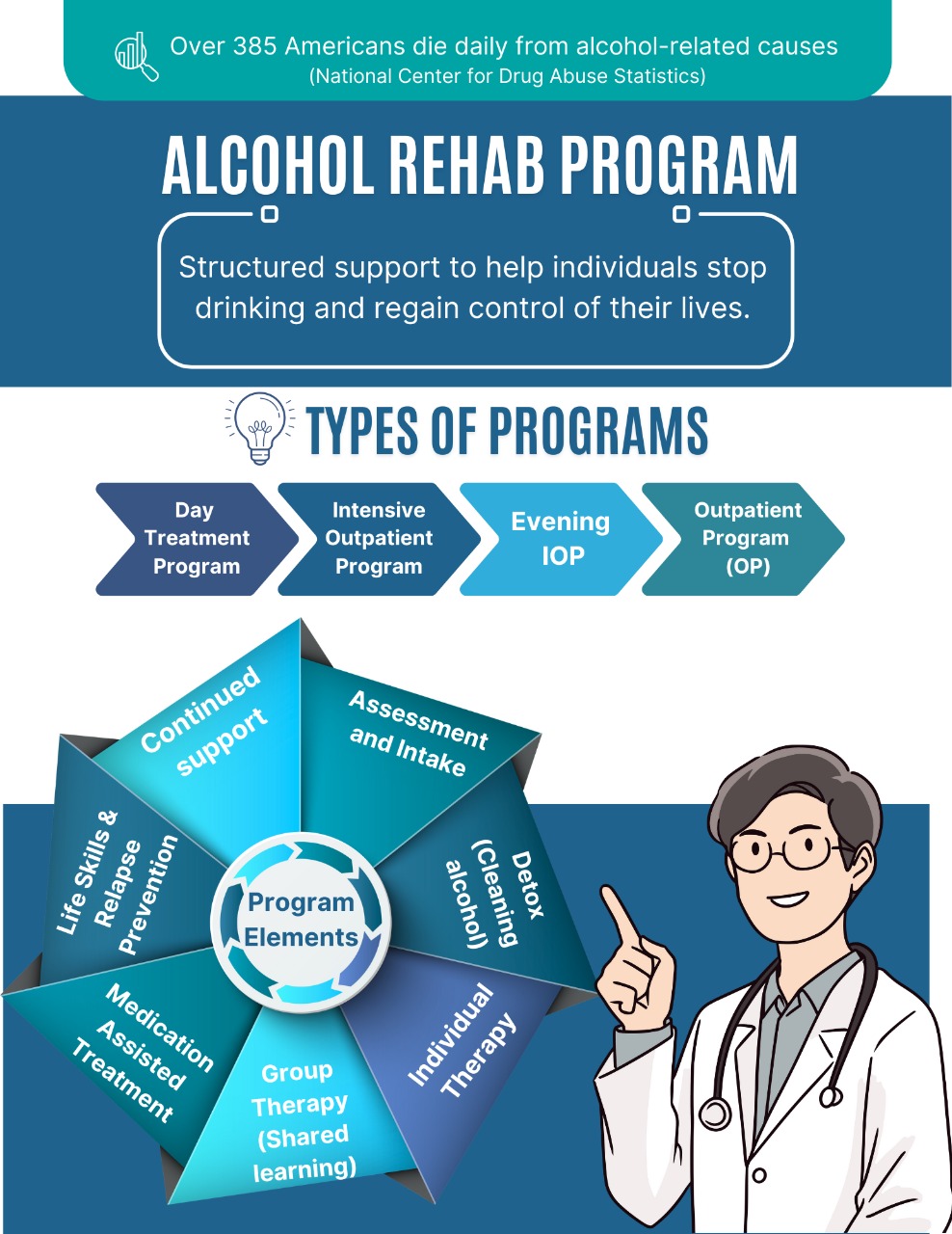
You don’t have to know everything before you make contact. Forrest Behavioral Health begins with a comprehensive evaluation that includes information on how much, how frequently, and what a crash or craving looks like during the week. From there, we build a plan around you.
Treatment isn’t one-size-fits-all here, so the level of care is matched to where you’re truly at. Some people need the daily structure of day treatment, five days a week, to break the pattern and get their footing back. Others do better with the IOP track: three to five sessions a week with real focus on staying steady once the sessions end. Moreover, for people who’ve already done the harder work and just need consistency, standard outpatient (once- or twice-weekly) keeps that support in place without asking you to rebuild your whole schedule around it.
In contrast to some substances, alcohol use disorder can be treated with FDA-approved medications, such as acamprosate or naltrexone. Our clinicians can discuss them as part of your plan along with cognitive behavioral therapy and contingency management. We treat anxiety, depression, and other conditions within the same plan rather than in a different room.
FAQs
Does drinking water flush out alcohol?
Nope. Water can help rehydrate you and ease some of the symptoms, but it won’t speed up how quickly your liver metabolizes the alcohol. Only time does that.
How much alcohol is too much?
There’s no single number that’s universally safe, and cancer risk in particular starts increasing from the first drink. Heavy or frequent drinking raises risk across dozens of conditions, but “too much” ultimately depends on your health history, family history, and how alcohol is functioning in your life, not just a drink count.
Is alcohol worse than sugar?
Too much sugar is a factor in health conditions, including diabetes and obesity, but alcohol by itself is directly and solely responsible for 62 diseases, including several cancers, and a contributing factor in dozens more. First, your liver considers it a toxin; second, a source of calories
Final Words
None of this is about scaring you into a decision. It’s about giving you real numbers, so you’re not guessing about what’s actually happening in your body.
Fortunately, a coastline can still recover once the tide stops coming in so often. That’s all it takes with the right help and getting started as soon as possible. Call Forrest Behavioral Health today to set up your first appointment.
Lorem ipsum dolor sit amet, consectetur adipiscing elit. Ut elit tellus, luctus nec ullamcorper mattis, pulvinar dapibus leo.