

The Quiet Precursor: Recognizing the Early Warning Signs of Relapse in Recovery
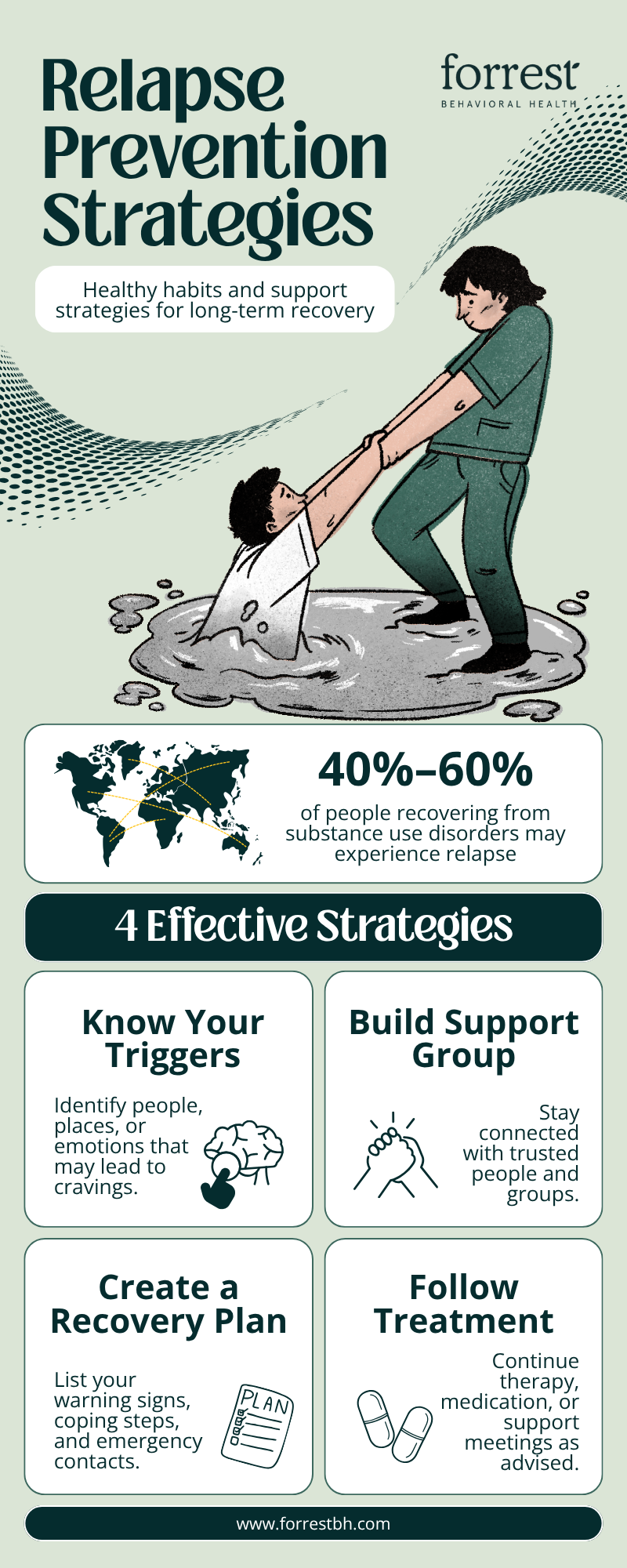
Sustaining long-term sobriety requires intense and daily maintenance. The demanding pace of life and work across Massachusetts often creates a dangerous false sense of security. Individuals frequently assume that just because they are sober today, they are permanently safe from their addiction. Addiction relapse statistics from 2026 show that around sixty to seventy percent of individuals experience at least one relapse within their first year of recovery.
A physical relapse does not happen the exact moment someone picks up a drink or a drug. Relapse is a slow psychological drift that begins weeks or even months before the actual physical slip occurs.
Recognizing these subtle emotional shifts is the absolute key to intercepting a full collapse. Located in Bedford, Forrest Behavioral Health offers sophisticated outpatient interventions designed to help individuals proactively realign their recovery.
The Three Stages of Relapse: Emotional, Mental, and Physical
Breaking down the clinical progression of a relapse helps individuals identify their own internal warning signs. The process always begins with the emotional phase of relapse. During this highly subtle stage, the individual is not actively thinking about using substances at all.
Their baseline behaviors are simply setting the neurobiological stage for future vulnerability. You might notice a sudden pattern of bottling up extreme workplace stress instead of talking about it. Poor sleep hygiene and a complete lack of basic self-care keep the central nervous system trapped in a state of high alert.
When your body is physically exhausted, it cannot properly regulate the complex emotions required to maintain sobriety. Your brain becomes entirely flooded with cortisol and adrenaline during these periods of extended burnout.
The Neurobiology of Emotional Relapse
This chronic stress response severely impairs the prefrontal cortex over time. This is the exact region of the human brain responsible for logical decision-making and impulse control. When this area fatigues, the amygdala takes over and forces you into pure survival mode.
Living in survival mode drains your natural emotional reserves and deeply impacts your memory centers. Minor inconveniences at the office suddenly feel like catastrophic life failures because your brain lacks the energy to process them logically. You entirely lose the cognitive bandwidth required to practice healthy coping mechanisms.
This biological exhaustion creates a profound vulnerability to old behavioral patterns. The brain naturally begins searching for the fastest available route to neurological relief.
Entering the Mental Bargaining Phase
If the emotional phase goes completely unchecked, the brain eventually transitions into the mental phase. This is a highly dangerous middle ground where the mind begins to actively bargain with the idea of substance use. You might find yourself thinking that you can easily control your drinking now that you have a few sober months under your belt.
This phase is heavily driven by a psychological trap known as euphoric recall. The human brain naturally romanticizes the immediate relief of past substance use during moments of intense stress. It completely filters out the devastating destruction and deep psychological pain that the addiction originally caused.
Your mind essentially tricks you into believing that the substance is a valid solution to your current exhaustion. It creates an artificial memory loop that completely ignores the reality of your past withdrawal symptoms or the damage done to your career.
How the Brain Hijacks Logic
This mental bargaining process is a direct result of a malfunctioning dopamine reward system. The brain desperately searches for an immediate chemical release from the mounting corporate pressure you face every day. It actively bypasses all your logical boundaries just to seek artificial relief.
Negotiating these boundaries creates a severe internal conflict that completely drains your remaining mental energy. You are spending hours actively fighting your own neurochemistry.
The Danger of Isolation and Unchecked Resentments
There are specific behavioral red flags that indicate a person is moving dangerously close to a physical relapse. A sudden and unexplained withdrawal from established support systems is a major warning sign. When a person starts skipping therapy sessions or claiming they have graduated from needing help, they are unconsciously removing their own accountability.
This isolation is almost always accompanied by a massive resurgence of untreated emotional distress. You might experience profound restlessness and chronic irritability that you simply cannot shake regardless of how much you sleep.
Recalibrating Your Baseline at Our Bedford Sanctuary
We must completely eliminate the heavy shame associated with needing a clinical tune-up. Asking for professional help when you feel emotionally unstable is never a failure of your recovery journey. It is actually the ultimate proof of deep resilience and profound self-awareness.
Our Partial Hospitalization Program and Intensive Outpatient Program provide the perfect structural agility for a comprehensive recovery reset. These programs offer an immediate bridge back to safety before the mental phase becomes a physical reality.
Advanced Interventions for High-Achieving Professionals
High-achieving professionals can receive robust psychiatric care and dual diagnosis support without completely abandoning their careers. We understand that taking a thirty-day leave of absence is simply not an option for most executives working along the Route 128 corridor. Our highly flexible clinical tracks allow you to receive top-tier care while maintaining your family obligations.
We utilize advanced clinical modalities to actively repair your damaged neural pathways. Our master-level clinicians heavily rely on Cognitive Behavioral Therapy to rapidly interrupt your destructive thought loops. We teach you how to challenge the euphoric recall before it dictates your physical behavior.
This deeply analytical approach appeals directly to the logic-driven mindset of a professional. You gain concrete tools to intercept your own relapse timeline.
Rewiring the Brain with Neurofeedback
Our clinical team also utilizes neurofeedback to help you visualize and retrain your own brainwaves in real time. This highly sophisticated tool actively repairs the specific neural pathways damaged by chronic stress and past substance use.
Rebuilding this distress tolerance ensures you can handle the extreme pressures of the Massachusetts corporate environment safely. You graduate from our clinical program with a renewed and scientifically backed foundation for lasting sobriety.
Do Not Wait for the Physical Slip to Ask for Help
You have the power to stop a relapse long before it ever becomes a physical reality. Please remember that seeking clinical support is a highly strategic move to protect the life you have worked so hard to rebuild. You do not have to wait until your life completely falls apart to justify getting professional psychiatric care.
Reach out to our dedicated admissions team today for a highly confidential and zero-judgment consultation. We will gladly help you explore targeted outpatient support that fits seamlessly into your daily professional life.
Contact Forrest Behavioral Health by calling (781) 570-5781. You can also explore our sophisticated recovery programs online at forrestbh.com.