

Crossing the Threshold: Deciding When It Is Time for Addiction Treatment in MA
Living in the agonizing purgatory of indecision is exhausting. You might wake up every single morning in Middlesex County wondering if your habits have finally crossed the line into a true substance use disorder. In Massachusetts, roughly nineteen percent of young adults use marijuana on a near-daily basis, highlighting a broad cultural normalization of heavy substance use.
You do not have to wait for a catastrophic medical emergency or a shattered career to justify getting professional help. Modern behavioral health intervention is a proactive choice designed to restore your neurological health and emotional stability.
Located in Bedford, Forrest Behavioral Health offers sophisticated outpatient care that allows you to address the crisis head-on without disappearing from your life.
The Myth of the Right Time and the Danger of Delaying Care
The procrastination trap keeps countless high-achieving professionals locked in a cycle of silent suffering. Individuals frequently tell themselves they will seek help after the holidays or when a major project finally wraps up. Treating a life-threatening chemical dependency as a simple scheduling conflict is incredibly dangerous.
Substance use disorders are inherently progressive by biological design. Delaying treatment does not magically stabilize the situation while you wait for a more convenient time to recover. Waiting only deepens the physical dependence and further entrenches the underlying mental health conditions driving the substance use.
The human brain physically adapts to the constant presence of illicit substances or heavy alcohol consumption. Your central nervous system downregulates its natural calming receptors to compensate for the artificial suppression. This creates a severe neurochemical deficit that makes attempting to quit on your own feel entirely impossible.
As this tolerance builds over time, you require increasingly larger amounts of the substance just to achieve a basic emotional baseline. This escalating physical need inevitably forces you to compromise your core values and professional integrity just to manage the daily withdrawal symptoms.
The Illusion of Future Control
People struggling with addiction often convince themselves they will naturally regain control once their external stressors disappear. They falsely believe that a promotion or a less demanding work schedule will miraculously cure their physical cravings. This illusion of future control completely ignores the heavy neurological reality of the disease.
Chemical dependency alters the structural pathways of your prefrontal cortex. This specific region of the brain is responsible for logical decision-making and impulse control. When this area becomes physically compromised by chronic substance use, waiting for a better time to quit only allows the neurological damage to spread.
Attempting to white-knuckle your way through a stressful work week without professional support usually ends in a severe binge. The brain desperately seeks an immediate release from the mounting cortisol and adrenaline. Professional clinical intervention is the only proven method to safely interrupt this destructive biological loop.
Recognizing Your Personal Inflection Point
We must shift the focus away from external disasters and look closely at internal metrics of suffering. It is time for treatment when the substance no longer provides genuine relief or enjoyment. You know you need help when the substance begins to dictate your daily schedule and your baseline ability to function.
A profound loss of control is the ultimate clinical signal that willpower is no longer enough. You might find yourself repeatedly breaking promises to yourself about your consumption habits. Swearing you will not drink today only to find yourself repeating the cycle hours later reveals a severe erosion of personal autonomy.
This internal battle creates a terrifying form of cognitive dissonance. You desperately want to stop using but find your physical body completely hijacked by the chemical dependency. Recognizing this profound loss of agency is the exact inflection point where professional psychiatric intervention becomes mandatory.
The Outpatient Advantage: Healing Without Leaving Your Life Behind
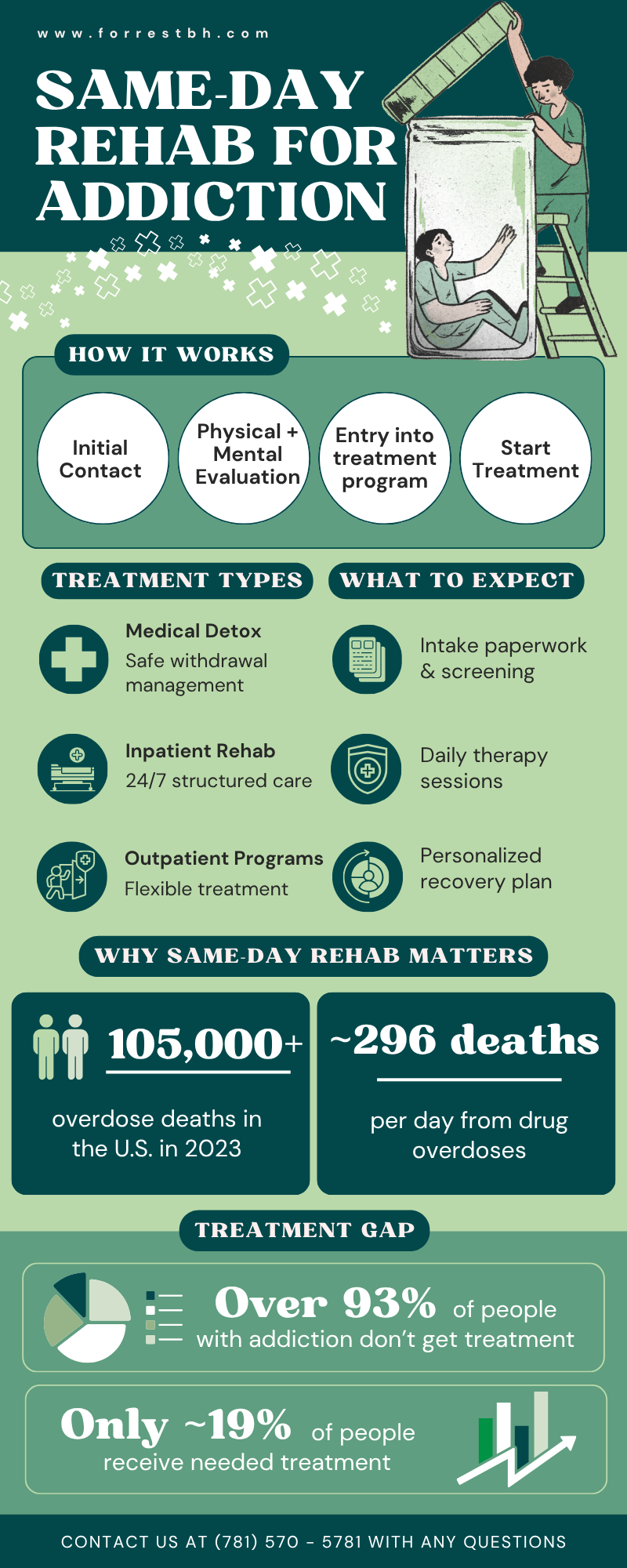
The logistical fear of traditional rehab keeps far too many people sick. Many individuals delay seeking treatment because they envision a mandatory thirty-day inpatient stay. They fear this isolation will completely disrupt their family dynamics and professional responsibilities across the Greater Boston area.
Forrest Behavioral Health offers a highly structured and modern alternative to residential isolation. Our Day Treatment and Intensive Outpatient Programs provide high-tier clinical care during the day. You then return to the safety and comfort of your own home at night to practice your new coping skills.
This outpatient model provides a much more sustainable and real-world path to long-term recovery. You do not have to abandon your career or your family to stabilize your central nervous system. You get to heal within the exact environment where you need your new coping mechanisms to work.
Maintaining Professional Momentum
High-achieving professionals often avoid treatment because they cannot afford a massive gap on their resume. Our clinical care model actively supports your continued professional momentum. We provide flexible scheduling options that allow you to engage in deep therapeutic work without missing critical board meetings or project deadlines.
This unique integration ensures you never have to choose between your health and your livelihood. You receive executive-level psychiatric care while actively maintaining your leadership roles. This allows you to rebuild your cognitive resilience and return to work functioning at a much higher level.
The Absolute Necessity of Dual Diagnosis Expertise
True recovery requires far more than just stopping the physical substance use. It demands advanced psychiatric care and targeted therapies to treat the root psychological drivers. We must address the profound burnout or severe anxiety that made self-medication necessary in the first place.
Our clinical team utilizes proven cognitive behavioral therapies to help you restructure destructive thought patterns. We blend these clinical tools with advanced modalities like EMDR to help your physical body process old trauma safely. This teaches your nervous system how to release trapped emotional pain without returning to chemical numbing.
You learn how to regulate your own nervous system and build genuine distress tolerance. We teach you how to intercept a panic attack before it completely takes over your physical body. This comprehensive dual diagnosis approach ensures you build a reliable foundation for lasting emotional stability.
Make the Decision to Interrupt the Cycle Today
Saying enough and asking for help takes immense personal courage. Picking up the phone is often the single hardest part of the entire recovery process. From that moment forward, you will have a dedicated clinical team carrying the logistical and psychological weight for you.
Please take immediate and decisive action by contacting our admissions team for a highly private assessment. This confidential call will help determine the appropriate level of care and rapidly verify your insurance benefits to eliminate unnecessary delays.
Contact Forrest Behavioral Health by calling (781) 570-5781. You can also explore our sophisticated outpatient programs online at forrestbh.com.