

What Fall Depression Treatment Options Are Available Near Concord, MA?
There is no single treatment plan for seasonal depression. Your symptoms, history, medications, other health conditions, and previous seasonal episodes all matter. For that reason, treatment may involve one option or several working together.
Light Therapy May Help With Winter-Pattern Seasonal Depression
Light therapy has been used for winter-pattern SAD since the 1980s. NIMH describes a common approach using a 10,000-lux light box for about 30–45 minutes each morning, generally from fall through spring.
Not every bright lamp works like a therapeutic light box. Certain eye conditions and medications that increase light sensitivity also require extra care. Talk with a health professional before treating seasonal depression with light therapy on your own.
CBT Can Address Seasonal Thought and Behavior Patterns
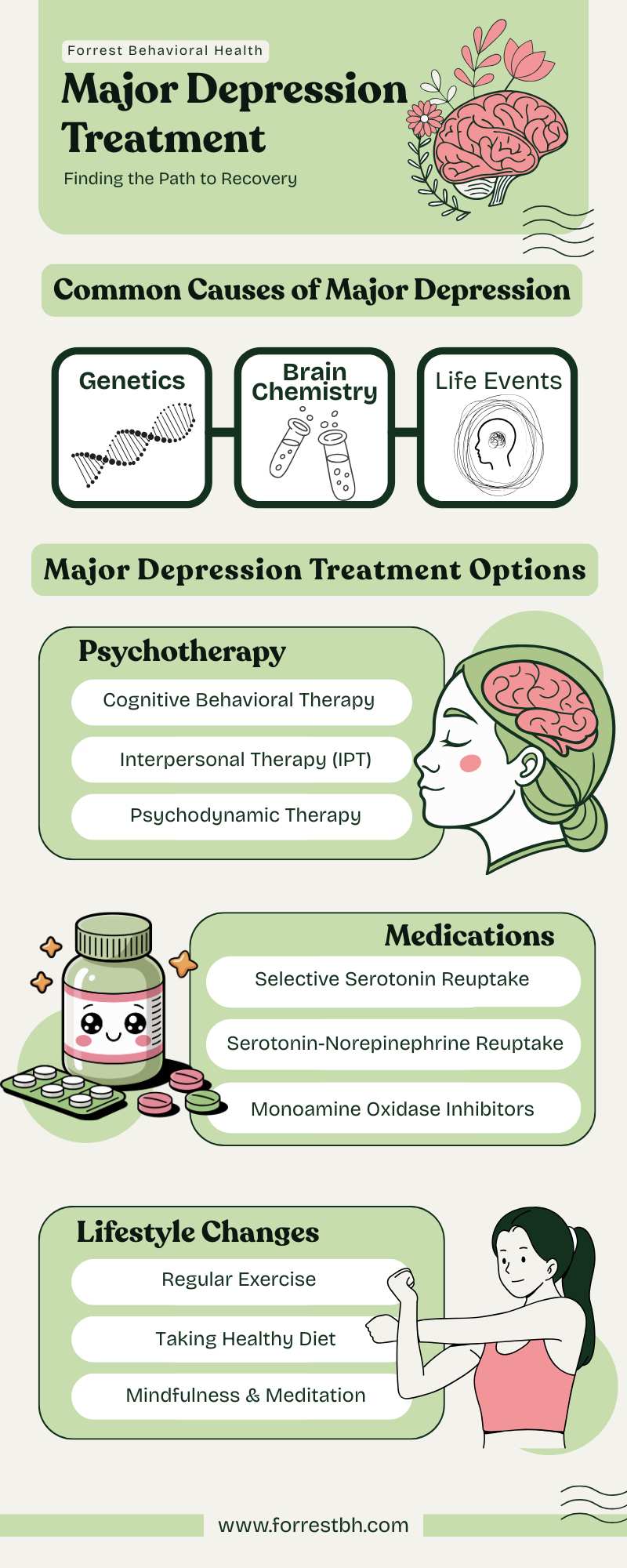
Cognitive behavioral therapy adapted for SAD, called CBT-SAD, focuses on thoughts and habits that can deepen seasonal depression. It may help you challenge negative seasonal thinking while rebuilding routines and activities that tend to disappear when motivation drops.
Behavioral activation is one part of that process. Instead of waiting to “feel motivated,” you schedule meaningful indoor or outdoor activities first. Forrest also offers broader mental health treatment options for people needing professional support.
If you are comparing care levels, read How to Find the Right Mental Health Treatment Program Near You before choosing a program.
Medication and Structured Outpatient Care May Fit Some People
Antidepressants may help some people with seasonal depression. NIMH notes that extended-release bupropion is FDA-approved to help prevent recurring seasonal depressive episodes in certain patients. Antidepressants also commonly take several weeks to reach their full effect.
Some people may need more support than weekly therapy provides. Standard outpatient treatment, IOP, or day treatment can offer different levels of structure. Concord residents can explore Concord mental health treatment options through Forrest’s nearby Bedford location.
Can Starting Seasonal Depression Treatment in Fall Make Sense?
For someone with a known seasonal pattern, discussing care before symptoms become severe can make sense. NIMH notes that people with previous SAD episodes may benefit from beginning treatment before their usual season starts, although prevention research remains limited.
Reasons to plan earlier include:
- Known seasonal history: Previous fall or winter episodes offer useful timing clues.
- Early symptoms: Sleep, energy, or motivation may already be changing.
- Medication timing: Antidepressants can take four to eight weeks to work.
- Planning ahead: Therapy and routines can begin before winter symptoms grow.
Real-World Case Study: CBT-SAD vs Light Therapy Over Two Winters
A randomized study followed 177 adults with recurrent winter seasonal depression after six weeks of CBT-SAD or light therapy. During the first winter after treatment, researchers found no meaningful difference between the two groups across the main outcomes.
By the second winter, recurrence occurred in 27.3% of CBT-SAD participants and 45.6% of light-therapy participants. The study suggests CBT-SAD may have longer-lasting effects for some people. It does not mean CBT is automatically better for everyone.
What Mental Health Support Is Available Around Concord, MA?
Concord residents have local community resources alongside nearby clinical care. The Town of Concord lists behavioral health services, community clinicians, and referral support. Its Behavioral Health Collaborative also connects residents with mental health and substance-use resources.
Resource | When It May Help |
Concord Behavioral Health Resources | Local referrals and community support |
MA Behavioral Health Help Line | Finding mental health care or urgent support |
Standard Outpatient Therapy | Ongoing lower-intensity treatment needs |
IOP | More structure than weekly therapy |
Day Treatment | Higher daytime support without residential care |
For local information, visit the Town of Concord Behavioral Health page. Forrest Behavioral Health serves Concord and surrounding Middlesex County communities from its nearby Bedford treatment location.
When Should You Seek Depression Treatment Near Concord, MA?
An occasional low-energy day usually does not require structured treatment. Professional support becomes more relevant when symptoms keep returning, grow stronger, or begin interfering with work, sleep, relationships, concentration, self-care, or activities you normally enjoy.
Signs worth discussing include:
- Mood stays low: Sadness or emptiness continues.
- Interest fades: Usual activities stop feeling rewarding.
- Sleep changes: Oversleeping or disrupted sleep becomes common.
- Daily responsibilities suffer: Work or relationships become harder.
- Symptoms return each fall: A seasonal pattern becomes noticeable.
If depression includes thoughts of death or suicide, call or text 988 for immediate crisis support. If there is immediate life-threatening danger, call 911.
 If worsening depression includes hopelessness or concern about suicide risk, read National Suicide Prevention Month: Warning Signs and Support at a Woburn, MA Behavioral Health Center.
Don’t Wait for Winter to Notice a Seasonal Pattern
Seasonal depression in Concord, MA can begin while fall still looks inviting outside. Shorter daylight may slowly change sleep, energy, motivation, and mood. Paying attention early can help you recognize a repeating pattern before winter feels much harder.
Fall depression treatment may include therapy, light therapy, medication, or more structured care. If seasonal changes are returning or affecting daily life, Forrest Behavioral Health can help Concord residents explore mental health treatment from its nearby Bedford location.