

What Happens in a Mental Health IOP? A Guide to Intensive Outpatient Therapy
“You don’t have to carry everything alone.”
Maybe you’re getting through work each day, yet anxiety keeps stealing your sleep. Or perhaps depression, trauma, or substance use has made daily life feel heavier than usual.
A mental health IOP provides structured treatment while you continue living at home. It offers more contact than weekly therapy without an overnight stay. Medicare describes intensive outpatient services as a level of care between standard outpatient therapy and inpatient or partial hospitalization treatment.
At Forrest Behavioral Health, we help people in Massachusetts explore care that fits their current needs. Here’s what IOP treatment can include and what a typical week may look like.
What Happens in a Mental Health IOP?
A mental health IOP combines regular therapy, skill-building, progress checks, and care planning over several days each week. You attend treatment sessions, then return home afterward. That setup gives you room to practice new tools in real life.
For example, you might learn a grounding technique during a Tuesday group session. Later that evening, you may use it before a tense conversation or a stressful work call. Therapy does not stay inside the room. It starts showing up in small moments.
Your IOP treatment plan may include:
- A clinical assessment and personal care plan
- Group therapy with guided discussion
- Individual counseling for private concerns
- Skills practice for stress and emotions
- Medication support when clinically appropriate
- Progress reviews and aftercare planning
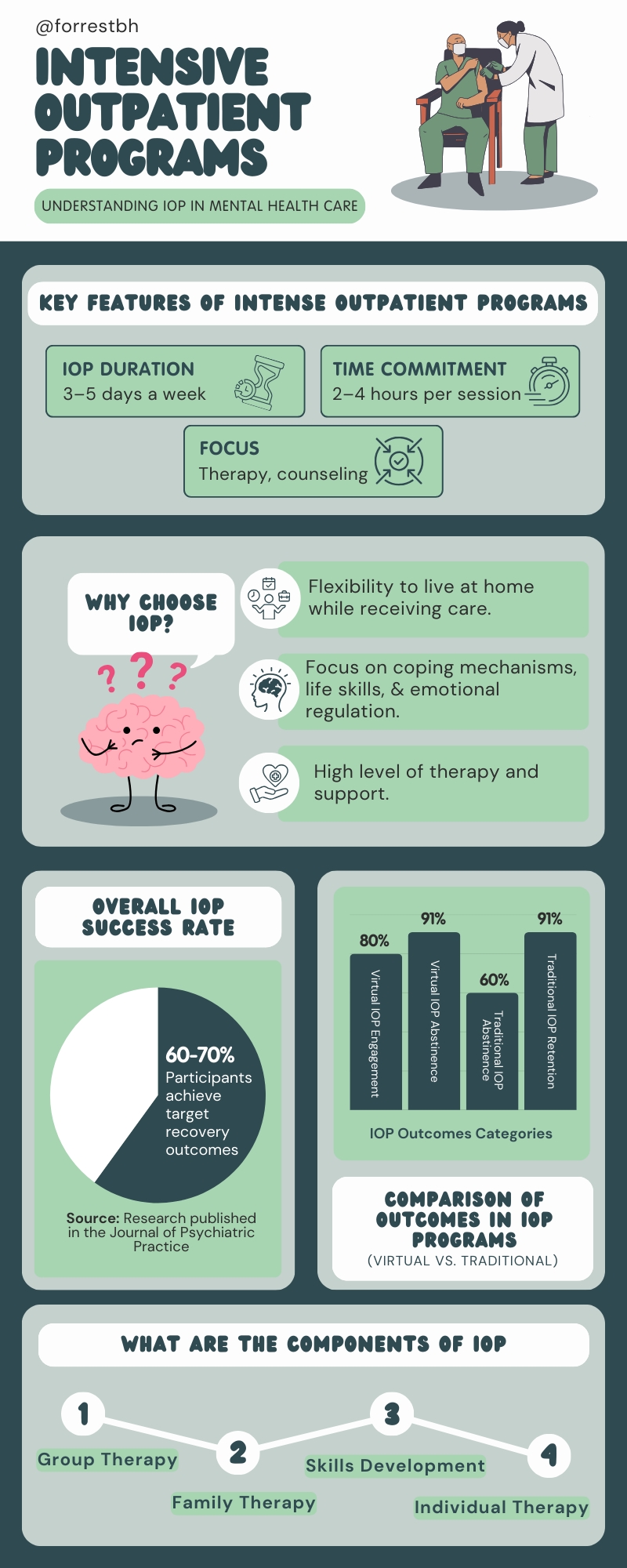
Forrest Behavioral Health’s Intensive Outpatient Program in Massachusetts provides structured mental health and substance-use care through day and evening sessions.
What Happens During Mental Health IOP Intake?
Treatment usually begins with a conversation, not a test you can pass or fail. The first meeting helps your care team understand what has been difficult and what type of support may suit you.
How Does the First Assessment Work?
During your assessment, you may discuss symptoms and daily routines. The clinician may also ask about substance use because mental health symptoms and substance use can affect each other. This IOP treatment conversation helps determine if intensive outpatient therapy, day treatment, weekly counseling, or another option makes sense for you.
It can feel strange to share personal details at first. That is normal. You do not need to have every answer ready.
What Goals Are Set in Intensive Outpatient Therapy?
Treatment goals should feel personal and realistic. They are not a checklist for becoming a different person overnight. Instead, they focus on changes that can make daily life more manageable.
A goal might involve sleeping better, handling panic before a meeting, or speaking with family without shutting down. Small wins count. They often add up faster than you expect.
Common goals may include:
- Reduce symptoms that disrupt everyday life
- Practice coping skills outside sessions
- Build steadier routines
- Strengthen support at home
- Plan the next level of care
What Does a Typical Mental Health IOP Day Look Like?
A mental health IOP often meets three to five days each week. Many programs provide nine or more hours of therapeutic services weekly. Medicare uses at least nine hours a week as a coverage benchmark for intensive outpatient services.
The exact IOP therapy schedule varies. Some people attend in the morning. Others choose evening sessions because work or family comes first. Forrest BH offers three-hour day and evening sessions, which can make structured care more workable for people with busy lives.
Part of the Day | What May Happen | Why It Matters |
Check-In | Share current concerns and goals | Gives the team a picture of your week |
Group Therapy | Discuss topics with professional guidance | Builds connection and useful insight |
Skills Session | Learn coping tools | Helps you respond differently to stress |
Individual Session | Meet privately with a therapist | Focuses on personal goals |
Care Planning | Review progress and next steps | Keeps treatment focused |
What Therapies May Be Used in IOP Treatment?
Intensive outpatient therapy can use several evidence-based methods, depending on your needs. You will not necessarily use every therapy type. Your care plan should reflect your symptoms, goals, and progress.
- Cognitive behavioral therapy: Notice and challenge unhelpful thought patterns
- DBT skills: Practice emotional regulation and distress tolerance
- Group therapy: Build communication skills in a supported setting
- Individual counseling: Explore personal concerns more deeply
- Trauma-informed care: Work in a setting that recognizes trauma’s effects
- Medication management: Review medication needs with a qualified prescriber
If mental health symptoms occur alongside substance use, dual diagnosis treatment may address both concerns together. People who need more treatment hours may also consider day treatment.
What Does a Documented Mental Health IOP Case Example Show?
A 2020 study examined 205 adults in a community mental health program that offered partial hospitalization, IOP-only care, and step-down care from partial hospitalization to IOP. People in the IOP group attended three days a week for three hours per day. They also received individual therapy and could access medication management when needed.
Across all three groups, participants showed reductions in depression, anxiety, hopelessness, and overall suffering from intake through discharge. Still, this record-based study was not a randomized trial. It cannot predict one person’s outcome or prove that one treatment path works for everyone.
What This Means: IOP can give you time to learn skills, try them in daily life, and return to therapy with real questions from the week.
Take the Next Step at Your Own Pace
A mental health IOP includes regular therapy, coping-skills practice, progress reviews, and a plan for continued support. It is not a punishment. It is a place to pause, regroup, and build tools for the days ahead. Care should fit the person, not force the person to fit care. If you are seeking support in Massachusetts, Forrest Behavioral Health can help you explore your next step.
Want to understand the time commitment before starting? Read our guide, How Long Is a Mental Health IOP Program?, to learn what can shape your IOP schedule and treatment timeline.