

Adderall Addiction: Signs, Symptoms, and Treatment
Borrowed energy always feels like your own at the time. Nobody staring down a deadline at 2 a.m. thinks of the pill they just took as a loan. It feels like fuel, like focus you finally found, like the version of yourself that was in there all along and just needed a little help getting out.
Adderall use is similar to borrowing money from your brain. It allows you to focus and use energy that you haven’t yet saved or earned. You get the benefits immediately, but you have to pay it back with interest later, and most people aren’t prepared for how high that cost can be.
How Adderall Affects the Brain
If used correctly and under supervision, Adderall is a proper and effective treatment for ADHD patients. It raises dopamine, serotonin, and norepinephrine levels in the brain, allowing them to focus, sit still, and get things done that used to fall out of their minds.
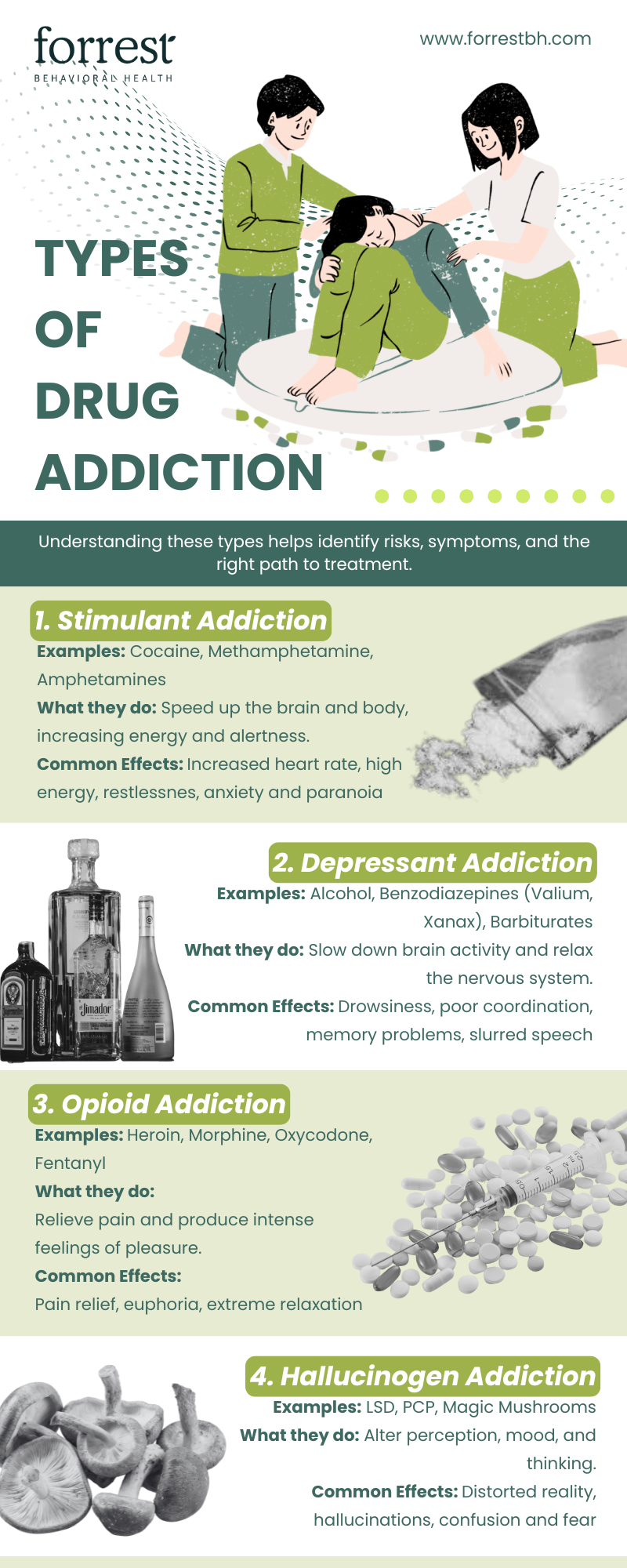
Unfortunately, about 25% of those prescribed stimulant drugs have used them in inappropriate ways, and a substantial portion of these individuals later satisfy the criteria for a clinical diagnosis of Prescription Stimulant Use Disorder (PSUD).
Signs and Symptoms
Some of this shows up in behavior before it shows up anywhere else. You start taking more than prescribed or taking it sooner than you’re supposed to refill. You notice yourself thinking about your next dose before you’ve even needed it yet. You start hiding how much you’re actually using from people who’d ask questions if they knew.
Physically, symptoms often show up as a loss of appetite, disrupted sleep, a resting heart rate that’s higher than it used to be, and a wired exhaustion that doesn’t go away with rest. Psychologically, it starts with irritability and anxiety. Then comes the flat, foggy, can’t-get-out-of-bed feeling whenever the dose wears off, and nothing is there yet to replace it.
None of these signs show up all at once. That’s part of what makes them easy to miss. They show up one at a time, quietly, the way a balance grows before anyone bothers to check the statement.
When the Bill Comes Due: Withdrawal and Overdose Risk
Quitting Adderall after extended use isn’t just about losing the boost. It means the body has to recalibrate around a baseline it has forgotten how to hold on its own. Fatigue is common with withdrawal, as is low mood. You may have vivid and unpleasant dreams, and your sleep may become disrupted in either direction. Your appetite can also sharply increase as your body tries to recover.
People underestimate the threat of overdose the most. Adderall can cause dangerously high body temperature or seizures (in extreme cases) when taken in higher doses than prescribed, taken frequently, or combined with other stimulants. This isn’t a risk limited to people using it recreationally, either. Nonmedical Adderall use among college students now sits somewhere between one in five and nearly one in three, most of it aimed at academic performance rather than getting high. This shows how normalized borrowing against your own nervous system has become.
Why This Question Usually Isn’t Really About a Prescription
If you’re reading this because something about your own Adderall use feels off, the honest checklist is short. Ask if you’ve needed more than you used to for the same effect. Notice if you’re taking it in ways or amounts your prescriber never actually approved. Consider whether the version of you that shows up without it feels less capable, less worthy of showing up at all, than the version that took the pill.
That doesn’t make you reckless or dishonest. It simply means the loan has been running longer than you realized. This is fixable once someone helps you look at the full balance instead of just the withdrawal.
What Getting Help Looks Like at Forrest Behavioral Health
Adderall is different from a lot of substances we treat, because for many people, there’s a real, legitimate ADHD diagnosis sitting underneath the misuse. At Forrest Behavioral Health, we don’t skip past that. Our assessment looks at your actual stimulant use alongside your attention, mood, and history, so we can tell the difference between a prescription that needs adjusting and a pattern that’s turned into dependence, and often it’s some of both.
From there, your plan is built around a combination of the following:
Medication Management & ADHD Reassessment
Our psychiatric team will reassess if Adderall is still right for you, consider non-stimulant ADHD options when appropriate, and safely manage any medication adjustments, instead of leaving you to taper on your own. This is the piece that makes stimulant cases different from most other substances we treat, and it’s handled by clinicians who specialize in exactly this.
Individual Therapy
One-on-one sessions focused on what’s actually driving the misuse, whether that’s untreated ADHD symptoms, academic or work pressure, anxiety, or a pattern that started small and quietly grew.
Group Therapy
Structured sessions with others working through similar stimulant-use patterns, built around accountability, shared strategies, and the kind of honesty that’s harder to access alone.
Family Therapy & Education
Get support from those around you so that recovery isn’t something you’re managing by yourself and those closest to you know what’s really going on and how to support you.
Relapse Prevention Planning
Practical work on identifying triggers, like deadlines, exams, or performance pressure, and building strategies that don’t rely on borrowing energy from a balance that isn’t there.
Final Words
Adderall can feel like your own drive, your own sharpness, and your own energy until the moment it isn’t there and you realize exactly how much you’ve been borrowing from yourself all along. The good news is that no matter how long the balance has been running, it can still be settled with the right support and a plan to get you back to baseline.
If you’re ready to start that conversation, we’re here to listen. Contact Forrest Behavioral Health today for a confidential assessment. Let’s look at the full picture together and build a plan that helps you move forward with focus and stability that truly belongs to you.